Nestled along the tranquil waters of Dedduwa Lake just inland from Bentota, Lunuganga Estate is the celebrated country residence and five-decade passion project of visionary architect Geoffrey Bawa.
Considered the spiritual birthplace of Tropical Modernism, this enchanting 15-acre estate began in 1948 as an abandoned rubber plantation on a rocky promontory. Seeking to transform the untamed hillside into an Italianate pleasure garden reminiscent of the lakeside villas he admired in Europe, Bawa realized his creative yearning required formal architectural training. Leaving his legal career behind, he journeyed to London to study architecture, dedicating the next fifty years of his life to meticulously shaping Lunuganga into a living laboratory of space, light, and landscape design.
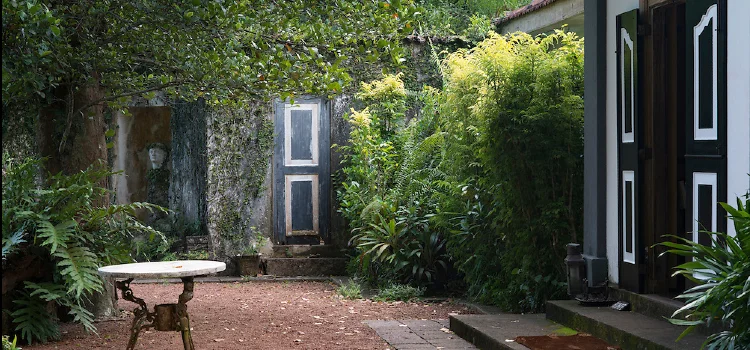
Visionary Origins and Tropical Modernism
Before Geoffrey Bawa achieved global acclaim for masterpieces such as Sri Lanka’s Parliament at Kotte and the lakeside Heritance Kandalama, Lunuganga was his private sanctuary for architectural experimentation. Every terrace, colonnade, staircase, and grove of trees was positioned with mathematical precision to investigate how built structures could dissolve into natural surroundings. Rather than imposing rigid European geometry upon the tropical jungle, Bawa developed a delicate philosophy of harmonious adaptation, creating indoor spaces that flow effortlessly into open-air garden corridors.
The transformation of the property was an ongoing, evolutionary endeavor that lasted until Bawa’s final years in the late 1990s. Hills were re-sculpted, ponds excavated, and tree lines pruned to create forced perspective lines that draw the eye toward carefully framed natural focal points. Lunuganga became an enduring masterclass in the Japanese landscape principle of borrowed scenery, where distant rice paddies, coconut groves, and rural hills across Dedduwa Lake are drawn into the garden’s visual composition as if they were part of the estate itself.
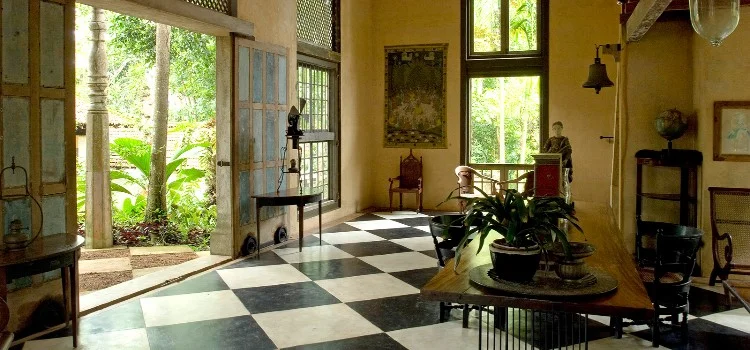
The Landscape Design and Garden Rooms
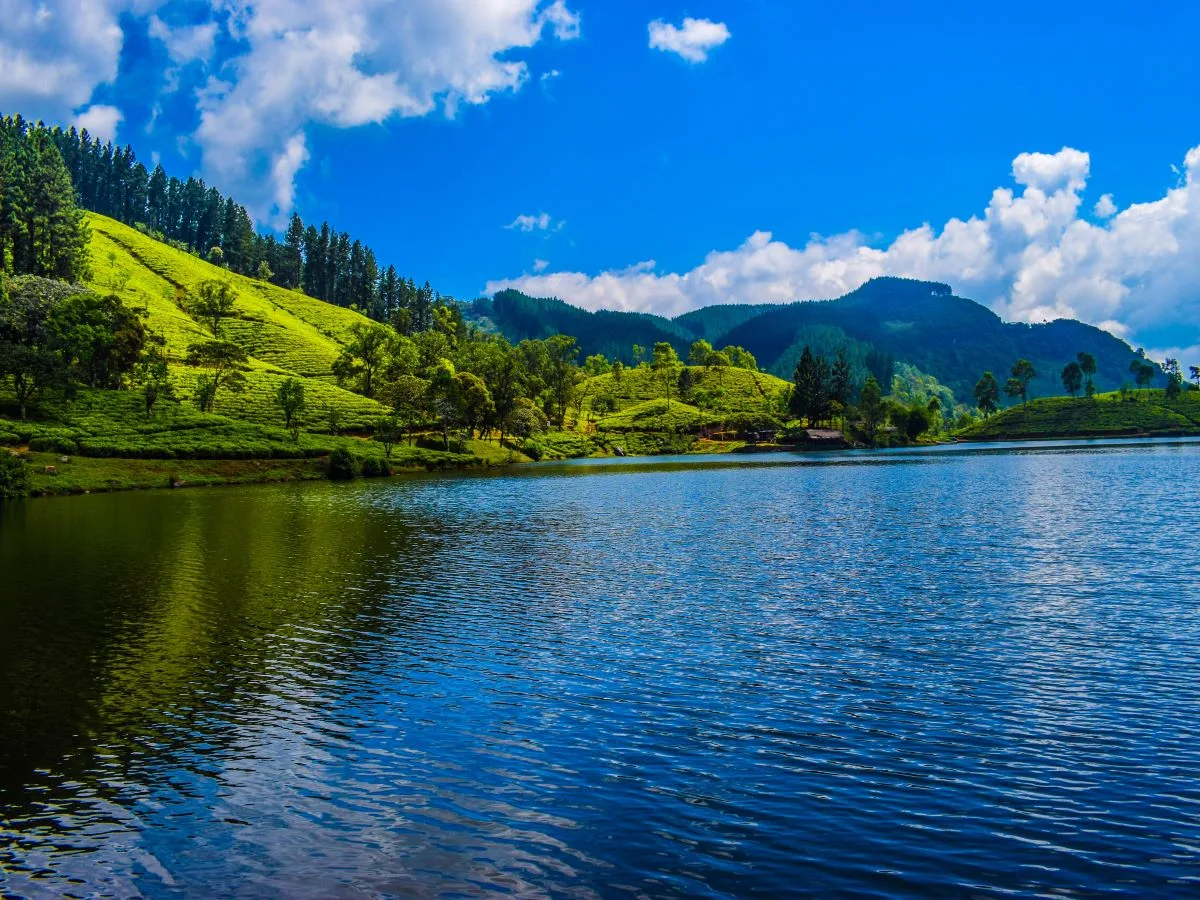
The estate is structured as a series of distinct outdoor living rooms, each possessing its own mood, microclimate, and spatial proportion. Broad grassy terraces shaded by fragrant frangipani and ancient rubber trees yield to intimate stone courtyards enclosed by lush foliage. Narrow gravel pathways wander through dense bamboo thickets before unexpectedly opening onto panoramic vistas of Dedduwa Lake.
A remarkable feature of the landscape is Bawa’s masterful play of light and shadow. Dappled sunlight filters through the canopy of mahogany and rain trees, illuminating velvety green mosses on antique stone steps and casting soft reflections across quiet reflection ponds. Throughout the grounds, monumental Chinese storage jars, weathered terracotta pots, and classical Roman busts are casually positioned amidst tropical vegetation, evoking the timeless romance of an Arcadian wonderland where classical European garden traditions meet the vibrant fecundity of the tropics.
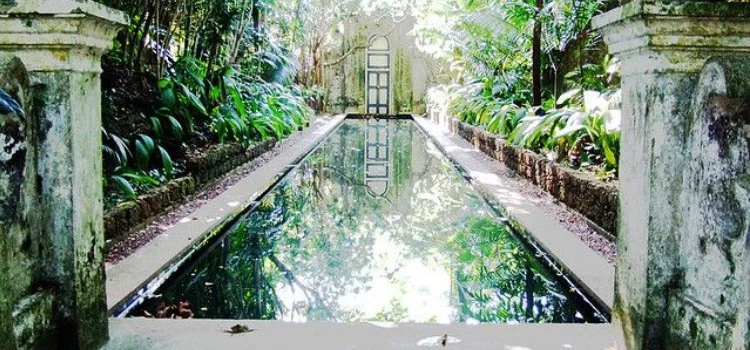
Exploring the Grounds: Cinnamon Hill and the Water Garden
Turning southward from the main bungalow, visitors encounter Cinnamon Hill, a sweeping grassy knoll that rolls gently upward toward a secluded ridge. Framed by groves of cinnamon and slender areca palms, the summit is crowned by a solitary mooning tree and an ornamental classical urn. From this quiet high point, the eye is drawn across the sparkling expanse of the lake to distant forest-cloaked hills, creating one of the most serene and contemplative viewpoints on the entire estate.
In dramatic contrast, the northern boundary drops steeply toward a tranquil water garden. Here, sunken paddy terraces, lotus basins, and lily-covered pools blend seamlessly into the marshy reeds and mangrove borders of Dedduwa Lake. Across the property stand several atmospheric open-air pavilions, including the Roman Pavilion with its classical colonnades, the vividly painted Blue Pavilion, and the Red Terrace. High in the branches of key shade trees hang vintage brass bells, which Bawa famously rang to summon staff or signal meal times to guests scattered across the sprawling grounds.
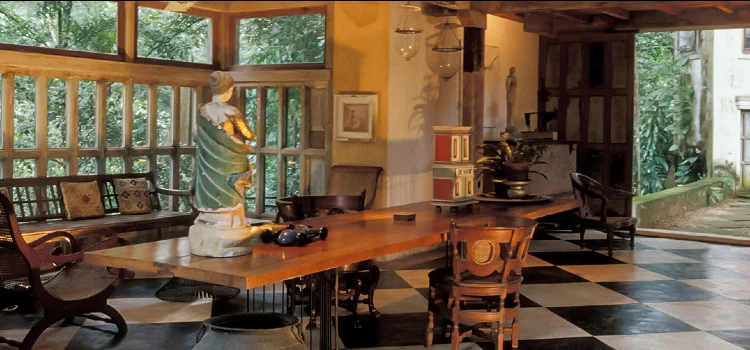
The Main House and Heritage Boutique Retreat
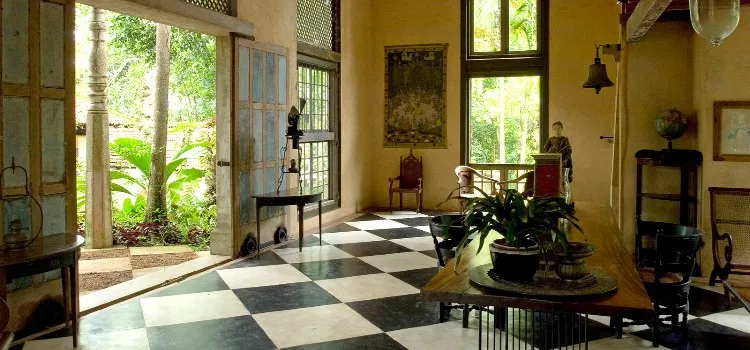
At the architectural heart of the estate stands the main bungalow, a converted colonial-era plantation house that Bawa transformed into an open-plan masterpiece of tropical architecture. The interior is characterized by whitewashed masonry walls, deep overhanging eaves, and black-and-white chequered tile floors that keep living areas cool throughout the tropical day. Spacious open-sided verandas, known as sandellas, blur the boundary between indoors and outdoors, allowing soft breezes and the gentle hum of garden birdlife to permeate the rooms.
The estate houses an extraordinary collection of original furnishings, incorporating Dutch-Portuguese antiques, custom modernist furniture crafted from local jackfruit and calamander timber, and distinctive artworks by celebrated artists of Sri Lanka’s 43 Group, including Donald Friend, Laki Senanayake, and Ivan Peries. Today, the property is preserved under the stewardship of the Geoffrey Bawa Trust and operates as an exclusive boutique retreat managed in partnership with Teardrop Hotels. Discerning travelers can stay overnight in beautifully conserved heritage suites, experiencing the tranquil ambiance of Bawa’s country home after daytime tour groups have departed.
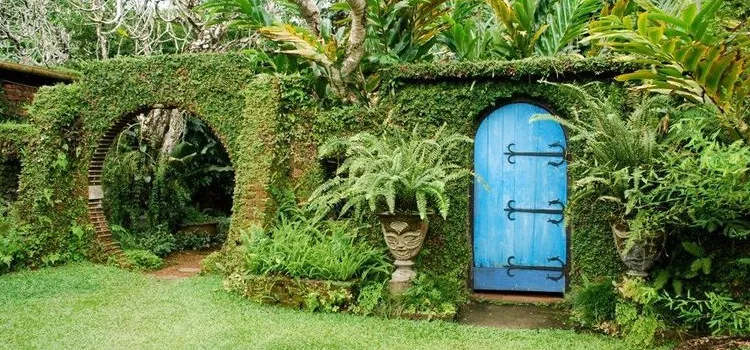
Lunuganga and Brief Garden: A Tale of Two Brothers
No architectural journey through Bentota is complete without visiting Brief Garden, the celebrated estate created by Geoffrey Bawa’s elder brother, Bevis Bawa. Located just ten kilometres north in Beruwala, Brief Garden presents a captivating contrast in personality, philosophy, and artistic expression. While Geoffrey Bawa was an introspective architect who favored grand vistas, restrained geometry, and classical order, Bevis was an extroverted artist, bon vivant, and former colonial officer whose garden is a theatrical, bohemian jungle.
Where Lunuganga expands into wide, open horizons and reflective lakeside vistas, Brief Garden enfolds visitors within a dense, labyrinthine jungle of exotic palms, winding mossy paths, hidden courtyards, and provocative stone sculptures. Bevis transformed his family’s rubber plantation into a seductive tropical maze that hosted international luminaries such as Vivien Leigh and Laurence Olivier. Exploring both gardens during your stay in Bentota provides an extraordinary, complementary appreciation of two creative geniuses whose divergent sensibilities profoundly shaped Asian landscape design.
Visiting Practicalities and Guided Tours
Lunuganga is situated in the hamlet of Dedduwa, roughly five kilometres inland from the coastal resort town of Bentota and approximately two hours by road from the capital, Colombo. The estate is open daily to day visitors, with guided garden tours conducted by experienced naturalists at scheduled times throughout the day, typically at 9:30 AM, 11:30 AM, 2:00 PM, and 3:30 PM.
Because visitor numbers are capped to maintain the serene atmosphere of the grounds, reserving a tour in advance is strongly recommended, especially during the peak travel season. Following a walk through the gardens, guests can savor traditional highland tea, refreshing king coconut, or a leisurely multi-course Sri Lankan rice and curry lunch on the dining terrace overlooking Dedduwa Lake. The most comfortable months to explore the estate span the dry season from November through April, when clear skies and gentle coastal breezes create ideal conditions for garden strolls.
Exploring Bentota and Lunuganga with Overa Tours
A visit to Bawa’s Lunuganga Gardens offers a peaceful cultural counterpoint to the golden sandy beaches and energetic water sports of the southwest coast. Whether designing a dedicated architectural heritage pilgrimage across the island or incorporating a tranquil garden luncheon into a bespoke coastal holiday, Overa Tours crafts personalized itineraries tailored to your individual interests.
Our private chauffeur-guided tours provide seamless luxury transfers between Bentota’s luxury beach resorts, nearby cultural landmarks like the historic coastal city of Galle, and inland river safaris along the Madu Ganga. To arrange your bespoke journey to Lunuganga and the southern coast, contact our travel specialists.
Frequently Asked Questions
What are the opening hours and guided tour schedules at Lunuganga?
Lunuganga Gardens is open daily to the public for scheduled guided tours. Guided walking tours are typically held at 9:30 AM, 11:30 AM, 2:00 PM, and 3:30 PM. Each tour lasts approximately one hour and is conducted by knowledgeable estate guides who share detailed historical insights into Geoffrey Bawa’s design concepts, architectural anecdotes, and the rich plant collection across the property.
Is advance booking required to visit Bawa's Lunuganga Gardens?
While walk-in visitors may occasionally be accommodated if space permits, advance booking is strongly recommended, especially between December and April. The Geoffrey Bawa Trust strictly regulates daily visitor numbers to preserve the quiet, contemplative ambiance of the estate and ensure hotel guests enjoying the heritage suites are not disturbed.
Can day visitors dine at Lunuganga Estate?
Yes, day visitors who book a garden tour can enjoy refreshments, afternoon tea, or a traditional Sri Lankan lunch at the estate’s open-air pavilion restaurant overlooking Dedduwa Lake. Due to limited kitchen capacity and high demand, lunch reservations should be secured in advance alongside your garden tour booking.
How does Lunuganga differ from Brief Garden?
While both gardens were created by the Bawa brothers on former rubber estates near Bentota, their styles are completely different. Lunuganga, created by architect Geoffrey Bawa, emphasizes open vistas, Italianate terraces, borrowed scenery across Dedduwa Lake, and classical architectural discipline. Brief Garden, designed by his elder brother Bevis Bawa, is a theatrical, labyrinthine tropical jungle full of dense foliage, secret alcoves, homoerotic sculptures, and artistic eccentricity.
Can guests stay overnight at Lunuganga Estate?
Yes, Lunuganga operates as an intimate heritage boutique hotel managed by Teardrop Hotels in collaboration with the Geoffrey Bawa Trust. The estate features six individually designed guest suites within the original bungalow and surrounding garden pavilions, offering guests the rare privilege of wandering the moonlit gardens and waking up to the tranquil morning birdsong of Dedduwa Lake.
How do you get to Lunuganga from the main hotels in Bentota?
Lunuganga is situated approximately five kilometres inland from the coastal road in Bentota, easily reached within a ten to fifteen minute drive via local taxi, three-wheeler, or private chauffeured vehicle. Overa Tours arranges comfortable door-to-door transfers from all major beach hotels in Bentota, Beruwala, and Ahungalla as part of our customized day excursions.