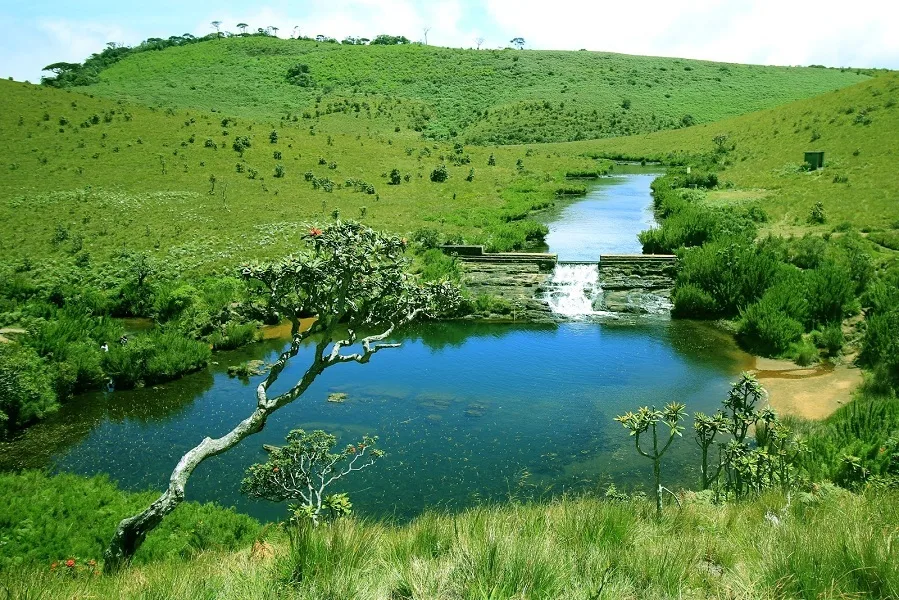
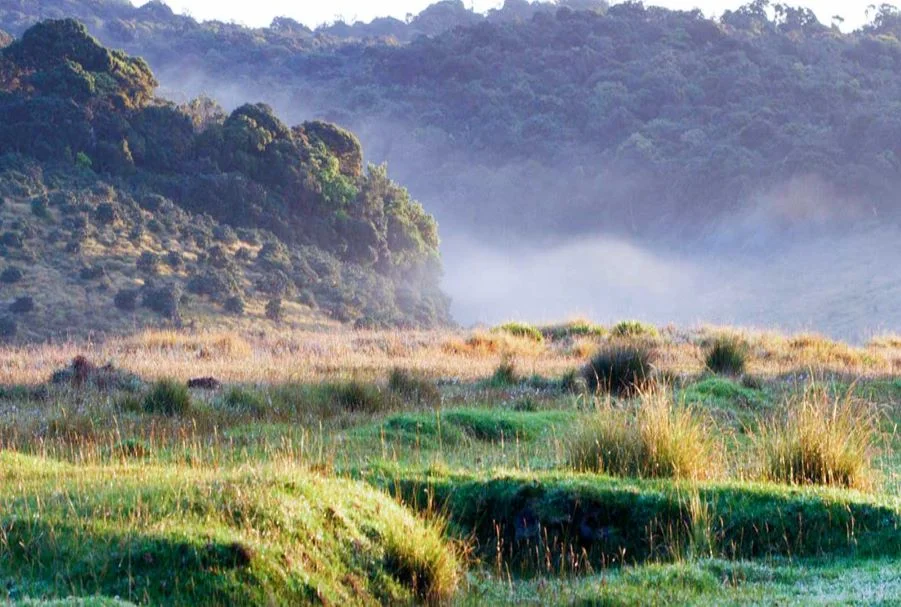
Horton Plains National Park is the highest plateau in Sri Lanka, marking the dramatic southern rampart of the central highlands across the borders of Nuwara Eliya, Badulla, and Ratnapura districts. Sitting at an altitude ranging between 1,950 and 2,389 meters (6,400 to 7,838 feet) above sea level, the park presents a stark and captivating landscape that differs completely from typical tropical lowlands. Here, expansive rolling wet patana grasslands give way to dwarf montane cloud forests draped in thick mosses, peat bogs, and crystal-clear mountain streams often enveloped in swirling mist.
With an average annual rainfall of approximately 2,150 mm and a cool mean temperature around 15°C (59°F), the plateau experiences crisp alpine mornings where ground frost occasionally coats the plains before burning off under the midday sun. Inscribed as a UNESCO World Heritage Site in 2010 as part of the Central Highlands serial property, Horton Plains is also a designated Ramsar wetland and the vital catchment area that gives birth to three of the island’s most critical waterways: the Mahaweli, Kelani, and Walawe rivers.
Exceptional Biodiversity and Endemic Wildlife
The isolated high-altitude ecosystem of Horton Plains represents a living evolutionary sanctuary. Nearly half of the 353 vascular plant species recorded across the plateau are endemic, with ancient relict cloud forests dominated by twisted Rhododendron arboreum trees that burst into vibrant scarlet blossoms between April and July, alongside rare dwarf mountain bamboos.
The national park provides a critical refuge for rare and threatened fauna. The critically endangered Horton Plains red slender loris (Loris tardigradus nycticeboides) is found exclusively within these high-altitude cloud forests. Large herds of sambar deer (Rusa unicolor) roam peacefully across the open patanas, grazing without fear in the early morning mist. Visitors may also encounter the highland purple-faced langur—locally known as the bear monkey due to its thick, shaggy coat—alongside dusky-striped squirrels, giant squirrels, wild boar, and the elusive Sri Lankan leopard.
Reptilian biodiversity includes unique cold-adapted lizards such as the rhino-horned lizard (Ceratophora stoddartii), the pygmy lizard, and the black-cheeked lizard. As an internationally recognized Important Bird Area (IBA), the park is home to nearly all of Sri Lanka’s highland endemic avian species, including the elusive Sri Lanka whistling thrush, Sri Lanka bush warbler, yellow-eared bulbul, Dull-blue flycatcher, and the Ceylon wood pigeon.
World’s End and the Circular Nature Trail
The primary and most celebrated trek within Horton Plains is the 9-kilometer circular nature trail, a gentle loop that typically takes between three and four hours to complete on foot. Unlike other national parks on the island, vehicles are strictly prohibited beyond the visitor center at Farr Inn, ensuring that hikers experience the pristine wilderness in complete tranquility.
Greater World’s End and Lesser World’s End
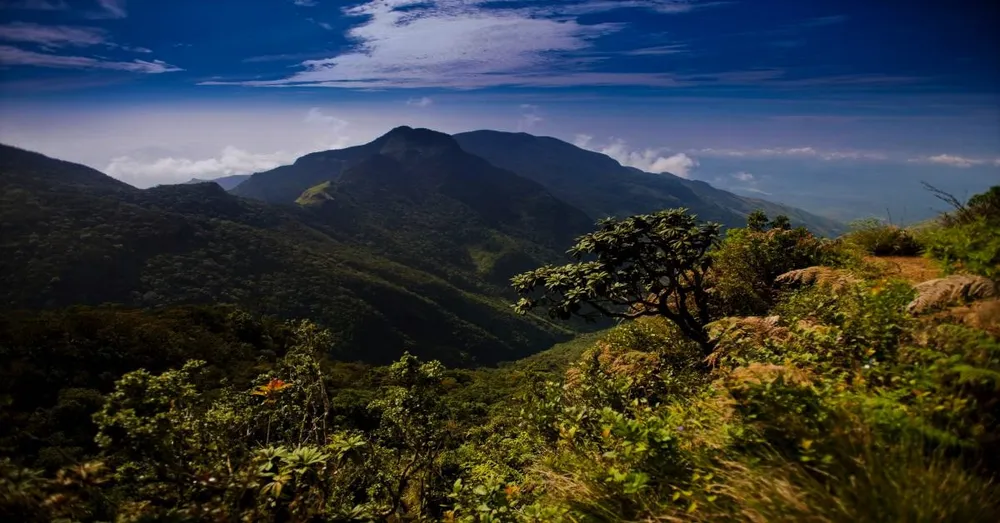
The highlight of the circular loop is Greater World’s End (Maha Loka Anthaya), a dramatic cliff edge where the plateau suddenly terminates in a vertical abyss plunging 884 meters (2,900 feet) down to the southern lowlands. On clear mornings between 6:00 AM and 9:30 AM, hikers standing at the precipice are rewarded with sweeping views that encompass tea plantations, distant reservoirs, the winding Walawe river basin, and toy-like hamlets stretching toward the southern coast.
Approximately one kilometer along the cliff path lies Lesser World’s End (Kuda Loka Anthaya), a secondary escarpment dropping roughly 274 meters (900 feet) that offers an alternative panoramic perspective across the gorge. By mid-morning, warming air from the lowlands condenses into a thick white curtain of cloud that rises up the cliff face, making an early arrival essential.
Baker’s Falls (Gonagala Ella)
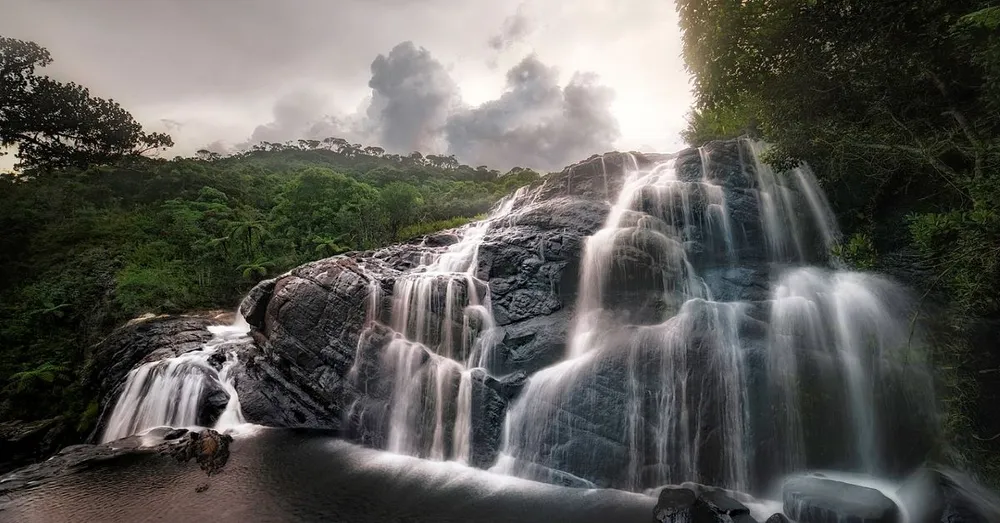
Continuing along the circular trail, the path winds down a shaded stone staircase toward Baker’s Falls. Formed by the cascading waters of the Belihul Oya, this picturesque 22-meter (72-foot) waterfall was named after British explorer Sir Samuel Baker, who documented the falls in 1845. The waterfall hurtles across three wide shelves of smooth granite rock, surrounded by lush fern groves, giant tree ferns, and mountain rhododendrons. While the viewing platforms offer wonderful photography opportunities, the plunge pool below is deep and turbulent, making swimming strictly prohibited.
Mountain Peak Expeditions: Kirigalpoththa and Thotupola Kanda
For adventurous hikers seeking more demanding trails, Horton Plains offers access to two of the island’s highest mountain peaks:
Kirigalpoththa Nature Trail
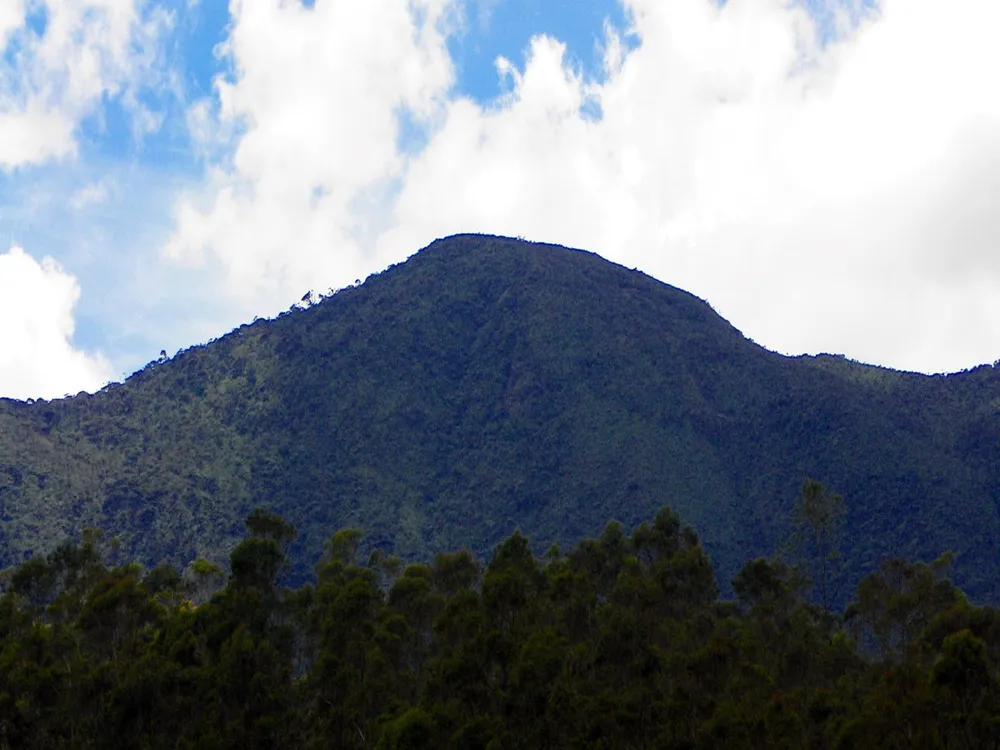
Rising to an elevation of 2,388 meters (7,835 feet), Kirigalpoththa is the second-tallest mountain in Sri Lanka and the highest summit accessible to the general public, as the taller Pidurutalagala remains a restricted communications installation. The 14-kilometer return trek commences from the park office and takes between five and six hours.
The trail traverses through wet boggy patanas, dense bamboo thickets, and misty cloud forests before undertaking a challenging rock scramble to the narrow, windswept summit ridge. Hikers are treated to breathtaking views across the entire central mountain massif and the southern plains.
Thotupola Kanda Peak Trail
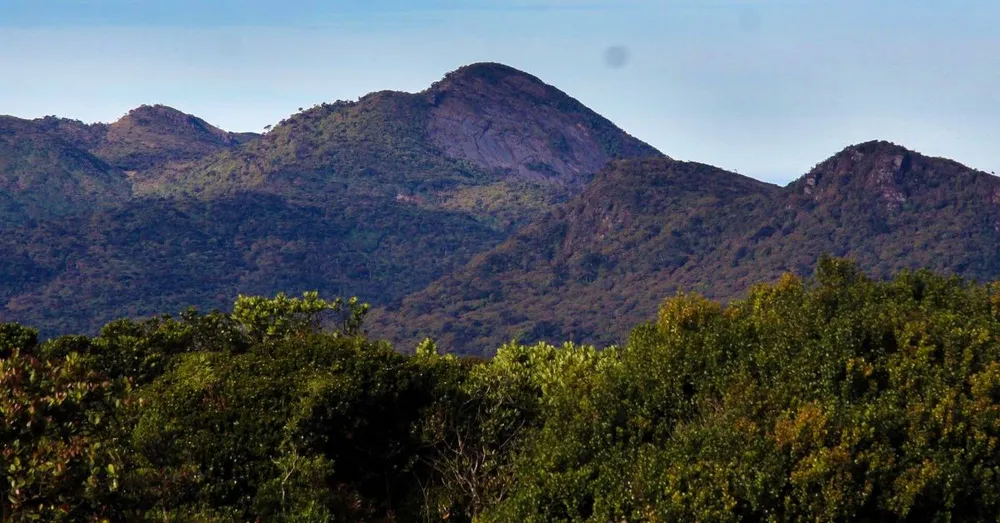
Standing at 2,357 meters (7,733 feet), Thotupola Kanda is the third-highest mountain on the island. The trailhead begins near the Pattipola entrance gate, offering a relatively short and straightforward 2-kilometer hike that can be completed in about two hours.
The trail ascends through hardy dwarf cloud forest shrubs adapted to strong highland winds. According to ancient Ramayana mythology, Thotupola Kanda—translating literally to “Landing Site Mountain”—was the mountain peak where King Ravana touched down his mythical Dandu Monara flying aircraft upon his return from India. On clear days, the summit provides unhindered sightlines extending toward Adam’s Peak.
Park Entrances, Regulations, and Practical Tips
Horton Plains National Park is open daily from 6:00 AM to 6:00 PM, with ticket counters operating at both official entry points: the Pattipola entrance (approached from Nuwara Eliya via Ambewela) and the Ohiya entrance (approached from Ella and Haputale).
To preserve the fragile montane ecosystem, the Department of Wildlife Conservation enforces strict environmental protections. Single-use polythene bags, plastic wrappers, styrofoam, cigarettes, and alcoholic beverages are strictly forbidden inside the park. Wildlife officers conduct thorough bag inspections at the ticket gate, removing plastic wrappers from food items and placing them into paper bags.
Travelers are strongly advised to begin their hike by 6:30 AM to reach World’s End before morning clouds obscure the vista. Weather on the plains can change rapidly, with bright sunshine suddenly giving way to dense fog, chilly winds, or highland showers. Dressing in layers, wearing sturdy waterproof hiking shoes, carrying a light rain jacket, and bringing a refillable water bottle ensure a safe and comfortable trek.
Planning Your Horton Plains Trek with Overa Tours
Horton Plains National Park connects seamlessly with highland stays in Nuwara Eliya and Ella, making it an essential adventure for nature lovers and trekkers.
Our private excursions include early morning transfers in comfortable vehicles, licensed naturalist guides familiar with the park’s endemic birdlife and botany, pre-arranged entrance ticketing, and packed breakfast from your hotel. To reserve your guided trek through Horton Plains, contact our travel specialists.
Frequently Asked Questions
What is the best time of day to start the hike at Horton Plains?
The ideal time to enter the park is at 6:00 AM when the gates open. Starting your hike between 6:00 AM and 6:30 AM ensures you reach World’s End before 9:00 AM, when cloud cover and mist typically rise up from the valley and obscure the dramatic drop. Early mornings also provide the finest wildlife spotting, particularly for sambar deer grazing along the trails.
How difficult is the main circular trail to World's End and Baker's Falls?
The 9-kilometer circular trail is rated as moderate and is suitable for travelers of average physical fitness, including active families. Most of the trail consists of relatively flat gravel paths and grass tracks, with occasional rocky sections and a steep stone stairway leading down to and up from Baker’s Falls. The entire loop typically takes three to four hours at a steady pace.
What strict rules regarding plastics and littering apply in the park?
Horton Plains is a zero-plastic conservation zone. Single-use polythene bags, plastic food wrapping, and plastic water bottle labels are strictly prohibited and will be confiscated or replaced with paper bags during mandatory gate inspections. Visitors must carry all personal waste back out of the park and stay strictly on marked paths.
What clothing and gear should I bring for the trek?
Because temperatures at dawn can be as low as 10°C (50°F), hikers should wear comfortable layers, including a light fleece or warm sweater that can be removed as the day warms up. Sturdy walking shoes or hiking boots with good traction are recommended, along with a waterproof jacket, a hat, sun protection, and a refillable water bottle.
How far is Horton Plains from Nuwara Eliya and Ella?
From Nuwara Eliya, Horton Plains is approximately 32 kilometers away via the Pattipola entrance, taking around one hour by private vehicle. From Ella or Haputale, the park is accessed via the Ohiya entrance, which takes roughly 1.5 to 2 hours of scenic driving through highland tea estates.
Can visitors camp or stay overnight inside Horton Plains National Park?
Overnight stays inside the park are restricted to official Department of Wildlife Conservation (DWC) bungalows (such as Ginihiriya and Mahaeliya) and designated basic campsites. These must be reserved in advance through the official Department of Wildlife Conservation booking portal. Most international travelers prefer to stay in boutique hotels in Nuwara Eliya, Ambewela, or Ohiya and visit as a half-day excursion.