Beneath a soaring emerald canopy shrouded in perpetual mist, Sinharaja Forest Reserve represents the last viable expanse of virgin primary lowland tropical rainforest on the island, safeguarding an irreplaceable evolutionary sanctuary where prehistoric trees, secret waterfalls, and rare endemic creatures thrive in pristine isolation.
Designated both a UNESCO World Heritage Site and an International Biosphere Reserve, Sinharaja—literally translating to the “Kingdom of the Lion”—spans roughly 8,864 hectares across the rugged ridges of the south-western wet zone. Cradled between the administrative boundaries of the Southern and Sabaragamuwa provinces, this ancient woodland is an ecological treasure house of planetary significance. Over sixty-four percent of all endemic tree species found across the nation are concentrated within this dense green refuge, alongside more than half of the island’s endemic mammals, butterflies, reptiles, and amphibians. For wilderness enthusiasts, birdwatchers, and intrepid hikers, journeying beneath the cathedral-like canopy of Sinharaja offers a mesmerizing glimpse into South Asia’s primeval natural heritage.
The Primeval Sanctuary: UNESCO Heritage and Lowland Rainforest Ecology
Geographically framed by the Rakwana mountain range and drained by an intricate network of crystal-clear river systems including the Gin Ganga and Kalu Ganga, Sinharaja encompasses a dramatic altitude gradient spanning from 300 metres in sheltered river valleys up to 1,170 metres atop mist-veiled mountain crests. The reserve endures a tropical rainforest climate characterized by torrential monsoonal downpours, with annual precipitation ranging between 3,500 and 5,000 millimetres distributed across almost the entire year. This sustained moisture fuels a multi-tiered forest architecture dominated by towering Dipterocarp giants—such as Shorea congestiflora and Dipterocarpus zeylanicus—that pierce the sky at heights exceeding forty-five metres, anchored by expansive buttress root systems that stabilize the thin forest soil.
Beneath the emergent layer, the continuous mid-canopy forms a dense umbrella of interlocking leaves, shielding the understory in perpetual emerald twilight. Epiphytic orchids, prehistoric tree ferns, climbing woody lianas, and moisture-loving mosses festoon every trunk and branch, creating vertical hanging gardens that capture humidity and nurture miniature arboreal ecosystems. Because Sinharaja escaped extensive commercial logging during the colonial era, its interior core preserves unbroken ecological processes that have unfolded uninterrupted since the breakup of the ancient southern supercontinent of Gondwana, making it one of the most critical biodiversity hotspots anywhere in the tropics.
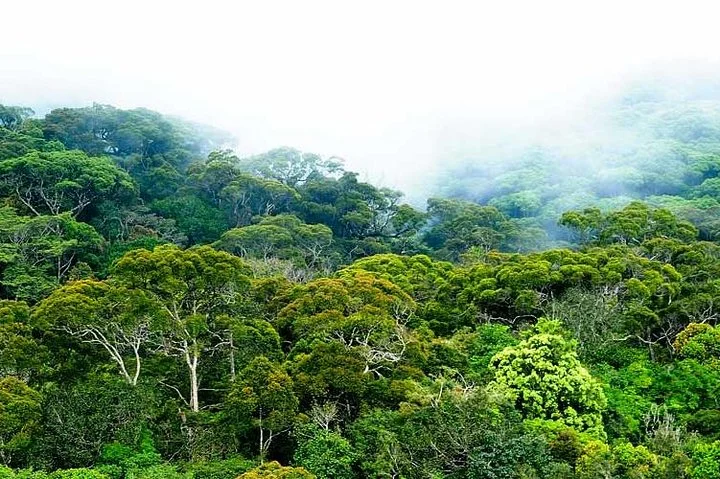 The dense, multi-tiered canopy of the UNESCO-protected Sinharaja Forest Reserve, home to ancient Dipterocarp trees and extraordinary biodiversity.
The World-Famous Sinharaja Bird Wave and Endemic Avian Wonders
For ornithologists and wildlife photographers, Sinharaja is globally celebrated as the premier birdwatching haven in the region, recognized as a globally Important Bird Area (IBA) by BirdLife International. The forest serves as a vital sanctuary for twenty-six of the country’s thirty-four endemic bird species. Visitors wandering quietly along the mossy footpaths have regular encounters with the dazzling Sri Lanka Blue Magpie (Urocissa ornata) with its vivid cobalt plumage and crimson bill, the secretive Red-faced Malkoha creeping silently through high foliage, the Ashy-headed Laughingthrush rummaging across the damp leaf litter, the Green-billed Coucal, the Sri Lanka Hanging Parrot, the White-faced Starling, and the rare Sri Lanka Wood Pigeon (Columba torringtoniae). In the quiet darkness before dawn, seasoned birders may even hear the haunting whistle of the Serendib Scops Owl, a species discovered only in 2001.
The crowning biological spectacle of Sinharaja is its world-renowned “bird wave,” formally termed a mixed-species foraging flock. Documented continuously for decades by the Field Ornithology Group of Sri Lanka, this phenomenon represents the largest, most stable, and longest-studied mixed-species bird flock in scientific literature. Rather than foraging individually, dozens of disparate avian species unite into a cohesive traveling flock that methodically sweeps across the forest canopy and understory. Led predominantly by the vociferous Orange-billed Babbler and the agile Crested Drongo, these dynamic foraging waves flush out hiding insects that are instantly snatched by accompanying insectivores like the Malabar Trogon, Yellow-fronted Barbet, and Tickell’s Blue Flycatcher. Remarkably, even non-avian forest residents—including giant squirrels and jungle squirrels—frequently join the wave to capitalize on the communal security and abundant food sources.
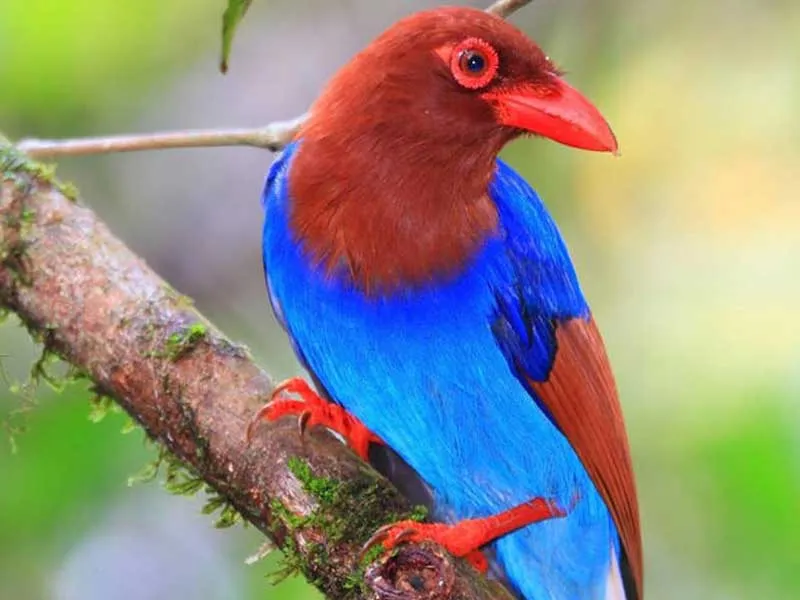 The vibrant Sri Lanka Blue Magpie (Urocissa ornata), an iconic endemic species frequently observed leading mixed-species foraging flocks.
Legendary Nature Trails: Sinhagala Peak and Mulawella
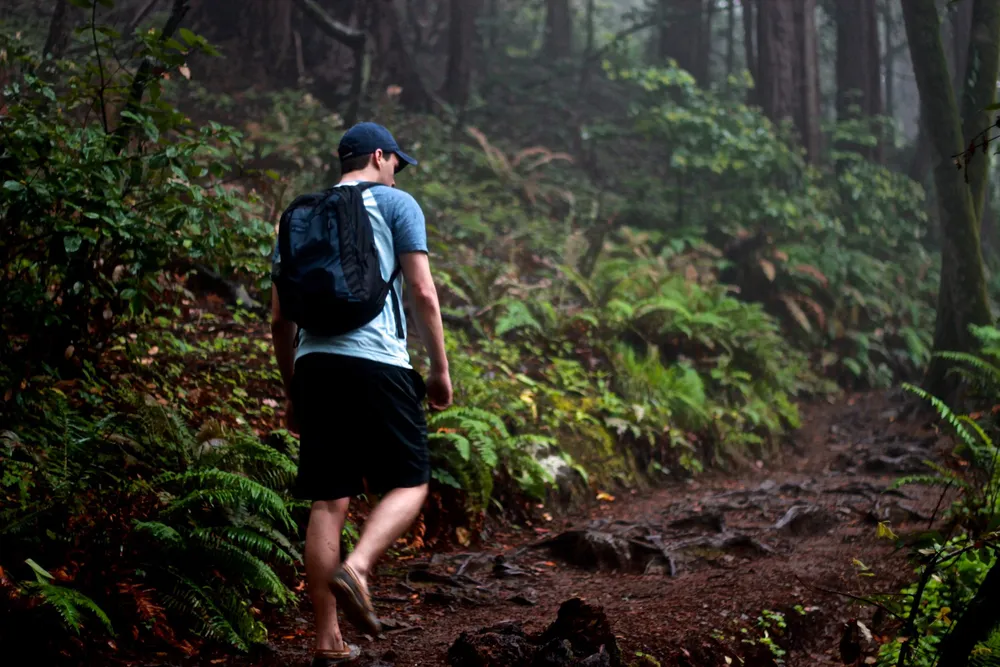
The primary gateway for exploring Sinharaja is the western Kudawa entrance, reached via the quiet hill town of Weddagala near Kalawana. From the Kudawa conservation station, well-maintained forest trails wind into the primary jungle, catering to day hikers as well as dedicated naturalists. The most famous hiking objective is Sinhagala, or Lion Rock, a steep, challenging trek of approximately fourteen kilometres round trip that typically requires five to seven hours to complete. Winding through stands of giant bamboo, past crystalline mountain rills, and under cathedral groves of virgin rainforest, the trail ascends steeply up a rugged granite ridge to reach the windswept summit of Sinhagala at 742 metres. The summit offers an unparalleled three-hundred-and-sixty-degree panorama across thousands of hectares of unbroken, emerald rainforest canopy stretching toward the distant southern horizon.
Travelers seeking a moderate half-day excursion can embark on the Mulawella Nature Trail, a picturesque circuit of approximately six kilometres that ascends to Mulawella Peak at 760 metres. The route weaves through recovering secondary forest along the reserve margins before entering dense primary jungle, traversing moss-encrusted boulder fields and crossing wooden footbridges over bubbling mountain brooks. At the summit, hikers are rewarded with commanding views over the surrounding tea country valleys and the emerald ridges of Kosgullana. Shorter interpretative loop trails surrounding the Kudawa research station offer leisurely family-friendly strolls, providing intimate looks at carnivorous pitcher plants (Nepenthes distillatoria), bioluminescent fungi, and medicinal wild herbs without demanding strenuous mountain climbs.
Southern Approaches, Cascading Waterfalls, and River Valleys
While the northern and western flanks around Kudawa attract the majority of trekking groups, the southern gateway at Pitadeniya, accessible via Deniyaya and Mideripitiya, offers an equally enchanting and notably quieter rainforest adventure. Crossing the rushing waters of the Gin Ganga across a slender suspension bridge, visitors entering through Pitadeniya step into a pristine riparian river valley renowned for dramatic waterfalls and crystalline forest cascades. The Pitadeniya sector is especially famous for the scenic waterfall circuit that connects Kekuna Ella, Pathan Oya Ella, and Kakuna Ella, where mountain streams tumble over polished black granite ledges into deep, emerald plunge pools fringed by giant river ferns and wild ginger blooms.
Farther to the east lies the remote Morning Side entrance near Rakwana, perched at elevations exceeding one thousand metres. Because of its higher altitude, Morning Side represents a rare sub-montane cloud forest eco-zone characterized by stunted, moss-laden trees, rolling mountain grasslands (patana), and chilly morning mists. This isolated sector harbors specialized micro-habitats that support localized dwarf lizards and rare highland orchids found nowhere else in the Sinharaja complex. Exploring these secluded river gorges and high ridges reveals a slower, deeply contemplative side of the rainforest, where the only soundtrack is the steady rush of mountain water, the distant hoot of monkeys, and the rhythmic percussion of falling raindrops.
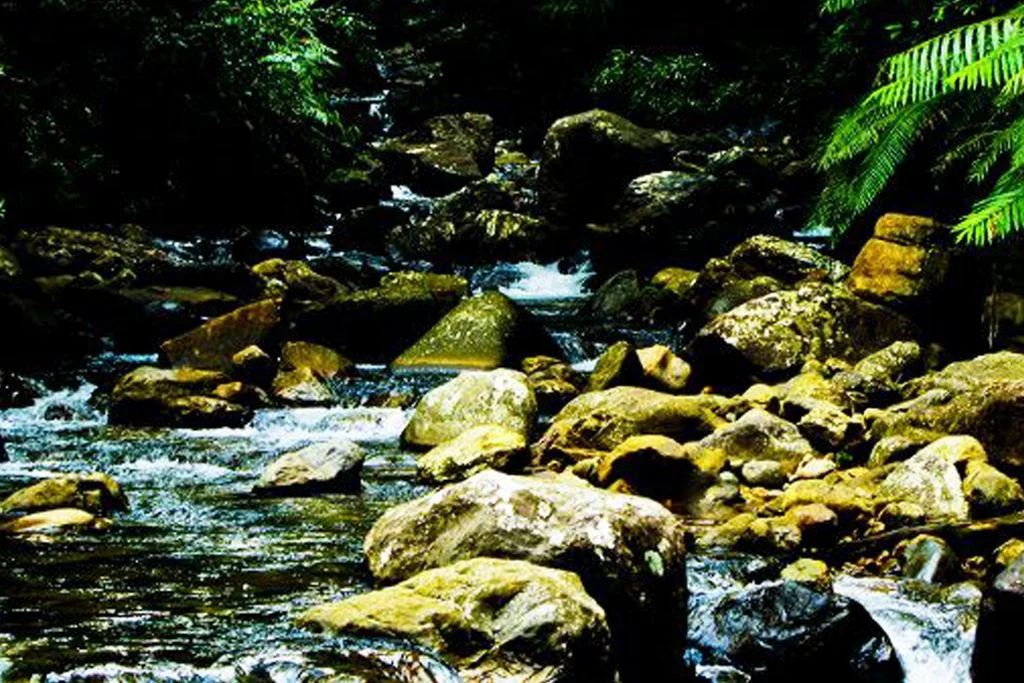 Crystal-clear mountain streams cascading over moss-draped boulders in the heart of the Sinharaja rainforest ecosystem.
Mammals, Reptiles, and Micro-Faunal Treasures
Beyond its world-class birdlife, Sinharaja provides refuge to an extraordinary array of mammals, reptiles, amphibians, and invertebrates. High in the treetops, troops of the endangered western purple-faced langur (Semnopithecus vetulus nestor) swing gracefully among the branches, their deep, guttural territorial calls echoing across the valleys at dawn. Down on the forest floor, barking deer (muntjac), wild boar, and Indian pangolins navigate ancient game trails, while elusive predators such as the fishing cat, rusty-spotted cat, and the apex Sri Lankan leopard (Panthera pardus kotiya) maintain secretive hunting territories within the dense interior core. Although sightings of large mammals are rare due to the dense vegetation, their tracks and territorial claw markings on tree trunks serve as constant reminders of their presence.
For macro photographers and herpetologists, the wet-zone undergrowth is an endless wonderland. Over fifty percent of the amphibians and reptiles dwelling in Sinharaja are endemic, including the striking green pit viper (Trimeresurus trigonocephalus), the rhinoceros-horned lizard (Ceratophora tennentii), and the fascinating kangaroo lizard (Otocryptis wiegmanni) that sprints across the leaf litter on its hind legs. Along humid stream banks, endemic tree frogs gather on broad leaves, while rare jewel-toned butterflies like the giant Ceylon Birdwing (Troides darsius)—the island’s largest butterfly—and the delicate, translucent Sri Lanka Tree Nymph (Idea iasonia) drift lazily through patches of sunlight filtering down through the canopy gaps.
Essential Trekking Advice, Seasons, and Preparation
Sinharaja Forest Reserve is open to visitors daily from 6:30 AM to 6:00 PM, with morning entries highly recommended to experience peak wildlife activity before the midday heat. Under strict conservation regulations enforced by the Department of Forest Conservation, independent wandering is strictly prohibited; all visitors must purchase entrance permits at the official conservation stations and be accompanied by a licensed, Department-accredited village naturalist. These local guides possess extraordinary tracking abilities, spotting cryptic reptiles, hidden owls, and medicinal plants that untrained eyes would easily overlook, while also providing valuable economic support to the twenty-two buffer-zone villages that border the reserve.
Due to the tropical wet-zone climate, rainfall can occur at any time, but the most favorable trekking window extends from January through April and again from August to September, when sunny intervals are more frequent and forest trails are firmer underfoot. Hikers should dress in lightweight, breathable long trousers and moisture-wicking long-sleeved shirts, sturdy waterproof hiking shoes with aggressive tread, and high-quality leech socks, which are indispensable protection against the harmless but persistent forest leeches (Haemadipsa zeylanica) that inhabit the damp leaf litter. Bringing insect repellent, a lightweight rain poncho, dry bags or silica packs for camera gear, and ample drinking water ensures a comfortable and deeply memorable expedition into this ancient rainforest wilderness.
Frequently Asked Questions About Sinharaja Rain Forest
What is the best time of year to visit Sinharaja Rain Forest?
While Sinharaja is an evergreen tropical rainforest that can be visited year-round, the most comfortable months for trekking and photography are during the relatively drier seasons from January through April and from August to September. During these intervals, rainfall is less relentless, forest trails are less muddy, and sunlight filtering through the canopy makes wildlife spotting and trail hiking significantly easier. Visiting during the wetter monsoon periods from May to July and October to December provides surging waterfalls and lush greenery, though hikers should anticipate heavy daily downpours and high leech activity.
Which entrance is best for visiting Sinharaja: Kudawa or Pitadeniya?
The Kudawa entrance near Kalawana on the northwestern side is the most popular and accessible gateway, offering the best infrastructure, easiest trail networks, the highest concentration of licensed birding guides, and access to iconic hikes such as Sinhagala and Mulawella peaks. In contrast, the Pitadeniya entrance near Deniyaya on the southern perimeter provides a tranquil, less crowded experience ideal for travelers staying on the southern coast; it features suspension bridge river crossings, scenic riverside paths, and easy access to picturesque waterfalls like Kekuna Ella. Travelers seeking remote high-altitude cloud forest can also consider the eastern Morning Side entrance near Rakwana.
Are leech socks really necessary when hiking in Sinharaja?
Yes, leech socks are strongly recommended for any walk within Sinharaja Forest Reserve. The warm, perpetually damp leaf litter is inhabited by land leeches that actively attach to passing footwear. While forest leeches do not transmit diseases and are completely harmless, their bites can cause itchiness and minor bleeding. Wearing tightly woven canvas leech socks over your standard socks, pulled high to the knee and secured over long pants, prevents leeches from accessing your skin. Naturalists also recommend rubbing soap, salt, or citronella oil on footwear as an additional deterrent.
Can I explore Sinharaja Rain Forest without a guide?
No, independent exploration is strictly prohibited by the Department of Forest Conservation to protect this fragile UNESCO World Heritage ecosystem and ensure visitor safety. Every trekking group must hire an official, Department-accredited forest tracker or naturalist guide at the ticket office before entering the reserve. These local guides have intimate knowledge of the trails, understand animal behavior, and excel at spotting cryptic species—such as camouflaged green pit vipers, endemic owls, and rare lizards—that visitors would never spot on their own.
How long does a typical trek in Sinharaja take?
Trek durations vary widely depending on your fitness level and wildlife interests. A standard introductory nature walk around the Kudawa research station or along the Pitadeniya waterfall trail typically takes between three and four hours, covering three to five kilometres at a relaxed, observational pace suitable for families and casual walkers. Serious hikers tackling the summit of Sinhagala (Lion Rock) should plan for a full-day adventure of six to eight hours covering roughly fourteen kilometres through rugged terrain, while dedicated birdwatching walks often last five to seven hours to maximize sightings across multiple feeding waves.
What wildlife species am I most likely to see during a trek?
Visitors frequently encounter a diverse spectrum of endemic birdlife, including the Sri Lanka Blue Magpie, Orange-billed Babbler, Crested Drongo, and Sri Lanka Hanging Parrot, particularly when intersecting with a mixed-species foraging bird wave. On the forest floor and tree trunks, you are very likely to observe kangaroo lizards sprinting on two legs, green pit vipers resting motionless on low branches, giant wood spiders, and troops of purple-faced langurs calling from the upper canopy. While large mammals such as leopards and wild boars inhabit the reserve, their shy nature and dense forest cover make direct encounters exceptionally rare.