Jump to Section in Guide (8)
The indigenous people of Sri Lanka, traditionally known as the Veddas (Wanniyala-Aetto, or “forest-dwellers”), represent the island nation’s aboriginal inhabitants. Regarded as the true first people and forebears of this ancient land, the Veddas possess a rich oral history, intimate knowledge of tropical ecology, and profound spiritual ties to the forest. For cultural travelers and history enthusiasts, understanding their way of life offers an invaluable glimpse into the prehistoric roots of the island. Contact our travel team to arrange respectful cultural visits or explore our 10-Day Cultural Tour.
Origin and Ancient History
According to the island’s legendary historical chronicle, the Mahavamsa, the Veddas trace their lineage back to Queen Kuveni, an indigenous Yaksha monarch, and Prince Vijaya, the exiled prince from northern India who landed on the island in the 5th century BC.
Following Vijaya’s accession to the throne and his subsequent repudiation of Kuveni, her two children fled into the deep central wilderness of Malaya Rata (the central mountain forests). Over millennia, their descendants adapted to dense jungle ecosystems, developing a specialized lifestyle rooted in hunting, foraging, and forest stewardship that evolved into the distinct Vedda community recognized today.
Traditional Hunting Methods & Sustenance
Traditionally living as nomadic hunter-gatherers, the Vedda developed sustainable subsistence methods that left minimal impact on natural habitats:
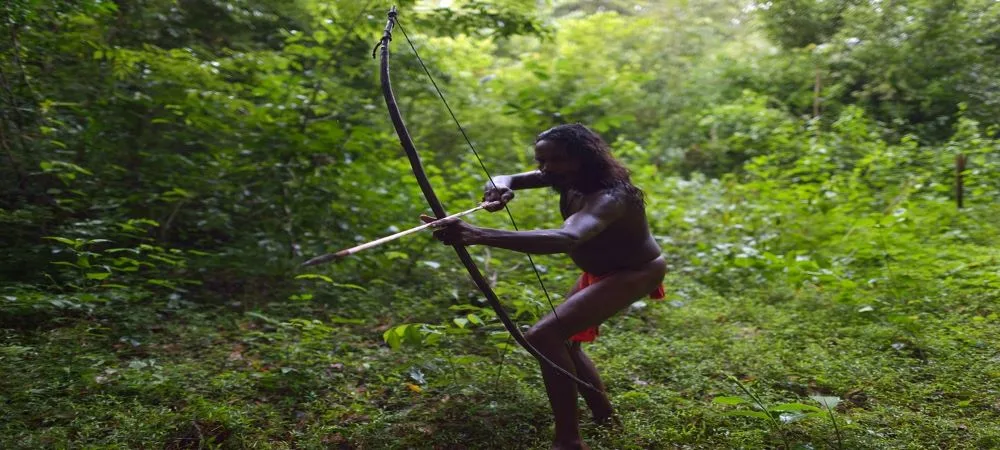
- Archery & Silent Tracking: Vedda hunters were renowned archers, using handmade longbows (dunna) and arrows (kolla) tipped with iron heads to quietly track game such as deer, wild boar, and monitor lizards.
- Ethical Hunting Code: Deep cultural customs dictated that pregnant animals, young offspring, and protected sacred beasts were never harmed. Game was strictly taken for immediate communal sustenance and distributed among clan members.
- Organic Fishing & Foraging: The Vedda utilized botanical extracts—derived from crushed bark and toxic jungle creepers—to temporarily stun fish in river pools without poisoning the watercourse.
- Chena Cultivation: In more recent centuries, some communities incorporated shifting chena agriculture, cultivating dryland crops such as finger millet (kurakkan), dry-paddy rice, and squash alongside their foraging.
Traditional Attire & Forest Livelihood
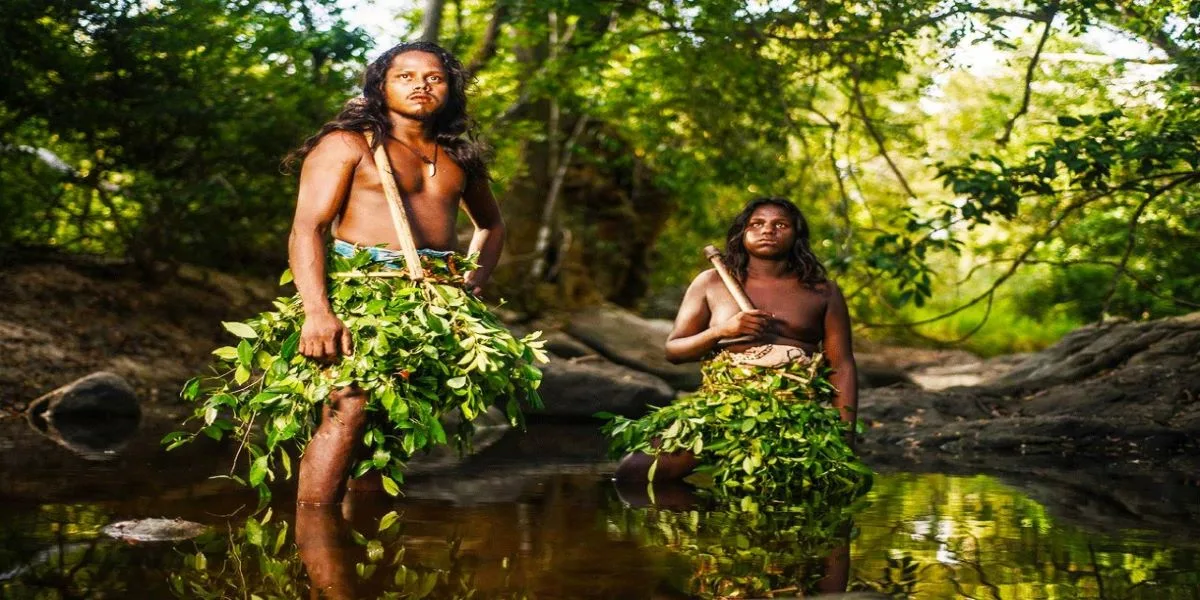
Historically, Vedda clothing was simple and crafted entirely from natural forest fibers:
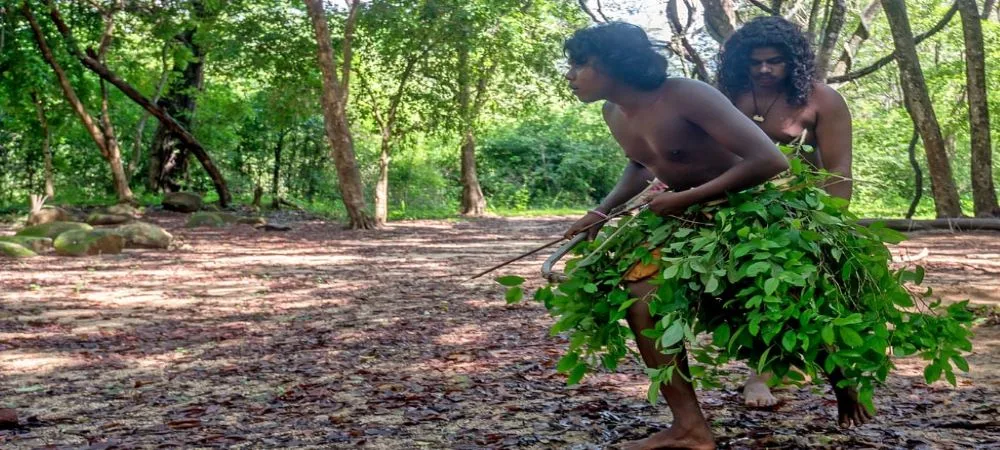
Traditionally, men wore simple loincloths secured by a waist-cord, while women wore knee-length bark-cloth wraps (riti). Today, Vedda attire has transitioned toward comfortable cotton garments—men typically wear knee-length sarongs and carry a characteristic small hand axe (keteriya) over the shoulder, while women wear traditional sarongs and blouses.
Wild Honey Gathering
One of the most celebrated and perilous seasonal traditions among the Vedda is the harvest of wild bee honey (Bambara peni). Each year around June and July, hunting parties embark on extended expeditions deep into rocky jungle bluffs:
Scale-climbers descend sheer cliff faces using handmade vines (yotu), carrying bundles of smoldering leaves to smoke out aggressive giant rock bees (Apis dorsata). The freshly harvested golden honeycomb is carried back in woven bark sacks. Beyond its culinary value, wild honey serves as a natural preservative for meat and a foundational ingredient in indigenous botanical healing.
Natural Remedies & Bone-Setting
Vedda healing relies on an intimate pharmacopeia of wild roots, bark extracts, and soothing tree saps. Renowned for their bone-setting methods and herbal poultices, elders utilize 100% natural wild remedies combined with spiritual blessings from ancestor spirits to treat injuries, snakebites, and ailments.
Spiritual Beliefs, Rituals & Ancestor Worship
The spiritual framework of the Vedda is grounded in animism and ancestor worship (Nae Yaku):
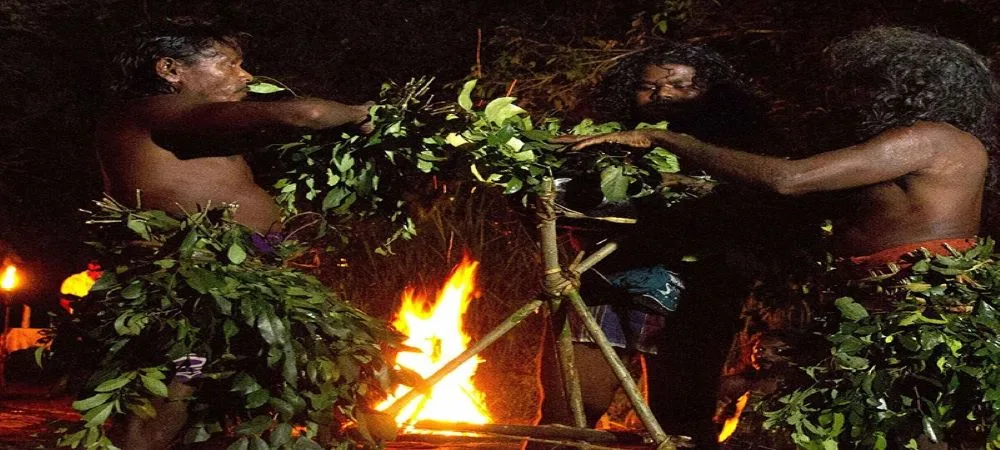
- The Nae Yaku Cult: Veddas believe that upon death, departed ancestors become benevolent guardian spirits (Yaku) who watch over hunting grounds, crops, and families.
- Shamanic Invocations: During ritual ceremonies (Kiri Koraha), tribal shamans enter trances, dancing to rhythmic drumming and chanting invocations to communicate with ancestral spirits, seeking guidance and hunting fortune.
- Marriage Customs: Vedda marriage remains an unpretentious communal ceremony. It is traditionally formalized when the bride ties a hand-twisted bark string (Diya lanuva) around the groom’s waist, symbolizing mutual trust and lifelong companionship.
- Burial Traditions: The deceased are traditionally laid to rest with minimal pomp in quiet forest graves, accompanied by their personal bow, arrows, and betel pouch.
Music, Poetry and Oral Traditions
Song and dance play an essential role in passing ecological lore and tribal memory across generations. Traditional chants celebrate wild honey collection, successful hunts, and sacred animal spirits:
“Bori Bori Sellam-Sellam Bedo Wannita,
Palletalawa Navinna-Pita Gosin Vetenne,
Malpivili genagene-Hele Kado Navinne,
Diyapivili Genagene-Thige Bo Haliskote Peni,
Ka tho ipal denne”— Traditional Vedda Honey-Cutter’s Folk Song
This ancient folk song honors the mountain bees gathering flower nectar across distant hills, reminding the honey gatherer to honor nature and harvest with restraint. The Vedda language also includes traditional lullabies considered among the oldest surviving lullabies in South Asia, preserving phonetic structures distinct from modern Sinhala.
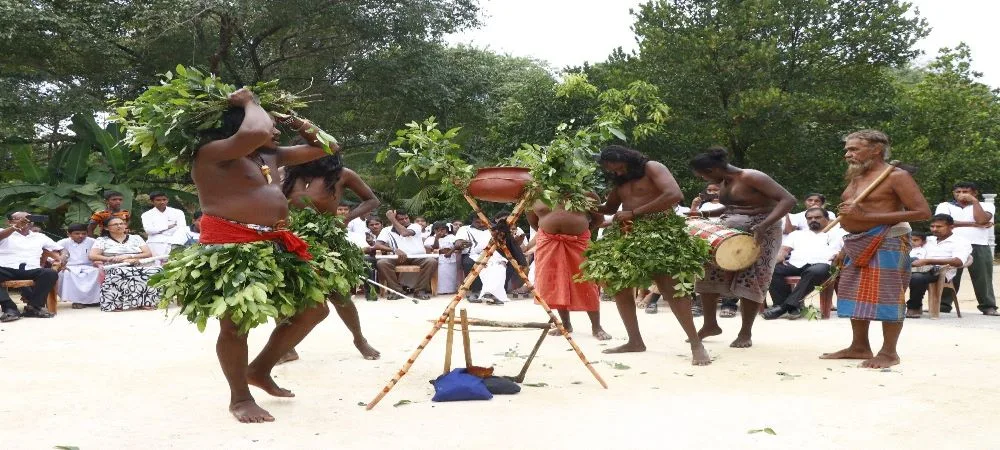
Visiting Vedda Communities with Respect
For travelers eager to discover traditional island culture, visits to ancestral settlements around Dambana (near Mahiyanganaya) and Henanigala offer a rare cultural exchange.
Accompanied by a respectful, authorized local guide, visitors can meet tribal chieftains, observe traditional bow-and-arrow craft, learn how fire is generated with flint and iron, and purchase authentic, ethically harvested wild forest honey.
Understanding and respecting the Vedda people’s heritage helps preserve this priceless indigenous legacy amid the rapid currents of modern development.
Contact our travel team at Overa Tours to design a respectful, ethically guided cultural tour that brings you face-to-face with the ancient traditions of the island.