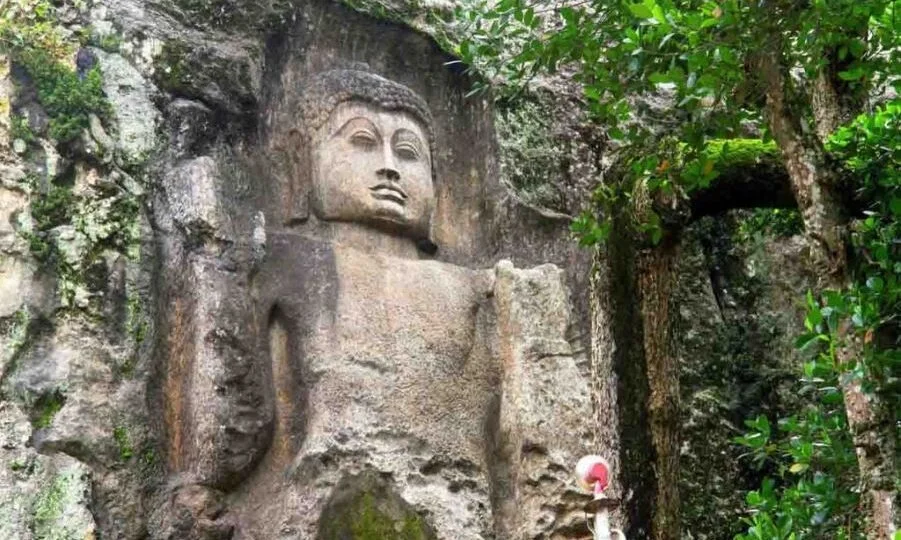
Nestled in a peaceful valley between Ella and Bandarawela, the Dhowa Rock Temple (Dhowa Raja Maha Viharaya) is an ancient 2,000-year-old heritage sanctuary renowned for its colossal 38-foot unfinished rock-carved Buddha statue and well-preserved Kandyan-era cave paintings.
Historical Significance
Tracing its origins back to the 1st century BC during the reign of King Walagamba, the sanctuary served as a hidden monastic retreat during times of foreign invasion. The monumental standing Buddha, sculpted directly into the sheer granite rock face, displays distinct Mahayana artistic influences and remains one of the central highlands’ most impressive rock sculptures.
What to See and Highlights
- The 38-Foot Rock-Cut Buddha: The centerpiece of the temple, a majestic standing figure carved directly into the cliff wall, enveloped by native trees and hanging vines.
- The Cave Shrine Room: A secluded rock cave housing vibrant Kandyan-period murals illustrating Jataka tales, celestial deities, and traditional lotus motifs alongside seated and reclining Buddha statues.
- The Secret Cave Tunnel: Local legend recounts an ancient underground subterranean network believed to have connected Dhowa with Ravana Cave and the Bogoda wooden bridge.
- Picturesque Mountain Stream: A clear natural stream flows past the foot of the temple grounds, enhancing the peaceful monastic setting.
Practical Visitor Information
- Location: Situated along the Badulla-Bandarawela main road, approximately 6 km from Ella town (a 15-minute drive by tuk-tuk or private vehicle).
- Opening Hours: Daily from 6:00 AM to 6:00 PM.
- Dress Code: Modest temple attire covering shoulders and knees is strictly required, with footwear removed before entering the shrine.
- Best Time to Visit: Morning or late afternoon offers pleasant mountain temperatures and soft, natural lighting for viewing the rock carvings.
- Nearby Attractions: Pair your visit effortlessly with the Nine Arch Bridge and Ravana Falls.