Anuradhapura is a city of immense cultural significance and one of the most venerable ancient capitals on the island. Serving as the capital of the North Central Province and the administrative seat of the Anuradhapura District, this historic metropolis was the third royal capital of the Rajarata kingdom, following the earlier settlements of Tambapanni and Upatissa Nuwara. For well over a millennium, Anuradhapura flourished as the epicenter of Theravada Buddhism, producing architectural marvels, grand monasteries, and sophisticated hydraulic networks that remain unrivaled in South Asia.
Situated approximately 205 kilometers (127 miles) north of Colombo along the historic banks of the Malvathu River, Anuradhapura is recognized as one of the oldest continuously inhabited cities on earth. Inscribed as a UNESCO World Heritage Site in 1982, the sacred city preserves an astonishing tapestry of living spirituality, monumental brick stupas, and serene monastic sanctuaries.
The History of Anuradhapura
Founded in the 5th century BCE and formally designated as the royal seat by King Pandukabhaya around the 4th century BCE, Anuradhapura served as the capital of Sri Lanka’s Sinhalese civilization until the 11th century CE. During this extended golden era, the city withstood shifts in dynastic rule and occasional foreign invasions, continuously refining its philosophical, artistic, and agricultural traditions. By the late 10th and early 11th centuries, severe South Indian invasions forced the royal court to shift eastward to Polonnaruwa.
Following the royal relocation, dense dry-zone forest gradually reclaimed much of the royal palaces and peripheral monasteries. However, local monastic communities and faithful pilgrims never fully abandoned the core shrines. The city underwent systematic rediscovery and documentation under British archaeological surveys during the 19th century, sparking a cultural resurgence beginning in the 1870s. During the mid-20th century, the modern administrative town was strategically relocated eastward to establish a preserved archaeological sanctuary, allowing systematic excavations while safeguarding sacred pilgrimage grounds.
What to See in the Sacred City
Within this pre-Christian planned city, travelers encounter a remarkable array of Buddhist monasteries, royal pavilions, ceremonial gardens, granite bathing pools, and colossal irrigation reservoirs. Anuradhapura was conceived with structured urban planning: the inner sanctum was reserved for the monarch, royal court, and administrative functions, while surrounding suburbs accommodated major monastic communities, artisans, and trading hubs.
Jaya Sri Maha Bodhi
The Jaya Sri Maha Bodhi stands as the spiritual heart of Anuradhapura. Planted in 288 BCE from a southern cutting of the historical Bodhi tree in Bodh Gaya under which Siddhartha Gautama attained enlightenment, it is the oldest surviving human-planted tree with a documented planting date in recorded history. Sheltered on an elevated terrace surrounded by gilded railings and ancient stone walls, this sacred fig tree attracts thousands of pilgrims who offer fragrant frangipani blossoms and colorful prayer flags every day.
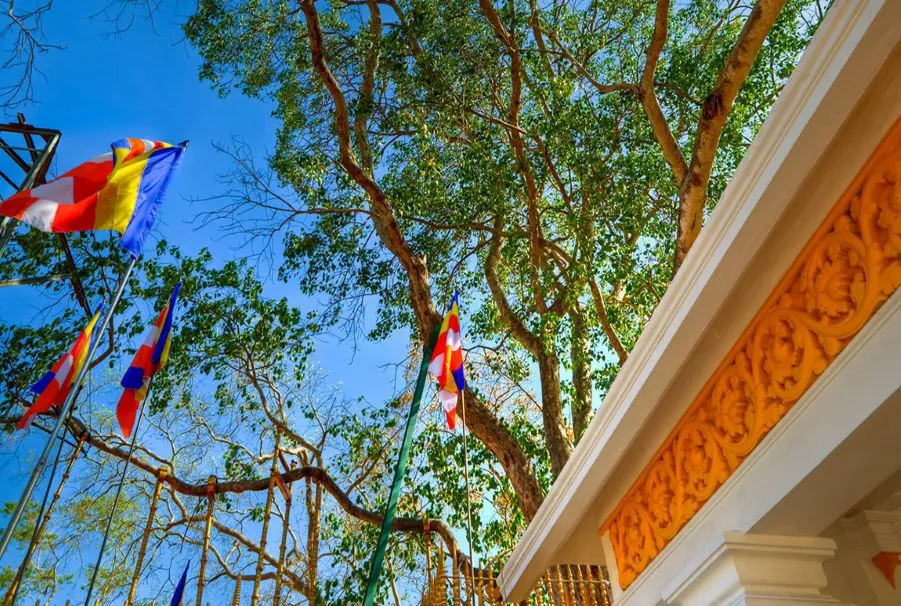 The sacred Jaya Sri Maha Bodhi tree, the oldest historically documented human-planted tree in the world.
Ruwanweliseya Maha Stupa
Rising majestically above the Mahamewna Gardens, the Ruwanweliseya (also known as the Maha Stupa) was commissioned by King Dutugemunu in the 2nd century BCE to enshrine sacred relics of the Buddha. Surrounded by a striking perimeter wall featuring hundreds of life-sized sculptured elephant heads standing shoulder to shoulder, the gleaming white dome remains one of the most venerated monuments in the Buddhist world.
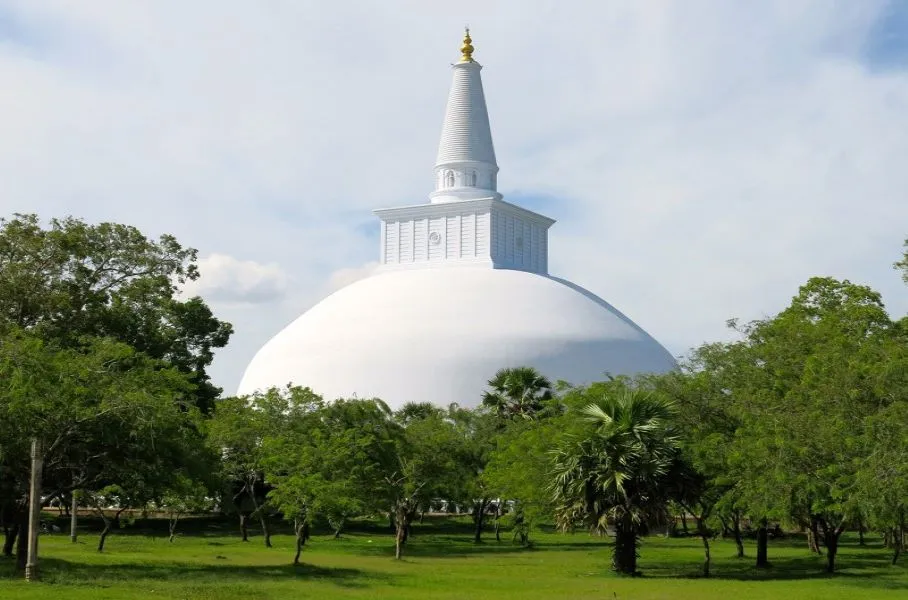 The gleaming white dome of Ruwanweliseya Maha Stupa, one of the most venerated monuments in the Buddhist world.
Abhayagiri Monastery and Stupa
The vast Abhayagiri Monastery complex was established in the 1st century BCE by King Valagamba. Over subsequent centuries, it grew into a premier international Buddhist university housing more than five thousand resident monks and scholars from across Asia, including the famous Chinese pilgrim monk Faxian. The central stupa once soared over 100 meters high, set amidst tranquil monk residences, meditation refectories, and ornate granite gateways.
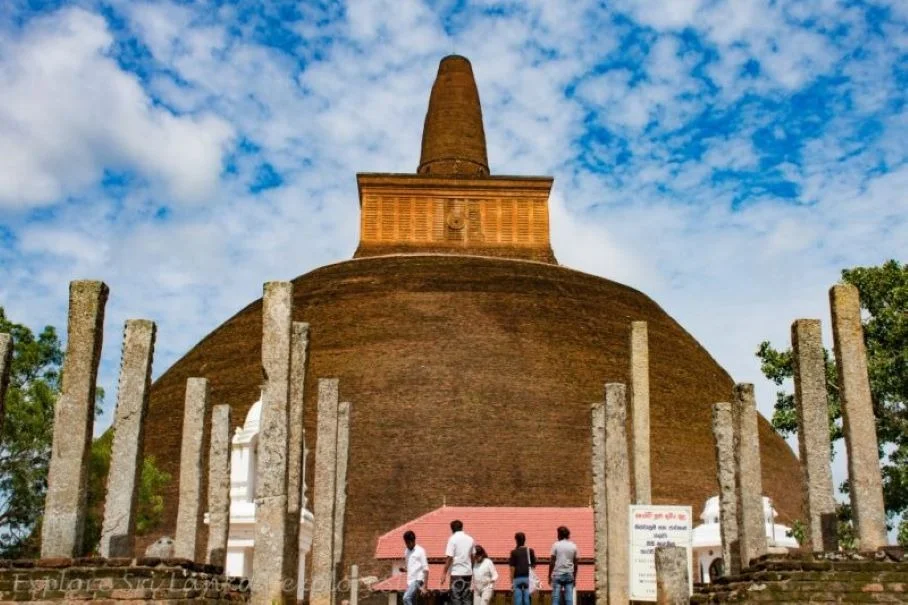 The monumental stupa and historic monastic grounds of the ancient Abhayagiri Buddhist university.
Jetavanaramaya Monastery
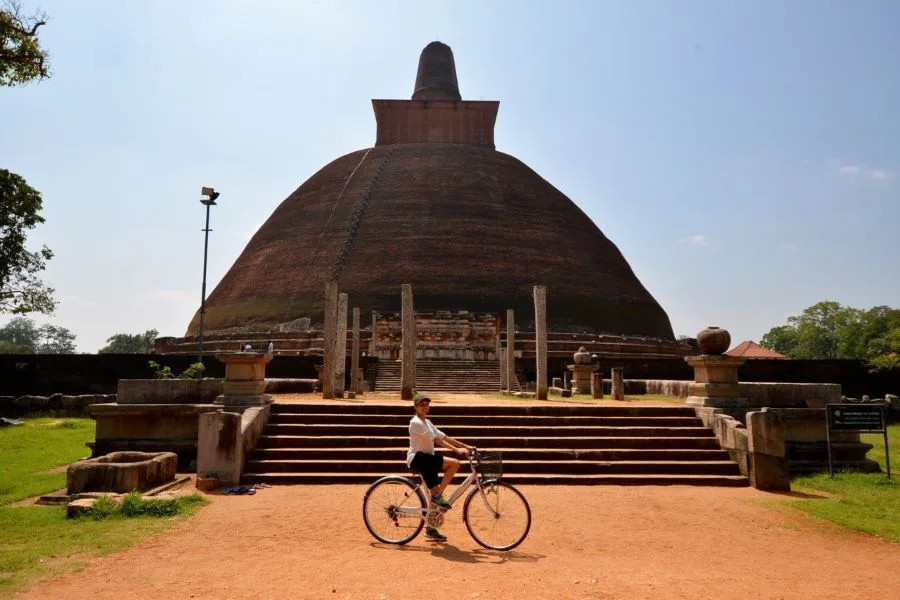
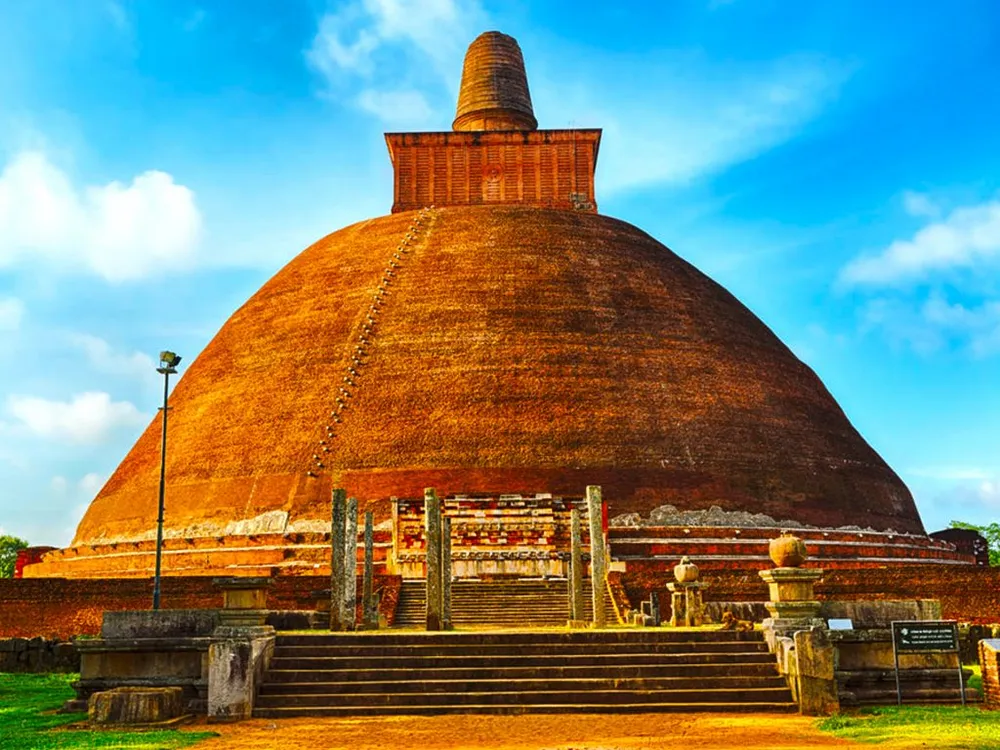
Built in the 3rd century CE by King Mahasena, the Jetavanaramaya Monastery represents one of the greatest engineering feats of the classical world. With an estimated ninety-three million baked clay bricks in its core, the stupa was the third tallest structure in antiquity, surpassed only by the Great Pyramids of Giza. According to traditional records, the monument enshrines a portion of the sash or belt tied by Gautama Buddha.
Isurumuniya and the Royal Pleasure Gardens
Positioned against picturesque rock boulders adjacent to the embankment of the Tissa Wewa reservoir, the ancient rock temple of Isurumuniya houses world-renowned granite carvings, including the delicate 6th-century sculpture of the Isurumuni Lovers, a seated warrior beside a horse head, and playful bathing elephants emerging from stone water lines. Directly adjoining the precinct lie the Ranmasu Uyana, or ancient Royal Pleasure Gardens, featuring intricate 2,000-year-old twin goldfish ponds, stone-cut bathing chambers, and ancient astronomical rock glyphs.
Kuttam Pokuna (The Twin Ponds)
Demonstrating the sophisticated hydraulic engineering of the Anuradhapura era, the Kuttam Pokuna served as ceremonial bathing pools for the monks of the Abhayagiri fraternity. Built with precision-cut granite tiers, ornate entrance flights decorated with punkalas (pots of abundance), and advanced sub-surface filtering systems, these twin pools highlight the pinnacle of ancient architectural aesthetics and plumbing expertise.
Ancient Wonders of Engineering and Hydraulics
The ancient stupas and reservoirs of Anuradhapura represent crowning achievements in classical civil engineering. To support immense populations and extensive agricultural projects in the dry plains, Anuradhapura’s rulers engineered an intricate system of massive artificial reservoirs—including the Tissa Wewa, Nuwara Wewa, and Basawakkulama (Abhaya Wewa). These reservoirs were interconnected by gentle-gradient canals, feeding water into monastic bathing ponds and paddy fields across hundreds of square miles.
Equally impressive is the architectural foresight embedded within the city’s stupas. Master builders utilized specialized mortar mixes, foundation stabilizing layers of crushed stone and clay, and precise conical geometry. Ancient chroniclers note that stupa crowns incorporated lightning-grounding conductors crafted from copper and precious metals centuries ahead of Western developments.
Things to Do and Experiencing the Living City
Unlike the purely archaeological, museum-like environment of Polonnaruwa, Anuradhapura remains a thriving spiritual sanctuary where ancient rituals, monastic chanting, and daily pooja offerings continue unbroken.
Cycling Through Ancient Monastic Pathways
Because the sacred city spans dozens of square kilometers, exploring the wide paved avenues, forest tracks, and reservoir dikes by bicycle offers an unforgettable perspective. Cycling allows you to glide effortlessly between secluded monasteries, ancient moonstones (Sandakada Pahana), and towering stupas beneath the shade of towering tamarind and mahogany trees.
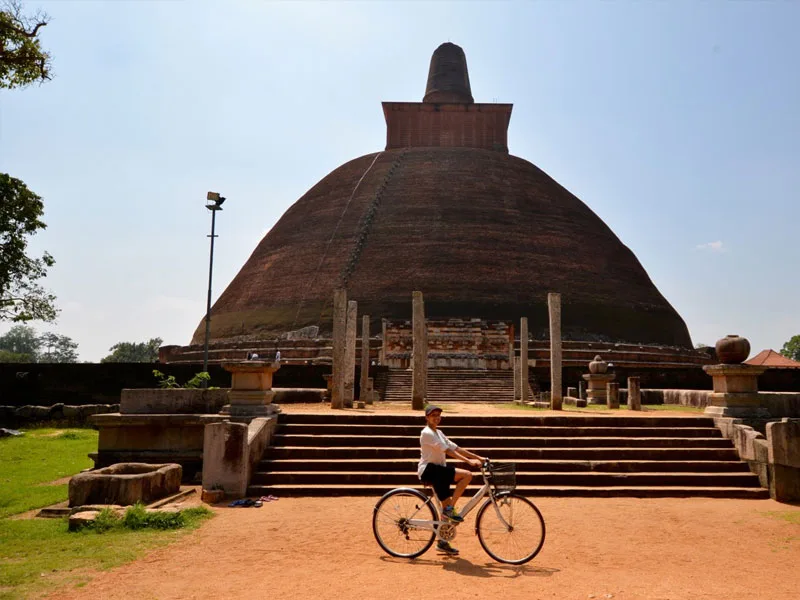 Cycling along tranquil, tree-shaded monastic pathways across the sprawling ruins of Anuradhapura.
Evening Pooja Ceremonies and Night Illumination
As dusk falls across the Rajarata plains, the enormous domes of Ruwanweliseya and Jetavanaramaya are illuminated by golden floodlights against the dark tropical sky. Joining local devotees dressed in modest white clothing as they light oil lamps, burn fragrant incense, and recite ancient Pali suttas provides a tranquil cultural experience that leaves a lasting impression.
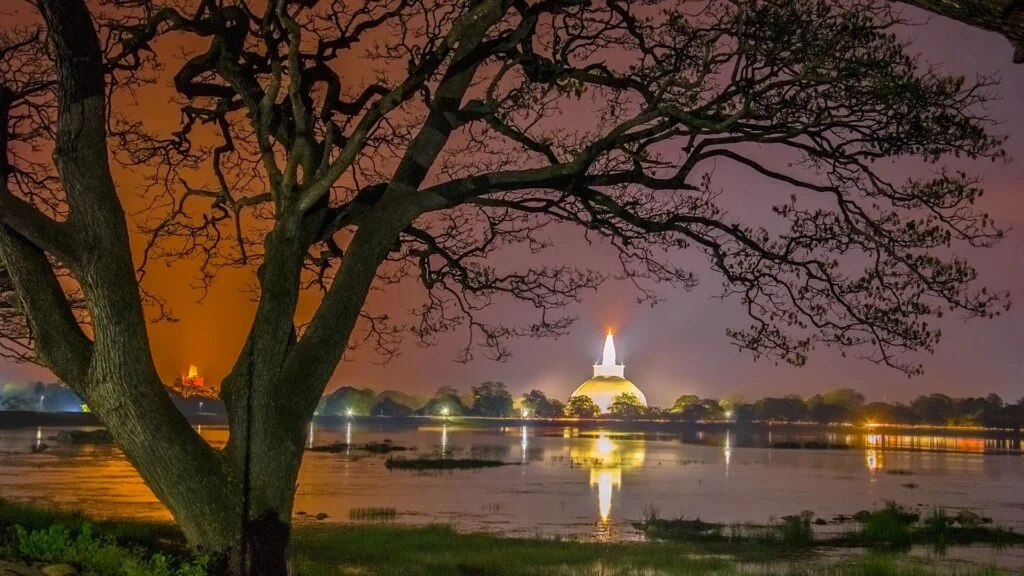 The grand stupas of Anuradhapura illuminated by golden floodlights during evening devotional pooja ceremonies.
Day Excursions to Mihintale and Wilpattu
Anuradhapura serves as an ideal base for exploring northern landmarks. Just twelve kilometers to the east lies Mihintale, the sacred mountain sanctuary where Buddhism was first introduced to the island in 247 BCE. To the west lies Wilpattu National Park, renowned for its natural freshwater lakes (villus), dense forests, and high density of leopards, sloth bears, and wild elephants.
Essential Visitor Information
Visiting the sacred city requires modest preparation to ensure respect for local customs and comfort in the tropical climate. The archaeological complexes and sacred temple grounds remain accessible daily from 6:00 AM to 8:00 PM, with early morning and late afternoon hours providing the coolest conditions and finest photography light.
Because Anuradhapura is an active pilgrimage destination, all visitors must dress respectfully with shoulders and knees covered. White or light-colored attire is customary and widely appreciated by locals. Footwear and headwear must be removed before stepping onto the elevated stone terraces of stupas and shrines, so carrying a pair of thick socks is helpful to protect feet against sun-warmed granite flagstones.
The Central Cultural Fund ticket office issues round tickets for the major archaeological zones and on-site museums, whereas living shrines such as Jaya Sri Maha Bodhi and Ruwanweliseya are operated independently by temple trustees and require no cultural ticket. Given the vast distances separating complexes across the ancient capital, exploring by bicycle, tuk-tuk, or an air-conditioned private vehicle with an experienced driver-guide ensures a seamless journey.
Our bespoke itineraries, including the 10-Day Ancient Kingdoms Heritage Trail and the Cultural Triangle & Galle Fort tour, feature seamless private transport, handpicked heritage hotels, and expert local guides. To curate your journey through the ancient kingdom, contact our travel specialists.
Frequently Asked Questions
What is the entrance fee for the Anuradhapura Ancient City?
The Central Cultural Fund (CCF) round ticket for international visitors costs approximately USD $30 for adults and USD $15 for children aged 6 to 12 as well as SAARC citizens. This ticket covers the main archaeological museums, the Jetavanaramaya museum and stupa complex, and the Abhayagiri monastery precinct. Independent living pilgrimage sites such as the Jaya Sri Maha Bodhi and Ruwanweliseya can be visited without the CCF ticket, though small voluntary donations for temple preservation are appreciated.
How much time should I spend exploring Anuradhapura?
Most travelers allocate at least one full day to explore the primary stupas, ancient monasteries, and sacred trees. If you plan to explore the extensive ruins by bicycle, visit the surrounding museums, and take an excursion to nearby Mihintale, dedicating two days allows for a relaxed and immersive pace.
What is the dress code when visiting Anuradhapura?
Because Anuradhapura is one of the most sacred pilgrimage destinations on the island, strict modesty guidelines apply. Visitors must wear clothing that covers both shoulders and knees. White or pale clothing is strongly encouraged and signifies reverence. Footwear and headwear must be removed before entering any stupa terrace or temple precinct.
How does Anuradhapura differ from Polonnaruwa?
While Polonnaruwa features well-preserved medieval ruins concentrated in a compact archaeological park, Anuradhapura is significantly larger, older, and remains an active spiritual sanctuary. Thousands of local worshippers visit Anuradhapura's stupas and sacred Bodhi tree daily, creating a vibrant atmosphere of living faith that contrasts with the museum-like setting of Polonnaruwa.
What is the best way to get around the ancient city?
The ancient city covers a vast geographical area of over sixteen square miles. Bicycles are popular for active travelers during early mornings and late afternoons. For maximum convenience and shelter from the tropical heat, exploring with a private vehicle and chauffeur-guide allows you to travel comfortably between distant complexes like Kuttam Pokuna, Jetavanaramaya, and Isurumuniya.
Can I visit Anuradhapura in the evening?
Yes, visiting in the evening is one of the most atmospheric experiences in Anuradhapura. Sites such as Ruwanweliseya and Jaya Sri Maha Bodhi remain open past sunset under warm floodlights, allowing visitors to witness evening pooja rituals, oil lamp ceremonies, and devotional chanting without midday heat.