Perched upon a rugged promontory jutting into the Indian Ocean, Galle Dutch Fort is South Asia’s most exceptionally preserved European colonial citadel and a UNESCO World Heritage treasure.
Enclosed within massive ramparts of coral and granite, this 36-hectare fortified city is a living monument where four centuries of history breathe through cobblestone lanes, red-tiled Dutch rooflines, stately colonial churches, and vibrant local life. Unlike static museum fortresses, Galle Fort remains a thriving, cosmopolitan community where multi-generational families, artisan workshops, chic boutiques, and world-class cafes coexist within an impregnable seventeenth-century maritime stronghold.
Four Centuries of Colonial and Maritime History
Long before European sails appeared on the horizon, the natural harbour of Galle served as a bustling entrepot for ancient seafaring civilizations. Classical historians link the port to the biblical trading hub of Tarshish, while Ptolemy charted it in the second century as Point de Galle. Arab navigator Ibn Battuta anchored in its sheltering bay in 1344, and the Chinese admiral Zheng He erected a trilingual stone tablet here in 1411, commemorating friendship across oceanic trade lanes.
The colonial era began in 1505 when a Portuguese fleet commanded by Lourenco de Almeida was blown off course by treacherous monsoon currents and sought refuge in Galle Bay. Recognizing the strategic value of the rocky peninsula, the Portuguese constructed a permanent fortified trading post named Santa Cruz in 1588. Following a ferocious siege in March 1640, the Dutch East India Company (VOC) under Willem Jacobsz Coster stormed the fortifications, expelling the Portuguese and establishing their southern administrative commandment on the island.
Over the ensuing nine decades, Dutch engineers transformed the modest Portuguese outpost into a massive coastal citadel. By 1729, an unbroken ring of thick granite walls and fourteen imposing bastions enclosed the town, engineered to withstand heavy naval bombardment and tropical monsoons alike. In 1796, control passed peacefully to the British, who governed until national independence in 1948. While British authorities added modern gateways and civic landmarks, they conscientiously preserved the original Dutch town layout and ramparts, allowing Galle Fort to survive into the modern era as an extraordinary architectural time capsule.
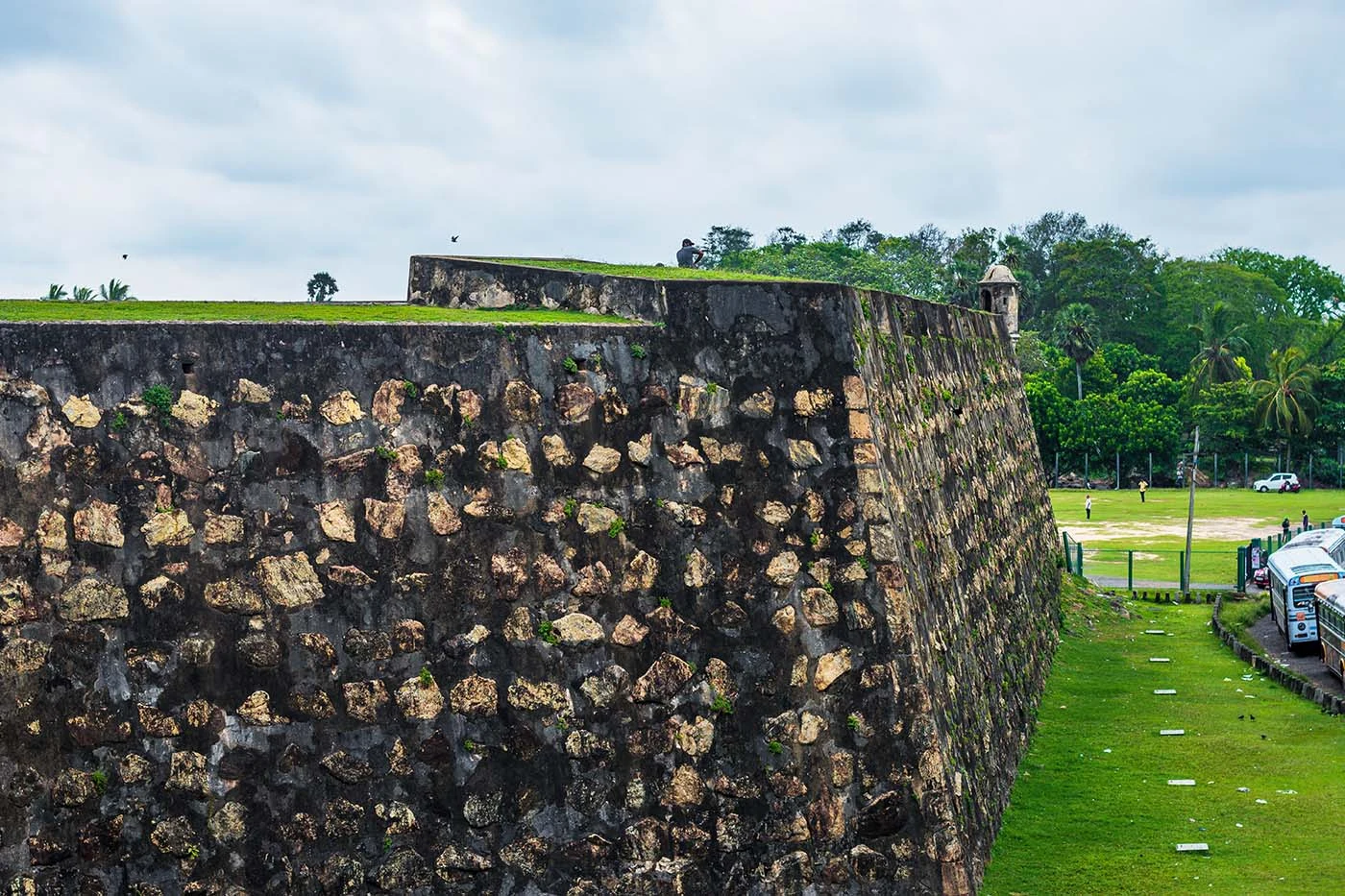 Walking the 17th-century coral-and-granite ramparts overlooking the Indian Ocean.
The Ramparts and the Circuit of Bastions
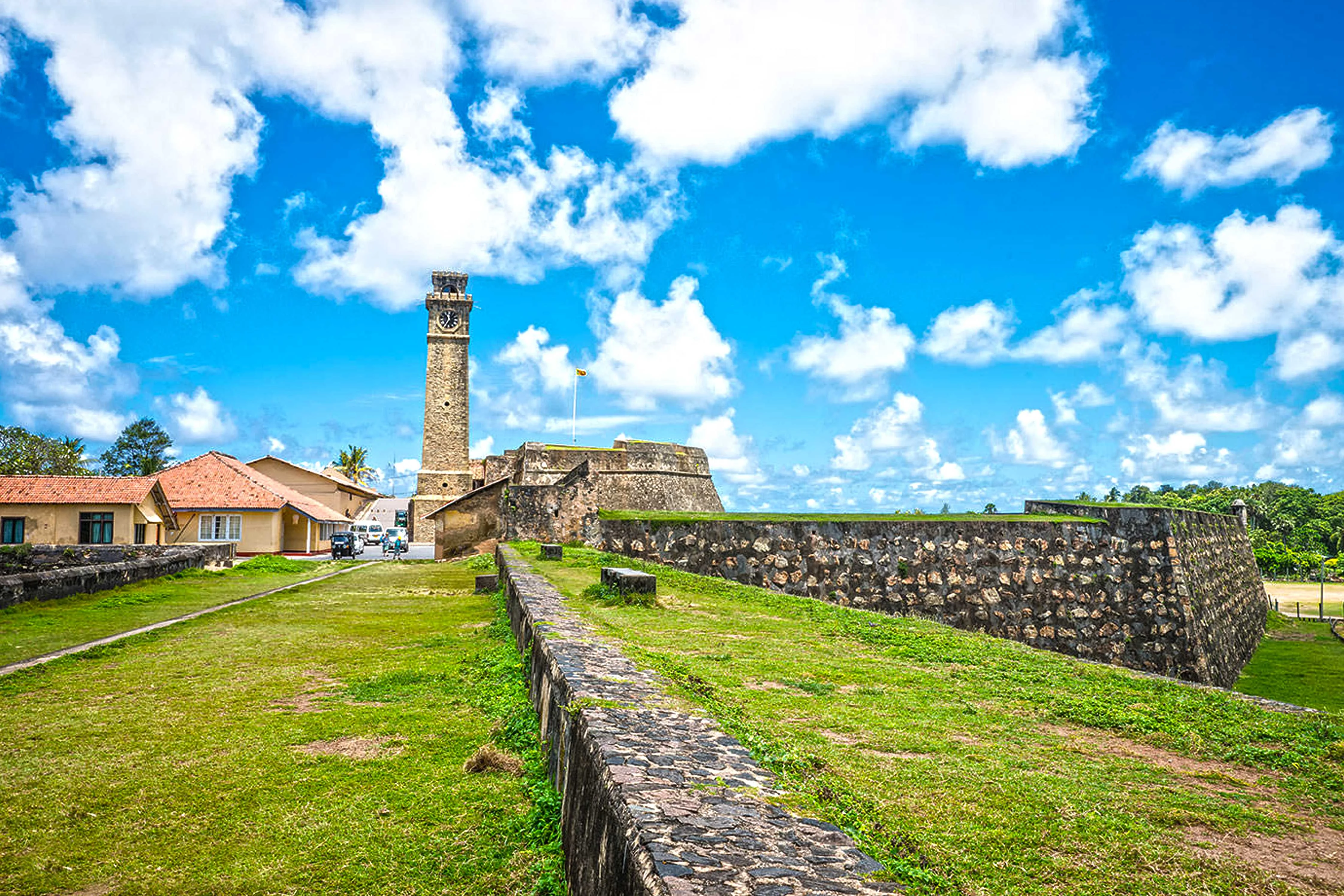
Walking the perimeter ramparts of Galle Fort is one of the quintessential heritage experiences in the region. Spanning approximately three kilometres, the elevated stonework offers panoramic vistas of the churning Indian Ocean on three sides and the historic cricket stadium on the landward side. The formidable landward defense is anchored by three colossal interconnected bastions—Star, Moon, and Sun—designed to provide crossfire coverage against potential overland incursions from the Kandyan kingdom.
The central bastion, Moon Bastion, forms the largest fortification in the citadel and was historically armed with nineteen heavy bronze cannons. Rising proudly above its grassy parapet is the iconic Victorian Clock Tower, constructed in 1883 through public subscriptions to honor Dr. P.D. Anthonisz, a revered local physician and legislative council member. Proceeding clockwise along the seaward walls leads to Black Fort, the oldest surviving military structure in the citadel and the lone remaining bastion from the Portuguese era.
Continuing southward, visitors encounter Akersloot Bastion, named after the birthplace of Dutch commander Coster, followed by Aurora Bastion and the picturesque Point Utrecht Bastion. Further along stands Flag Rock Bastion, once utilized as a nautical signalling station where lookouts hoisted flags to warn approaching vessels of hazardous submerged reefs. Today, Flag Rock is famous for local daredevil cliff jumpers who leap fearlessly from the bastion into the surging breakers below, as well as for being the premier gathering point for watching dramatic tropical sunsets.
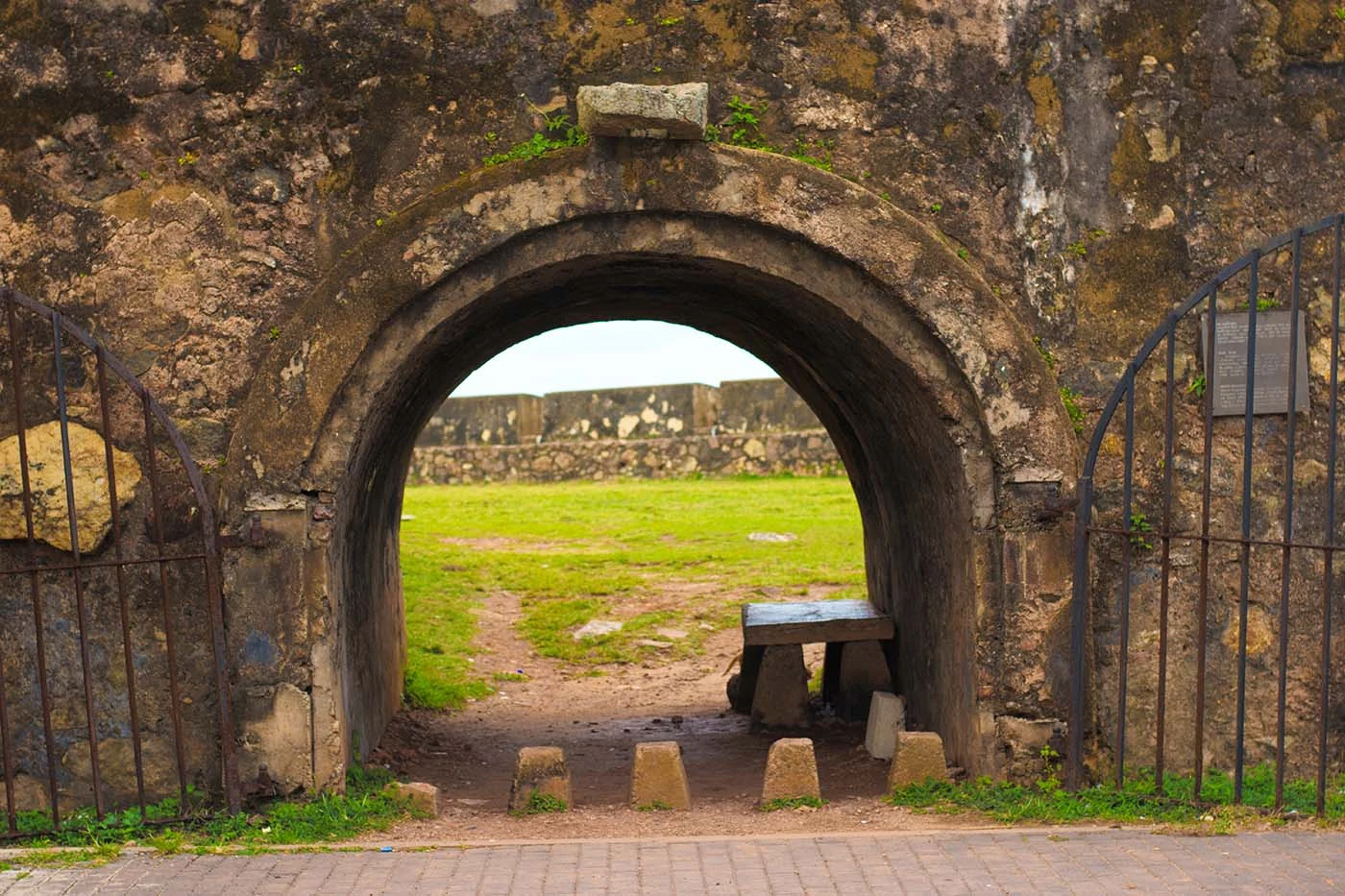 Colonial stone gateways and weathered bastion walls that have stood since the Dutch era.
Historic Landmarks and Colonial Monuments
Within the fortified perimeter, Galle Fort preserves an extraordinary ensemble of religious, civic, and maritime monuments. Crowning the highest elevation inside the citadel is the Dutch Reformed Church, known as the Groote Kerk, consecrated in 1755. Commissioned by Commandeur Casparus de Jong as an act of thanksgiving for the long-awaited birth of his daughter, the church features a Greek cross floor plan, classic Doric gables, a carved calamander wood pulpit, and a floor paved with weathered gravestones from the seventeenth-century Dutch cemetery.
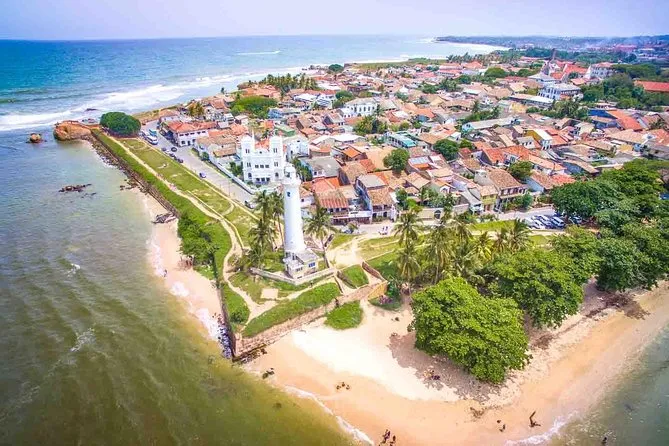
Just down Church Street stands All Saints’ Church, a magnificent Victorian Gothic Revival Anglican cathedral consecrated in 1871. Designed by British government architect J.G. Smithers, the basilica features lofty stone arches carved from local laterite kabok rock, intricate teak ceiling rafters, and radiant stained-glass windows that flood the sanctuary with kaleidoscopic light. Near the lighthouse, the Meeran Jumma Mosque displays an intriguing architectural fusion, where pristine whitewashed baroque gables and Victorian arched windows give the outward appearance of a European cathedral while housing a historic Islamic prayer sanctuary established by the fort’s Moorish merchant community.
Maritime heritage is commemorated at the National Maritime Museum, housed inside the cavernous Dutch Warehouse built in 1671. This fortress-like building features massive masonry walls and stout timber pillars built directly into the rampart to absorb cannon fire. Beneath the warehouse arches runs the Old Gate, the citadel’s original ocean-facing portal, featuring the carved VOC coat of arms flanked by lions on the interior archway and the 1796 British Royal Arms on the seaward facade. At the southernmost bastion of Point Utrecht stands the gleaming white Galle Lighthouse, erected in 1939 to replace an earlier Victorian light, casting its beam twenty-five nautical miles across crucial shipping channels.
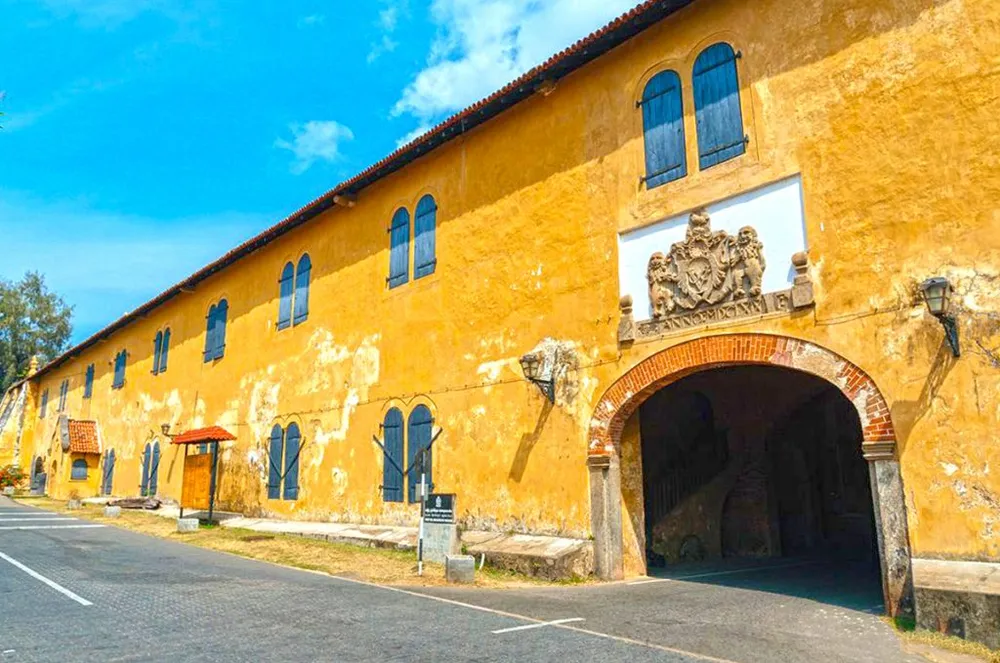 The cavernous 1671 Dutch warehouse at the Old Gate, now preserving the island’s rich maritime heritage.
The Living Fort: Colonial Streets, Boutiques, and Heritage Dining
What elevates Galle Dutch Fort beyond other historic fortifications is its vibrant, unbroken residential rhythm. A structured grid of quiet avenues—including Church Street, Pedlar Street, Leyn Baan Street, and Rampart Street—is lined with handsome single and double-storey Dutch colonial townhouses. These residences feature signature architectural elements such as deep colonnaded verandas that shelter pedestrians from midday sun, central internal courtyards that draw cooling ocean air, and decorative fanlight transoms above solid teak doors.
In recent decades, careful heritage conservation has transformed these historic residences into boutique sanctuaries. Visitors can wander between artisanal jewelry studios specializing in Ceylon sapphires and moonstones, traditional beeralu lace-making workshops where local women demonstrate delicate bobbin lace techniques introduced during Portuguese rule, and contemporary art galleries showcasing renowned southern artists. Dining within the fort is equally refined, ranging from intimate heritage bistros serving clay-pot seafood curries to stylish courtyard cafes offering tropical fruit gelato and high tea.
Surrounding Coastal Attractions and Leisure Experiences
Beyond the stone ramparts, Galle serves as a gateway to the southern coast’s finest coastal adventures and cultural landscapes. Immediately outside the Main Gate sits the world-famous Galle International Cricket Stadium. Flanked by the ocean on two sides and shadowed by the majestic ramparts of Moon Bastion, it is universally celebrated as the most scenic cricket ground on earth, where test matches unfold against the dramatic backdrop of Dutch ramparts.
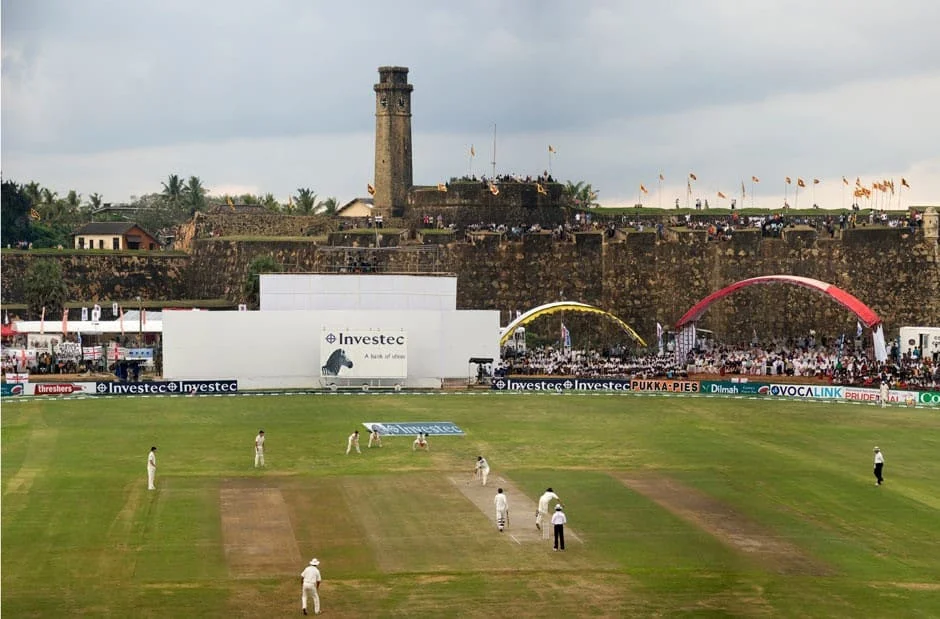 Test cricket with an unmatched view: Galle International Stadium framed by the fort ramparts and clock tower.
A short journey eastward brings travelers to the palm-fringed shores of Unawatuna Bay, renowned for its sheltered waters, coral reef snorkeling, and vibrant beachfront dining. Tucked around the neighboring headland lies Jungle Beach, a tranquil cove enclosed by coastal forest where calm conditions provide exceptional swimming. Further down the coast, Dalawella Beach features a protected natural reef lagoon where wild sea turtles glide peacefully through turquoise shallows, alongside the iconic palm tree rope swing made famous worldwide.
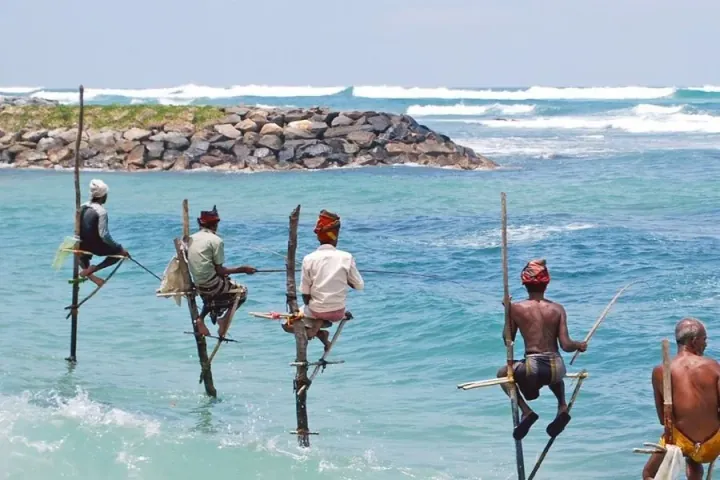
Cultural exploration continues at Yatagala Raja Maha Viharaya, an ancient rock cave temple dating back over two millennia, nestled amidst colossal granite boulders just inland from the coast. Here, visitors can admire vibrant Kandyan-era ceiling frescoes, a serene reclining Buddha statue, and quiet monastic meditation grounds away from coastal crowds. Along the southern coastline towards Koggala, travelers can witness the traditional practice of stilt fishing, where skilled fishermen balance patiently on slender wooden poles anchored into the breaking waves.
Visiting Practicalities and Best Time to Explore
Galle enjoys a pleasant tropical climate year-round, with the most favorable visiting season extending from late November through April. During these dry months, the southwestern coast experiences abundant sunshine, calm blue seas, and clear skies that make strolling the open ramparts particularly delightful. The inter-monsoonal and monsoon periods from May to October bring dramatic ocean swells and refreshing sea breezes, giving the historic walls a moody, atmospheric charm.
Because the interior of the fort is compact and largely level, it is best explored entirely on foot. The ideal time to explore the streets is during the cooler morning hours between 8:30 AM and 11:00 AM, when soft light illuminates the historic pastel facades and shops begin opening their shutters. Late afternoon from 4:30 PM onward is the perfect window to ascend the ramparts, joining locals and international travelers for the timeless ritual of watching the sun dip into the Indian Ocean while snacking on warm spiced street food from friendly rampart vendors.
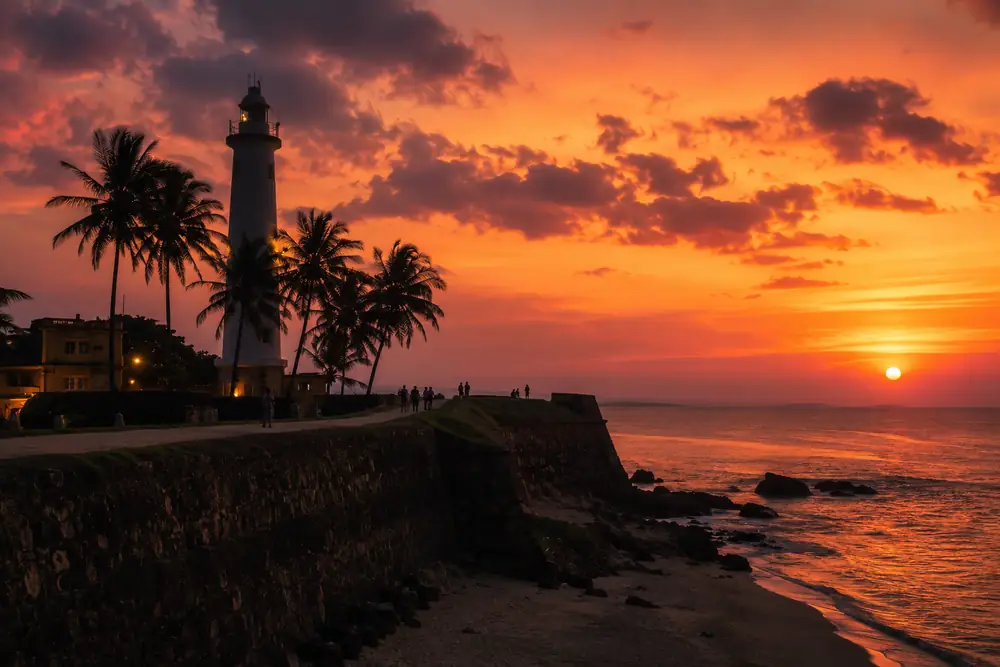 Dusk along the western walls, where gathering to watch the sunset is a timeless Galle tradition.
Planning Your Journey with Overa Tours
Galle Dutch Fort is an indispensable highlight of any journey along the southern coast, seamlessly blending architectural heritage with tropical coastal relaxation. At Overa Tours, we design bespoke itineraries that combine guided historical walking tours led by passionate local specialists with private vehicle transfers, luxury heritage boutique stays, and coastal excursions across southern coastal highlights.
Whether traveling south from the modern capital of Colombo, arriving from the beach resorts of Bentota, or continuing onward toward wildlife safaris in the southern national parks, our team ensures an effortless and unforgettable travel experience. To begin planning your personalized Galle holiday, contact our travel specialists.
Frequently Asked Questions
What makes Galle Dutch Fort unique among UNESCO World Heritage Sites?
Galle Dutch Fort is the most intact and complete fortified European colonial city remaining in South and Southeast Asia. Built by the Dutch East India Company between 1640 and 1729, it represents a remarkable synthesis of European military fortification engineering and indigenous South Asian building traditions. Furthermore, it is not an abandoned archaeological park but an active, vibrant living town with residential neighborhoods, administrative offices, schools, and thriving businesses.
Is there an entrance fee to enter Galle Dutch Fort?
No entrance fee is required to enter Galle Dutch Fort, walk along the public ramparts, or wander the historic colonial streets. The citadel is a functioning public town open twenty-four hours a day. Small admission fees apply only when visiting specific indoor museums, such as the National Maritime Museum and the National Museum of Galle.
How much time should visitors spend exploring Galle Fort?
Most day visitors find that spending three to four hours allows sufficient time to walk the full circuit of the perimeter ramparts, tour key historic churches, visit the National Maritime Museum, and enjoy coffee or lunch in a colonial courtyard cafe. For travelers wishing to fully immerse themselves in the fort's serene evening atmosphere after daytime tour buses depart, an overnight stay in one of the restored boutique hotels is highly recommended.
Can you walk along the entire perimeter of the fort ramparts?
Yes, visitors can walk along the entire continuous seaward and landward rampart circuit, covering approximately three kilometres. The elevated path is broad and mostly grassy, offering uninterrupted panoramic views of the Indian Ocean, Galle Harbour, the lighthouse, and the adjacent international cricket stadium. Walking the full loop takes approximately one to one and a half hours at a leisurely pace.
What is the best time of day to walk the ramparts?
The best times to walk the ramparts are early morning before 9:30 AM, when temperatures are comfortably cool and photographic lighting is soft, and late afternoon from 4:30 PM until dusk. Watching the sunset from Flag Rock Bastion or Point Utrecht Bastion is a beloved local tradition and the highlight of any visit.
What is the appropriate dress code when visiting Galle Fort?
Casual tropical resort clothing and comfortable walking shoes are perfectly suitable for exploring the fort's streets, shops, and ramparts. However, when entering active places of worship—such as the Dutch Reformed Church, All Saints' Church, or the Meeran Jumma Mosque—visitors should dress respectfully with shoulders and knees covered, and remove shoes where requested.