Encircling a broad, sheltered bay of shimmering golden sand, Weligama Beach is South Asia’s premier beginner surfing paradise and an atmospheric haven of southern coastal culture.
Translating literally to “Sandy Village” in Sinhala, Weligama stretches across a sweeping three-kilometre crescent within the Matara District, located roughly thirty kilometres east of Galle and just west of neighboring Mirissa. Once a quiet fishing village defined by outrigger canoes and swaying coconut groves, Weligama has flourished into a world-famous coastal hub where laid-back surf culture meets centuries of maritime heritage, private island estates, and clifftop luxury.
The World’s Premier Beginner Surfing Bay
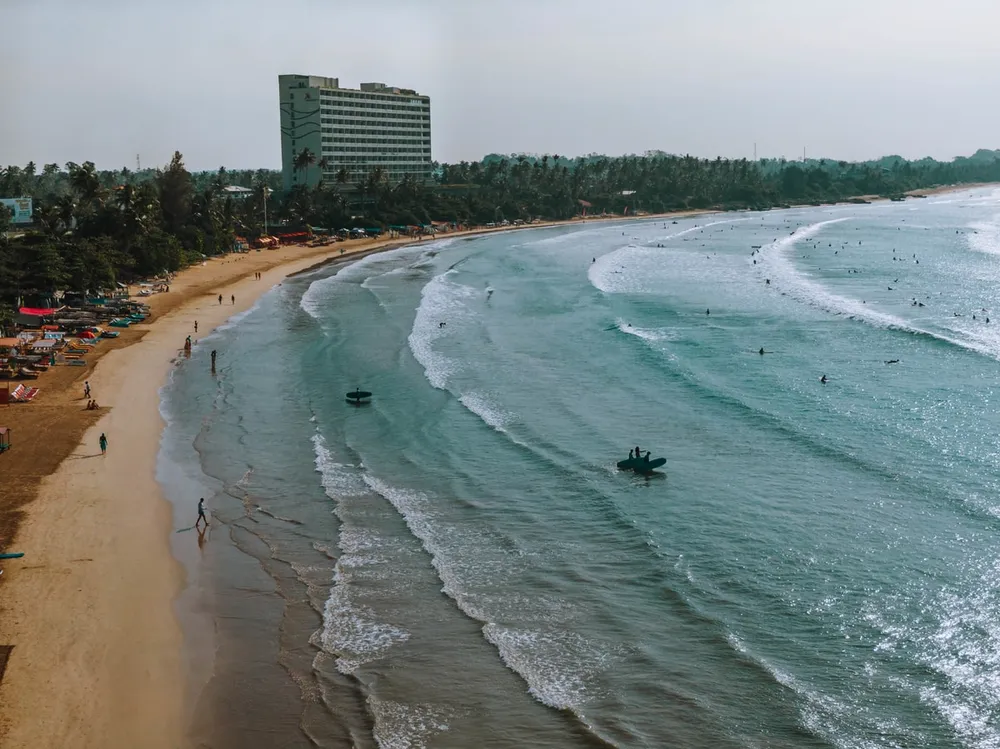
What sets Weligama apart from nearly every other surf destination along the Indian Ocean is its unique coastal geography. The broad horseshoe shape of Weligama Bay naturally refracts incoming swells from the Southern Ocean, diffusing raw wave energy into long, rolling, clean lines that break gently across a shallow sandy seabed free from treacherous rocks or sharp coral heads.
These gentle, chest-high waves provide long rides of up to one hundred metres, creating an exceptionally safe and forgiving environment for first-time surfers to master their balance and pop-up technique. Over thirty surf schools and board rental shacks line the beachfront along Matara Road, staffed by certified local and international instructors who provide structured lessons for solo travelers, couples, and active families. Because the bay faces south, favorable sandbars consistently produce rideable waves throughout the day, while more experienced riders can paddle out to the outer reef breaks or take short three-wheeler rides to nearby Midigama.
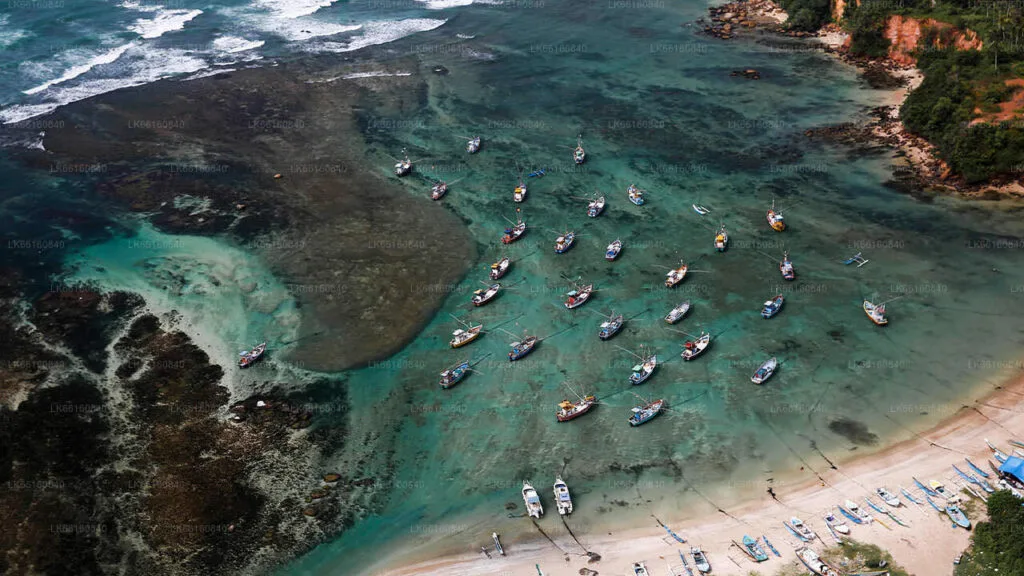 Traditional outrigger boats resting in the sheltered turquoise waters of Weligama Bay.
Taprobane Island: An Eccentric Aristocratic Dream
Rising dramatically from the turquoise waters just one hundred metres off the shoreline is Taprobane Island, Weligama’s most romantic and photogenic landmark. Known locally as Galduwa or Rock Island, this tiny two-and-a-half-acre private islet was purchased in the 1920s by the eccentric French-English nobleman Count Maurice de Mauny-Talvande, who transformed the rocky headland into an exquisite neo-Palladian fantasy villa crowned by an octagonal domed hall and terraced gardens.
Over the decades, Taprobane Island has hosted an illustrious procession of artists, aristocrats, and literary legends, including author Paul Bowles, who wrote parts of his acclaimed novel The Spider’s House while residing on the island, and science-fiction pioneer Arthur C. Clarke. Accessible at low tide by wading across the warm, waist-deep sandbar, this privately owned tropical sanctuary remains an enduring symbol of colonial romance and high-society intrigue along the southern coastline.
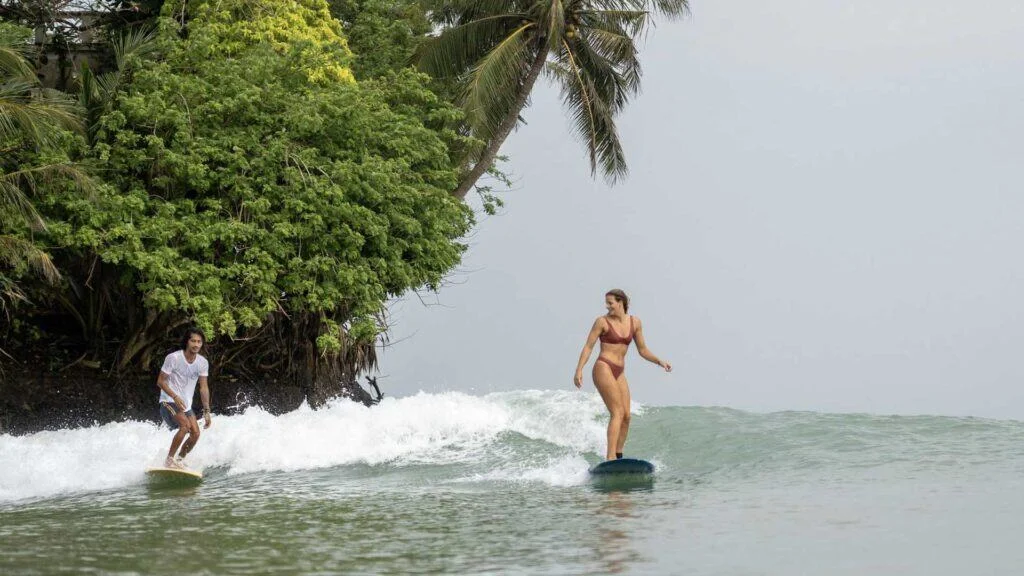 Long, rolling wave lines that make Weligama South Asia’s favorite destination to learn to surf.
Cultural Heritage and the Kushtarajagala Rock Relief
Beyond the sun-drenched beaches, Weligama preserves a profound spiritual history anchored by Kushtarajagala, an extraordinary colossal bas-relief carving situated just north of the town center. Sculpted directly into the face of a massive granite boulder around the eighth or ninth century, the six-foot-tall figure is widely recognized by archaeologists as Bodhisattva Avalokiteshvara, a revered deity of compassion in Mahayana Buddhism.
The statue features intricate aristocratic regalia, including an elaborate multi-tiered headdress containing a miniature carved figure of the meditating Buddha Amitabha, heavy ornamental earrings, flowing pleated waistcloths, and hands raised in the sacred vitarka gesture of spiritual teaching. Local folklore tells a captivating alternative legend: the carving is said to portray a foreign king who suffered from a devastating skin ailment known as kushta, who traveled to the shores of Weligama and was miraculously cured after drinking the mineral-rich water of king coconuts and following divine healing visions.
Traditional Stilt Fishing and Artisanal Coastal Rhythms
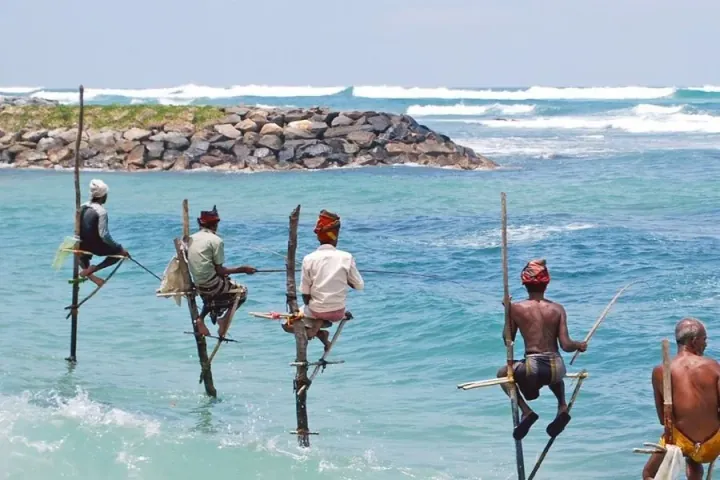
Weligama and its neighboring coves represent the historical cradle of stilt fishing, known locally as ritipanna. This ancient and ingenious fishing method arose out of severe food shortages during World War II, when local fishermen devised a way to harvest coastal waters without frightening away fish. Fishermen carefully balance atop slender wooden crossbars tied to vertical poles anchored firmly into the seabed, casting delicate lines into the crashing surf to catch spotted herrings and small mackerel at sunrise and twilight.
In the early morning hours, the town’s working harbour awakens as traditional wooden outrigger canoes, known as oru, return from overnight fishing trips in the deep ocean. The bustling fish market near the harbour jetty offers a fascinating glimpse into authentic maritime commerce, with merchants auctioning freshly landed yellowfin tuna, red mullet, sailfish, and blue swimmer crabs directly to local chefs and village vendors.
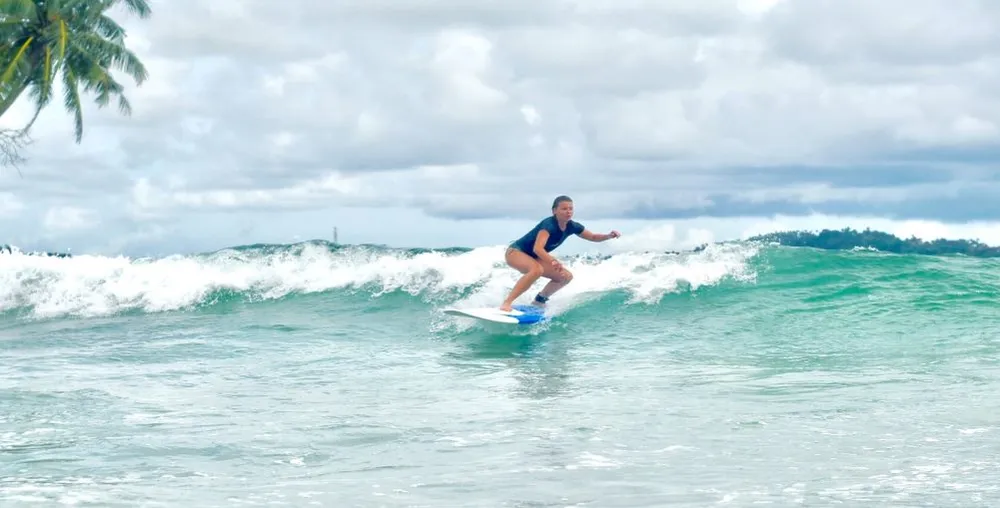 Riding clean peeling surf breaks along Weligama’s forgiving sandy shoreline.
Coastal Dining, Bohemian Cafes, and Clifftop Luxury
Weligama has evolved into a relaxed coastal hub that brings together surf culture and beachside dining. The beachfront and adjacent Matara Road are dotted with airy, open-plan cafes serving organic smoothie bowls, freshly pressed tropical fruit juices, sourdough avocado toast, and artisanal Ceylon coffee. As dusk approaches, beachfront eateries fire up open-air charcoal grills, offering freshly caught seafood feasts served at candlelit tables right on the sand.
Accommodations in Weligama span an extraordinary range, from vibrant boutique surf lodges with yoga shalas to world-class clifftop sanctuaries perched high upon an emerald headland overlooking the meeting of the bay and the open ocean. Travelers can begin their day with an early-morning surf session, spend mid-day enjoying a rejuvenating Ayurvedic massage or open-air yoga class, and end the evening listening to acoustic music beneath the palms.
Seasons, Weather, and Travel Logistics
Weligama enjoys warm tropical temperatures year-round, typically hovering between 26 and 32 degrees Celsius. The primary dry season extends from late October through April, delivering dry sunny days, light offshore winds, and pristine surf conditions across the entire bay. During these months, water visibility is crystal clear, making swimming and introductory surf lessons exceptionally pleasant.
The southwest monsoon season from May to September brings heavier rainfall and stronger swells. While the open ocean becomes choppy during these months, the sheltered topography of the bay still produces rideable secondary waves for dedicated surfers, and travelers can take advantage of tranquil, uncrowded beaches and excellent value at boutique hotels.
Traveling to Weligama is swift and convenient. Thanks to the Southern Expressway (E01), private air-conditioned vehicle transfers from Colombo or the international airport reach Weligama in approximately two to two and a half hours. Alternatively, visitors can take the scenic coastal train from Colombo Fort to Weligama Railway Station, enjoying panoramic ocean views along the rails before stepping directly into the center of the surf town.
Planning Your Weligama Journey with Overa Tours
Whether you are looking to catch your very first wave, explore centuries-old archaeological mysteries, or simply relax in a luxury clifftop villa with views stretching to Antarctica, Weligama offers an unforgettable southern coastal retreat. At Overa Tours, our travel specialists curate bespoke itineraries featuring verified surf schools, private transfers, handpicked boutique properties, and licensed chauffeur-guides.
Weligama pairs seamlessly with coastal explorations of Mirissa for whale watching, the UNESCO-listed ramparts of Galle Dutch Fort, and wildlife game drives in Yala National Park. To begin crafting your customized southern coast holiday, contact our travel specialists.
Frequently Asked Questions
Why is Weligama considered the best place in South Asia to learn to surf?
Weligama Bay features a gently sloping, rock-free sandy seabed and a naturally protected horseshoe shoreline that softens incoming ocean swells. The result is a series of slow, predictable, chest-high waves with long rides that provide the ideal learning platform for beginners without the risk of colliding with sharp coral reefs. Certified local and international surf schools operate year-round, providing safe, high-quality instruction for all ages.
When is the best time of year to visit Weligama for surfing and beach holidays?
The best time to visit Weligama is from October through April during the southwest dry season. This period offers sunny skies, gentle offshore winds, warm water, and clean wave faces. While the monsoon months from May to September bring more rain and stronger swells, the bay often still produces rideable waves inside its sheltered corners for intermediate surfers.
Can visitors visit or tour Taprobane Island?
Taprobane Island is a privately owned luxury villa estate and is not open to casual drop-in sightseers. However, visitors can clearly view and photograph the romantic island from the public beach directly opposite, or even walk through the waist-deep waters around its perimeter at low tide. Travelers with private reservations can rent the entire island villa for exclusive overnight stays.
What is the significance of the Kushtarajagala rock relief?
Kushtarajagala is a remarkable eighth-century Mahayana Buddhist rock relief depicting Bodhisattva Avalokiteshvara carved directly into a natural granite boulder. It is celebrated for its exquisite artistic detail, including a crown featuring a meditating Dhyani Buddha and elaborate royal jewellery. Local tradition also associates the site with a foreign king who was miraculously healed of a severe skin condition after drinking king coconut water.
Where can travelers see traditional stilt fishermen in Weligama?
Traditional stilt fishermen can be observed perched on their iconic vertical wooden poles along the shallow reefs between Weligama, Midigama, and Koggala. The best times to see them practicing this ancestral method are early in the morning shortly after sunrise and late in the afternoon around sunset, when fish feed close to shore.
How easy is it to travel between Weligama and Mirissa?
Weligama and Mirissa are directly adjacent to each other along the coastal road, separated by only four kilometres. The journey takes less than ten minutes by local three-wheeler (tuk-tuk), taxi, or coastal bus, making it effortless to stay in Weligama for surfing while heading to Mirissa for whale watching, dining, or sunsets at Coconut Tree Hill.