Where the lush tropical southwest transitions into the sun-drenched southern dry zone, Tangalle unfolds as a pristine haven of secluded turquoise coves, dramatic rocky headlands, and wild ocean beaches.
Situated within the Hambantota District approximately 195 kilometres south of Colombo and 35 kilometres east of Matara, Tangalle derives its name from Ran-gala, meaning “Golden Rock,” inspired by the glowing granite promontory that historically protected its natural fishing harbour. Unlike the high-density resort hubs further west, Tangalle preserves an unspoiled, unhurried charm where luxury clifftop sanctuaries and peaceful palm-fringed bays exist in complete harmony with traditional fishing hamlets and ancient spiritual shrines.
Pristine Beaches and Hidden Coves
The coastline of Tangalle is celebrated for its breathtaking diversity of coastal landscapes, alternating between dramatic rocky headlands and expansive golden beaches that stretch toward the horizon. At Goyambokka Beach, located just west of the town center, a pair of sheltered, crescent-shaped bays are embraced by smooth granite boulders and leaning coconut trees. Because the flanking rocky points break the force of open-ocean swells, Goyambokka offers calm, swimmable turquoise waters and soft sands, making it widely regarded as one of the most idyllic swimming and sunbathing sanctuaries on the southern coast.
Further west lies Silent Beach, also known as Amanwella Beach, a secluded coastal curve renowned for its powder-soft sands, crystalline shorebreak, and peaceful atmosphere sheltered beneath a whispering coconut grove. In contrast, the eastern coastline extending past Medaketiya and Medilla features wide, wild stretches of golden sand running for miles toward the mangrove-fringed Rekawa lagoon. While the open ocean along these eastern beaches produces powerful waves best admired from the shore, the sweeping horizons and cooling sea breezes provide a sublime backdrop for long, contemplative coastal walks.
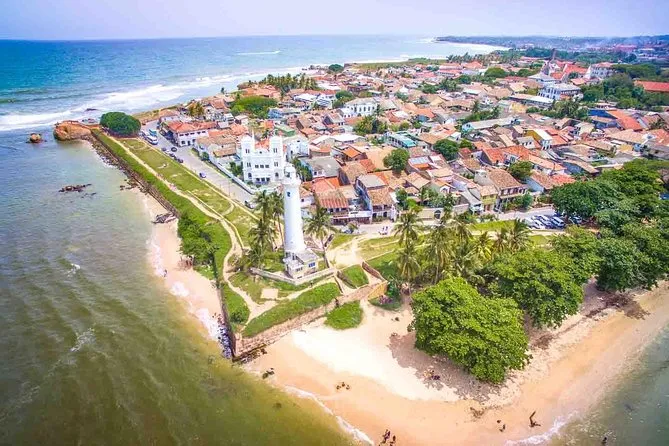
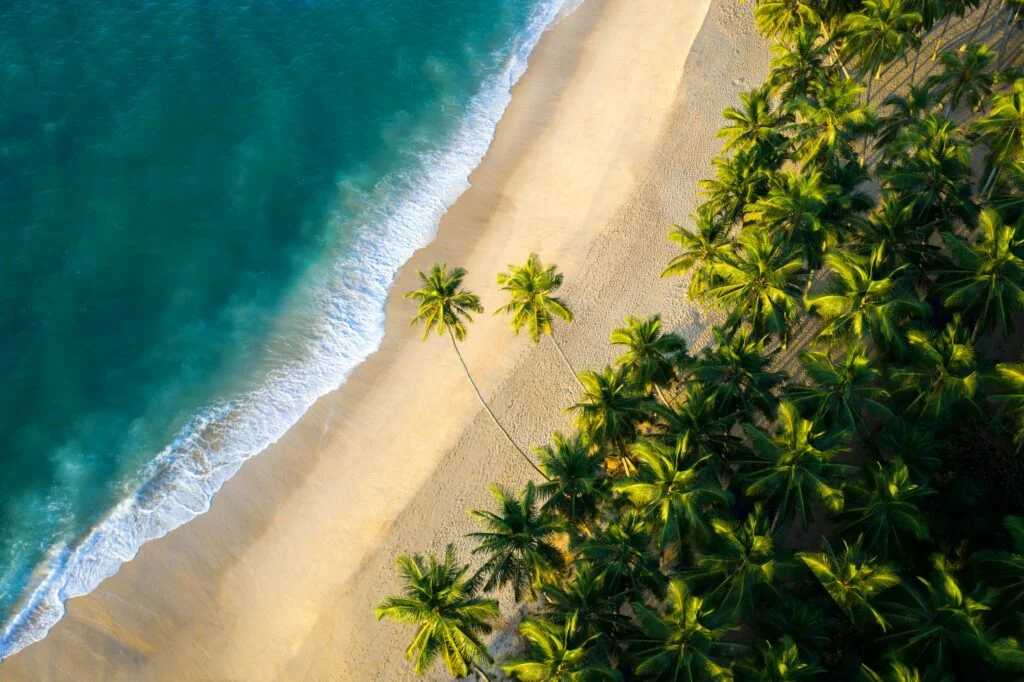 Sheltered granite boulders and turquoise waters at Goyambokka, one of Tangalle’s most idyllic swimming coves.
Hummanaya Blowhole: Nature’s Roaring Marine Geyser
A short twelve-kilometre excursion west of Tangalle brings travelers to Kudawella, home to the famous Hummanaya Blowhole. Recognized as the second-largest natural marine blowhole in the world and the only one on the island, this extraordinary geological wonder is formed by a deep, narrow fissure carved into a massive coastal sea cliff.
When powerful ocean swells surge into the submerged cavern beneath the rocks, hydraulic pressure forces seawater through the chimney, launching a thunderous column of spray up to twenty-five to thirty metres into the tropical sky. The force of the compressed air escaping before the geyser creates an eerie, reverberating sound known locally as “hoo-maniya,” from which the site takes its name. While visible year-round, the blowhole reaches its most awe-inspiring heights during the southwest monsoon between May and September, when heavy ocean swells drive dramatic, continuous plumes into the air.
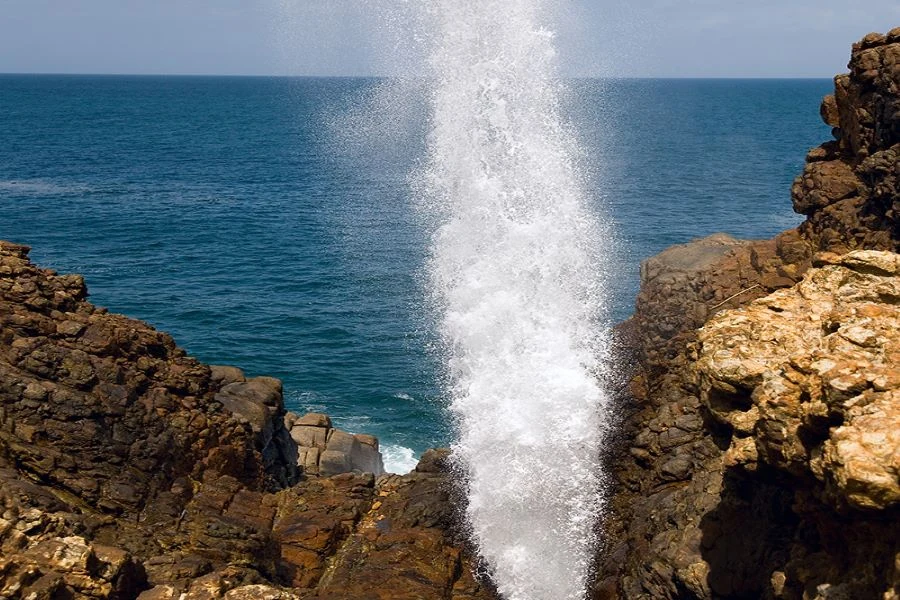 Ocean swells surging through a natural coastal fissure create a thunderous marine plume at Hummanaya.
Mulkirigala Rock Monastery: The Little Sigiriya of the South
Rising majestically out of the surrounding coconut jungle sixteen kilometres northwest of Tangalle is Mulkirigala Rock Monastery, an ancient spiritual complex perched upon a 205-metre sheer granite rock. Frequently celebrated as the southern counterpart to Sigiriya, the sacred monastery dates back more than two thousand years to the third century BC, when King Saddhatissa first established cave dwellings for meditating Buddhist monks.
Ascending the 533 stone steps carved directly into the rock face leads visitors through five distinct terraces containing seven ancient cave shrines. Within these sheltered natural rock chambers, travelers can admire colossal reclining Buddha statues and exquisite ceiling murals painted in the vibrant Kandyan folk style, illustrating the life of Gautama Buddha and traditional jataka tales. It was within this sacred hillside library in 1826 that British colonial civil servant George Turnour discovered the ancient Ola-leaf commentaries of the Mahavamsa, providing the crucial linguistic key that unlocked the translation of the island’s legendary historical chronicle. Reaching the summit stupa rewards climbers with sweeping, panoramic vistas extending across miles of emerald canopy all the way to the Indian Ocean.
Rekawa Turtle Conservation and Kalametiya Bird Sanctuary
Tangalle serves as a vital gateway for wildlife enthusiasts, anchoring two of the most critical coastal conservation sanctuaries in the Indian Ocean. Ten kilometres east of the town lies Rekawa Beach, a globally significant marine turtle nesting habitat where five of the world’s seven sea turtle species—including Green, Olive Ridley, Hawksbill, Loggerhead, and the massive Leatherback turtle—come ashore under the cover of darkness throughout the year to lay their eggs. Through the dedicated community-run Rekawa Turtle Watch, visitors can accompany trained naturalists on respectful night patrols, observing the ancient nesting ritual in its completely wild, natural state without the use of artificial hatcheries or disruptive lighting.
Further east along the coastal road toward Hambantota lies Kalametiya Bird Sanctuary, one of the oldest protected wetland reserves on the island, established in 1938. Covering a labyrinth of brackish coastal lagoons, mangrove forests, and salt marshes, the sanctuary supports over 150 species of resident and migratory waterbirds, including glossy ibis, painted storks, purple herons, and black-tailed godwits. Exploring the tranquil waters aboard a traditional non-motorized outrigger canoe at sunrise offers an exceptionally peaceful wildlife encounter, accompanied only by the dip of wooden oars and birdsong echoing across the reeds.
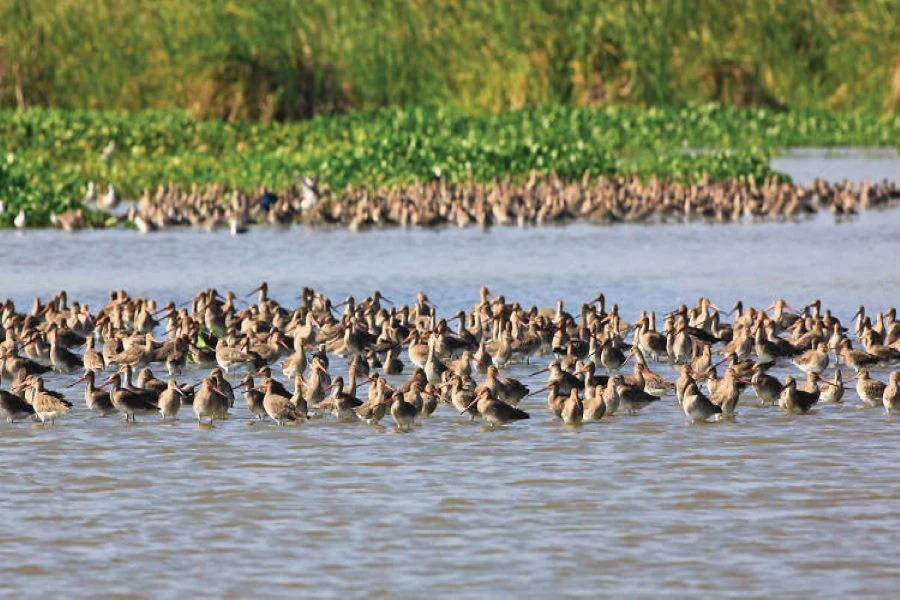 Peaceful birdwatching amidst the brackish lagoons and mangrove wetlands of Kalametiya.
Wewurukannala Vihara, Ussangoda, and Surrounding Heritage
Cultural discovery extends further into the tranquil countryside surrounding Tangalle. In the nearby town of Dickwella stands Wewurukannala Raja Maha Vihara, famous for its colossal fifty-metre seated Buddha statue, the largest of its kind in the country, completed in the eighteenth century. Visitors reach the towering monument by walking through an extraordinary tunnel gallery adorned with life-sized, vivid sculptures depicting scenes from the Buddhist afterlife, before climbing inside the statue’s eight-storey interior clock tower to take in views over the surrounding village.
Along the coastal highway toward Ambalantota, travelers can also explore Ussangoda National Park, a striking plateau of barren red soil perched atop sea cliffs. Steeped in Ramayana mythology as the landing ground where King Ravana’s mythical chariot, the Dandu Monara, was scorched by the monkey god Hanuman, the reddish headland features unusual mineral compositions and sweeping views over the crashing waves below.
Luxury Retreats, Dining, and Coastal Lifestyle
In recent decades, Tangalle has earned a distinguished reputation as the southern coast’s premier luxury wellness and boutique retreat destination. World-class resorts, such as Anantara Peace Haven Tangalle Resort and Amanwella, are thoughtfully situated across sprawling private coconut estates, offering private plunge pools, clifftop dining, and direct access to secluded coves.
The town’s culinary offerings reflect its dual heritage as a busy fishing harbour and a vibrant coastal centre. Visitors can savor freshly caught lobster, jumbo prawns, and red snapper grilled over coconut-husk barbecues at seaside shacks, alongside authentic southern rice and curry banquets featuring tangy fish ambul thiyal and creamy coconut-infused vegetable specialties. Peaceful mangrove lagoons, such as Mawella Lagoon, provide wonderful opportunities for sunset kayaking, while the surrounding headlands offer serene perches to witness vivid crimson sunsets melting into the sea.
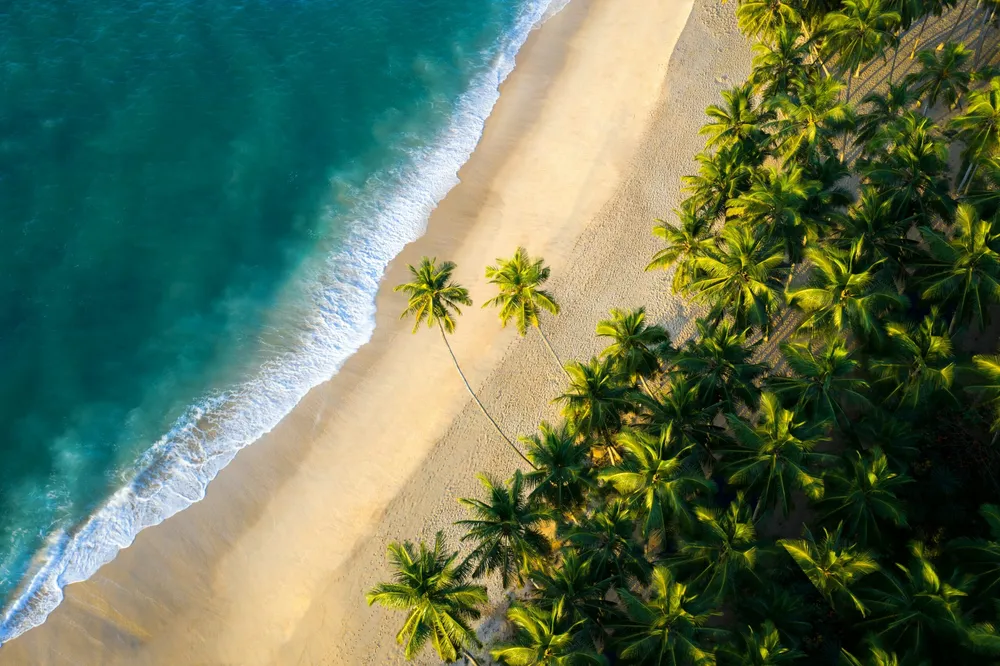
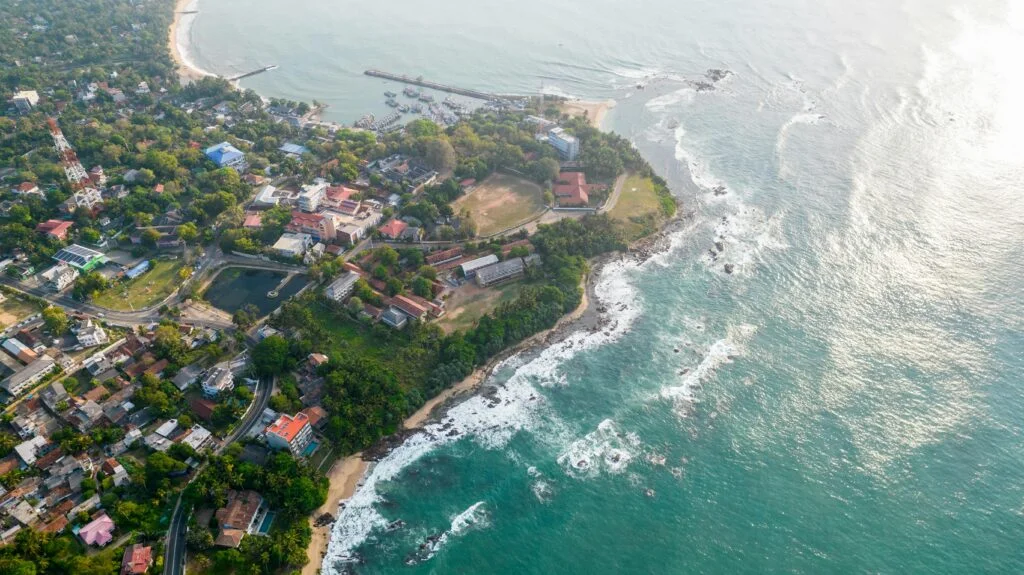 Tangalle’s dramatic coastline, where rugged headlands give way to untamed, sun-drenched beaches.
Seasons, Climate, and Travel Logistics
Tangalle enjoys a warm tropical climate year-round, with average temperatures ranging between 27 and 32 degrees Celsius. The primary dry season spans from late November through April, bringing abundant sunshine, calm sea conditions in sheltered coves, and pleasant coastal breezes that make outdoor exploration and swimming thoroughly enjoyable.
The southwest monsoon from May to October brings occasional rain showers and higher ocean swells along exposed coastlines. While swimming in open waters is restricted during these months, the dramatic surf activates the Hummanaya blowhole at its peak power, and the sheltered coves remain peaceful retreats with fewer travelers and appealing boutique rates.
Reaching Tangalle is seamless and scenic. Thanks to the Southern Expressway (E01), private air-conditioned vehicle transfers from Colombo or Bandaranaike International Airport arrive in approximately two and a half to three hours, exiting at Beliatta or Kasagala. Travelers can also take the coastal railway to the modern southern terminus at Beliatta, followed by a short ten-minute vehicle transfer directly into Tangalle town.
Planning Your Tangalle Escape with Overa Tours
Whether your dream journey includes watching nesting sea turtles on moonlit sands, climbing through the sacred painted caves of Mulkirigala, or unwinding in a private oceanfront pool villa, Tangalle represents the pinnacle of tranquil coastal travel. At Overa Tours, our team designs customized southern coast holidays that combine luxurious private transfers, handpicked boutique accommodations, and licensed naturalist guides.
Tangalle connects effortlessly with the whale watching capital of Mirissa, the historic ramparts of Galle Dutch Fort, and world-class wildlife safaris in Yala National Park or Udawalawe. To begin designing your bespoke tropical escape to Tangalle, contact our travel specialists.
Frequently Asked Questions
What makes Tangalle different from other beach towns on the southern coast?
Tangalle is characterized by its unhurried, low-density atmosphere and rugged natural beauty. Rather than a single continuous commercial strip, Tangalle features a succession of intimate, secluded coves separated by dramatic rocky headlands, alongside miles of wild, undeveloped sands. It caters to travelers seeking peaceful luxury, natural wildlife encounters, and cultural heritage away from the crowded party beaches found elsewhere.
Is it safe to swim in the ocean at Tangalle?
Swimming safety depends entirely on the specific beach and time of year. Sheltered coves with natural rock barriers, such as Goyambokka Beach and Silent Beach, generally offer safe, calm swimming conditions during the dry season from November through April. In contrast, exposed, straight beaches like Medaketiya and Medilla experience strong currents, heavy shorebreaks, and undertows that make open-water swimming hazardous. Swimmers should always check conditions locally and avoid swimming during the southwest monsoon.
How can visitors experience turtle watching at Rekawa Beach responsibly?
At Rekawa Beach, turtle observation is managed by the community-based Turtle Conservation Project. Visitors accompany trained local guides on nightly patrols along the beach without flashlights or loud noise. When a nesting mother is located in a nesting trance, observers are guided to watch the process using special non-disruptive red light. No flash photography or touching is permitted, ensuring nesting turtles are never stressed.
What is the best time to see the Hummanaya Blowhole in action?
While the Hummanaya Blowhole operates year-round whenever ocean swells enter the subterranean cavern, it performs at its most dramatic height during the southwest monsoon from May through September. Strong ocean swells during these months create maximum water pressure, propelling geysers up to twenty-five to thirty metres into the air.
How physically challenging is the climb to Mulkirigala Rock Monastery?
The climb to the summit of Mulkirigala involves ascending 533 stone steps carved into the granite rock face. The path is divided across five distinct terraces, allowing visitors to rest, explore the cave temples, and admire the murals at every level. The walk takes approximately forty-five minutes to an hour at a relaxed pace, and is suitable for travelers of moderate fitness wearing comfortable walking shoes.
What is the best way to travel to Tangalle from Colombo?
The fastest and most comfortable way to travel from Colombo or Bandaranaike International Airport to Tangalle is via private air-conditioned vehicle along the Southern Expressway (E01), which takes approximately two and a half to three hours. Travelers can also take the express train along the southern railway line to the new terminus at Beliatta, followed by a short ten-minute drive to Tangalle.