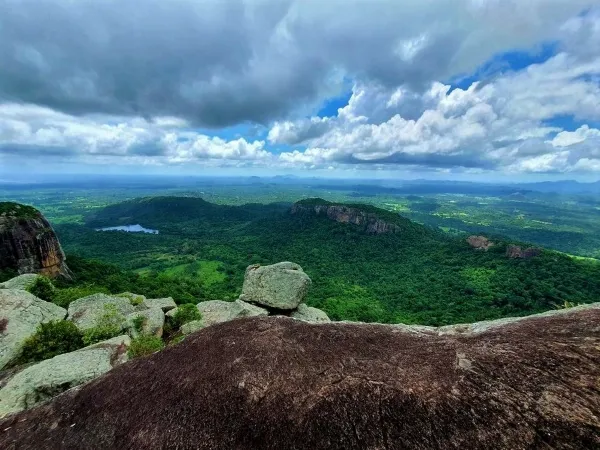
Rising prominently above the plains of Hiripitiya in the Kurunegala district, Dolukanda Mountain is a fascinating geological ridge celebrated for its unique biodiversity, ancient medicinal flora, and legendary ties to the Ramayana epic. Cloaked in dense forest with sheer rocky escarpments, the mountain plateau hosts rare plant species, making it both a cherished sanctuary for botanists and a revered landmark for cultural explorers.
History and Ancient Herbal Heritage
Dolukanda has held therapeutic significance for centuries. Archaeological and historical accounts link the mountain to King Buddhadasa (341 AD – 370 AD), the renowned physician king who established hospitals, veterinary clinics, and medicinal reserves throughout ancient Lanka. Dolukanda was utilized as a dedicated royal herbal garden, with herbalists collecting rare plants from the mountain’s mist-laden microclimates to prepare ancient Ayurvedic remedies. Ancient stone ruins, meditation caves, and pond remnants still scatter the upper reaches of the forest monastery.
The Ramayana Legend and the Sanjeevani Mountain
In Hindu tradition, Dolukanda is revered as Dolukanda Sanjeevani Mountain. According to the epic Ramayana, when Lord Rama’s brother Lakshmana fell gravely injured during the climactic war against King Ravana, the monkey god Hanuman was dispatched to the Himalayas to fetch the celestial life-restoring herb known as Sanjeevani.
Unable to identify the exact herb among the snowfields of Mount Dronagiri, Hanuman uprooted the entire mountain crest and flew across the subcontinent. Legend says that as he soared across the skies, fragments of the Himalayan peak fell at five separate locations across Sri Lanka—creating what devotees identify as the “Sanjeevani drops.” Dolukanda is celebrated as one of these sacred fragments, alongside locations like Rumassala, Ritigala, and Ussangoda. This deep mythological heritage connects Dolukanda intimately with other sacred sites across the island, including Divurumpola Temple, Ravana Cave, and Seetha Amman Temple.
How to Get to Dolukanda Mountain
Dolukanda is located roughly 20 km north of Kurunegala town. Two primary driving routes lead to the base:
- Via Ganewatta: Kurunegala → Muththettugoda Junction → Ganewatta → 10th Mile Post → Hunupola Village → Dolukanda trail head.
- Via Ibbagamuwa: Kurunegala → Ibbagamuwa → Madagalla Road → Godagala → Arankale Monastery road → Doluwa → Dolukanda.
Trekking and Visitor Guidelines
- Protected Forest Reserve: Dolukanda is a protected environmental reserve administered by the Department of Forest Conservation. Hikers should obtain permission from forest authorities and inform the resident monks at the foot temple (Dolukanda Sanjeevani Raja Maha Viharaya) before starting the ascent.
- Trek Difficulty: The trail is a moderately challenging 3 to 4-hour uphill hike through dense jungle terrain, rocky ridges, and steep granite steps. Sturdy trekking shoes, ample water, and insect repellent are essential.
- Group Safety: Due to dense forest cover and isolated terrain, solo trekking is not recommended. Hike in small guided groups and remain vigilant of local wildlife, including wild boars, wasps, and reptiles.
- Conservation Ethic: As a fragile sanctuary of rare medicinal herbs, visitors must leave no trace, refrain from plucking plants or herbs, and carry all plastic waste back down.