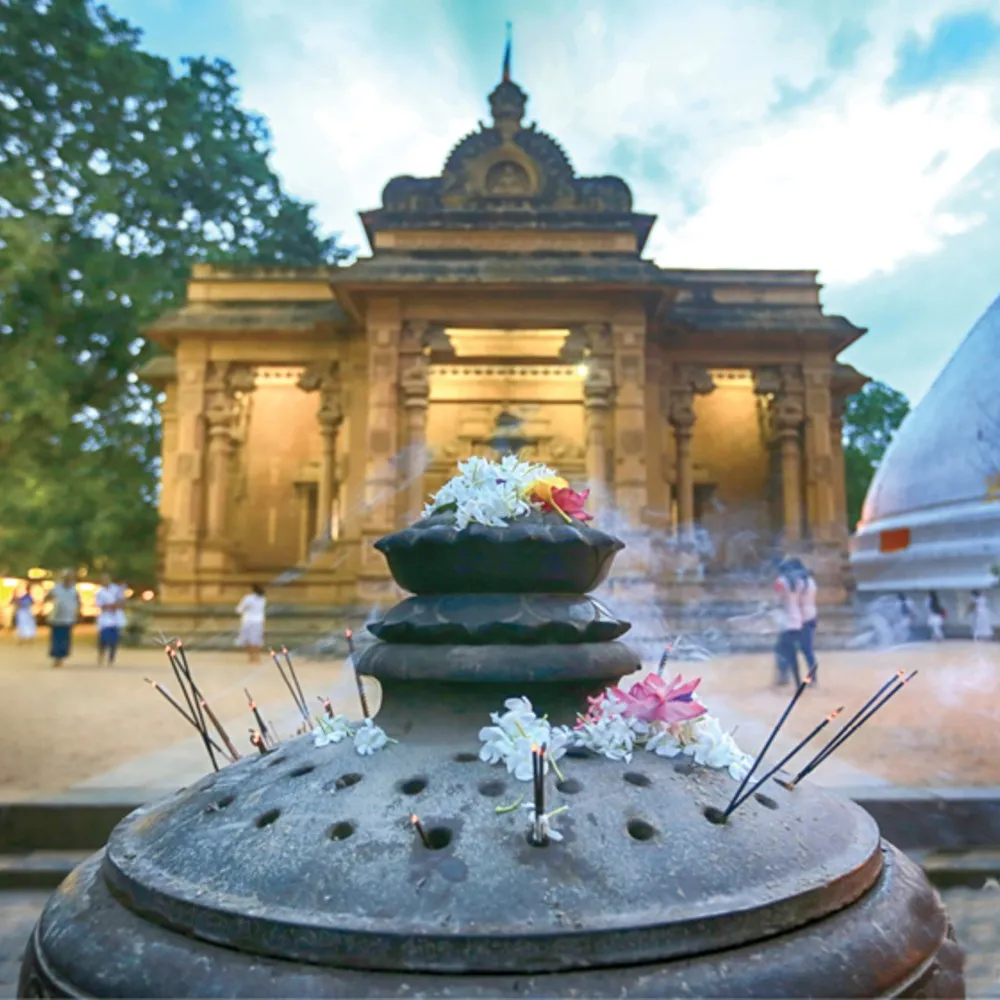
Kelaniya Raja Maha Vihara, commonly known as Kelaniya Temple, is one of the most revered ancient Buddhist shrines on the island. Situated along the peaceful bends of the Kelani River in Kelaniya, the complex lies roughly 10 kilometers northeast of Colombo and within comfortable driving distance of Negombo.
According to Buddhist chronicles, the temple site was sanctified during the third and final visit of Gautama Buddha to the island, eight years after his enlightenment. Arriving at the invitation of the Naga king Maniakkitha, the Buddha preached the Dhamma and settled a brewing conflict over a bejeweled throne. This sacred event places the origins of the sanctuary around 500 BCE, earning it a cherished place among the Solosmasthana (the sixteen holiest Buddhist pilgrimage sites).
In addition to its profound spiritual heritage, Kelaniya is celebrated for its exquisite religious art. The temple features celebrated 20th-century murals by legendary artist Solias Mendis, historic Kandyan-era ceiling paintings, an 18-foot stone statue of Bodhisattva Avalokitesvara, and a historic shrine dedicated to King Vibhishana from the Ramayana epic. Every January, the temple grounds host the world-famous Duruthu Maha Perahera, a vibrant cultural procession honoring the sacred traditions of the shrine.
Location and How to Get There
Kelaniya Raja Maha Vihara is perched on elevated ground overlooking the Kelani River. Its strategic location makes it easily accessible from the commercial capital:
- From Colombo: Approximately 10 km (a 25 to 35-minute drive depending on traffic), making it one of the easiest cultural day trips from Colombo.
- From Negombo: Roughly 35 km south via the Colombo–Katunayake Expressway, making a stop at Kelaniya one of the most enriching cultural things to do in Negombo or when traveling from Negombo Beach to the central highlands.
The Best Time to Visit Kelaniya Temple
Kelaniya Raja Maha Vihara welcomes pilgrims and travelers throughout the year.
- Best Season: Visiting during the month of January (Duruthu) allows you to witness the magnificent Duruthu Perahera, one of the grandest annual religious processions in the country.
- Best Time of Day: The late afternoon and early evening are ideal for exploring the complex. As dusk settles, warm illumination accents the exterior stupa, while temple lamps cast a serene glow over the intricate interior frescoes and painted ceilings.
What to See at Kelaniya Raja Maha Viharaya
The sprawling temple complex is filled with historic architectural marvels, sacred relics, and remarkable artwork:
- The Sacred Kelaniya Stupa (Dagoba): Built in the traditional bubble shape (bubbulakara), this gleaming white dagoba stands at the heart of the complex. It is believed to enshrine the legendary gem-studded throne (Mini Palanga) upon which the Buddha sat during his third visit.
- Architectural Wall Friezes: The exterior foundation walls of the oldest shrine building feature stone friezes depicting caparisoned elephants (gajas) denoting fortitude, whimsical dwarfs (ganas) in spirited musical postures symbolizing merriment, and swans (hamsas) representing purity and wisdom.
- Vibhishana Devalaya: Located between the stupa and the central image house, this revered shrine is consecrated to King Vibhishana. Following the defeat of King Ravana in the Ramayana epic, Vibhishana was crowned the righteous king of Lanka by Lakshmana and is venerated as one of the four guardian deities protecting the island. This directly links Kelaniya to sacred pilgrimage stops like Divurumpola Temple and Munneswaram Temple.
- Kandyan-Era Frescoes: Inside the historic central shrine room, visitors can admire 18th- and 19th-century paintings executed in the classic Kandyan style, illustrating traditional Jataka birth tales and pivotal moments in the life of the Buddha.
- Solias Mendis Masterpieces: In the new wing of the viharaya, master artist Solias Mendis spent nearly two decades creating some of the finest Buddhist murals of the modern era. Using natural earth pigments, Mendis depicted landmark historical events, including the arrival of Sanghamitta Theri carrying the sacred Bodhi sapling and Prince Danta and Princess Hemamala bringing the Sacred Tooth Relic to the island.
- Bodhisattva Avalokitesvara Statue: An impressive 18-foot stone sculpture of Bodhisattva Avalokitesvara stands majestically within the upper courtyard, attesting to the deep layered history of Buddhist veneration at the site.
- The Historic Eastern Gateway: The elaborate gateway arch (makara thorana) is so renowned for its balanced decorative proportions that it inspired the famous Jugendstil Gateway at Tierpark Hagenbeck near Hamburg, Germany.
The Duruthu Perahera Festival
Every year on the pre-full moon night of the Duruthu Poya in January, Kelaniya hosts the spectacular Duruthu Maha Perahera. First inaugurated in its modern format in 1927, this vibrant pageant brings together thousands of pilgrims and travelers from across the globe.
The procession features hundreds of traditional Kandyan and low-country dancers, energetic whip-crackers, acrobatic fire-spinners, flutists, and caparisoned tuskers carrying sacred relics. It serves as an authentic living showcase of traditional performing arts, drumming traditions, and religious customs preserved through generations.
History and Royal Heritage of the Temple
Historical chronicles including the Mahavamsa record that the original stupa at Kelaniya was enlarged by King Yatthalatissa in the 3rd century BCE. Over subsequent centuries, royal patrons expanded the monastic complex, which reached its zenith of wealth and scholarship during the Kingdom of Kotte.
In 1510, Portuguese forces invaded the region, destroying the magnificent shrine and confiscating vast tracts of monastic land. For over two centuries, the temple lay in ruins until the Kandyan era, when King Kirthi Sri Rajasingha restored royal land grants and reconstructed the main image house.
In the early 20th century, philanthropist Helena Wijewardene spearheaded a comprehensive restoration, collaborating with leading artisans and commissioning Solias Mendis to paint the modern image hall. Today, Kelaniya stands as a shining center of Buddhist scholarship and religious life, seamlessly connecting visitors to other cultural treasures such as the Temple of the Tooth in Kandy.