Matara is a vibrant coastal city in Sri Lanka, situated along the southern coast of the Southern Province. Located approximately 160 km (99 mi) south of Colombo, Matara serves as the administrative capital and principal commercial hub of the Matara District. Bisected by the Nilwala River as it empties into the Indian Ocean, the city offers a captivating blend of ancient southern culture, Dutch colonial architecture, and modern coastal life.
Etymology
Consisting of two components, the name Matara translates broadly as the “Great Ferry”, derived from the Tamil Matturai, meaning “great seaport” or “great fortress”. It is also believed to stem from the Portuguese mispronunciation of the word “Matora” when they recorded it as “Mature” or “Matturai” in 1672. The indigenous Sinhala term “Matora” may have originated from “Maha Tera” (“Great Ford”), indicating the primary crossing point across the Nilwala River.
Historically, the settlement was also known as “Maha Tota” (“Great Port”) or “Maha Pattana”. Today, the Nilwala River still flows gracefully through the heart of Matara, marking the ancient crossing point where ferries once transported travelers and goods across the water. Over the colonial centuries, the Dutch minister Philippus Baldaeus documented it as “Mature” in 1673, Robert Knox noted it as “Matura” in 1681, and Johann Wolfgang Heydt referred to it as “Maderon” in 1744.
History and Heritage
Historically, Matara belonged to the ancient kingdom of Ruhuna, one of the three historic kingdoms of Sri Lanka. According to the classical Sinhala poetic work Paravi Sandeshaya by Ven. Thotagamuwe Sri Rahula Thera, King Weerabamapanam established his administrative seat here, calling the city “Mapatuna”.
During the 16th to 18th centuries, Matara became a strategic coastal outpost under Portuguese and Dutch rule. In 1756, the Dutch divided the Maritime Provinces into four districts, with Matara governing the largest expanse of the southern territory. In 1760, forces from the Kingdom of Kandy laid siege to Matara Fort during the Matara Rebellion, holding the fortification for over a year before Dutch forces recaptured it in 1762.
Following the fall of Dutch maritime territories in 1796, Matara was peacefully handed over to the British. Enduring Dutch and British architecture remains visible throughout the old town today, including the ramparts of Matara Fort, the unique Star Fort, the Old Nupe Market, and St. Mary’s Church. Renowned literary figures associated with Matara include the classical scholar Kumaratunga Munidasa and the celebrated poetess Gajaman Nona.
Top Attractions in Matara
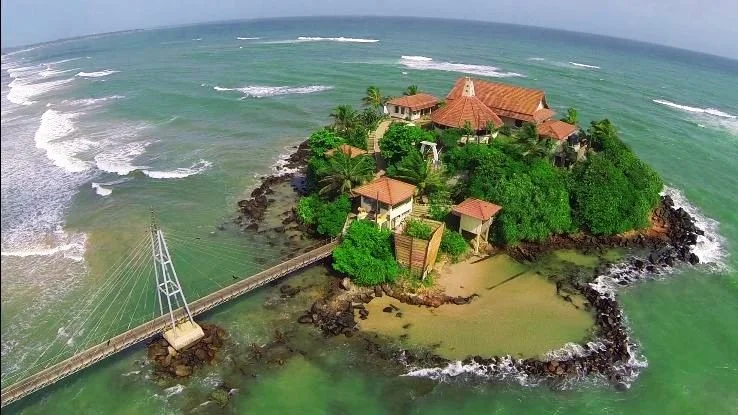
- Paravi Duwa Temple (Pigeon Island): A picturesque Buddhist shrine situated on a rocky offshore islet facing Matara Beach. The island is reached via an elegant cable-stayed pedestrian suspension bridge spanning turquoise waves, leading to manicured garden paths, Buddha statues, and sweeping ocean panoramas.
- Matara Fort & Ramparts: Founded by the Portuguese in the 16th century and significantly reinforced by the Dutch in the mid-17th century, this substantial stone rampart guards the narrow promontory between the Nilwala River lagoon and the sea.
- Star Fort: An exceptionally preserved six-pointed star fortification constructed by the Dutch in 1765 to protect the river entrance from inland attacks. Today, the moated fort houses an archaeological and heritage museum.
- Matara Bodhiya: A sacred Bo tree (Ficus religiosa) situated in the center of the town, recognized as one of southern Sri Lanka’s most venerated pilgrimage destinations.
- Dutch Reformed Church: Built inside Matara Fort in 1706 and renovated in 1767, this historic colonial church is among the oldest surviving Protestant places of worship in the Southern Province.
- Old Nupe Market: An open-sided Dutch market building constructed in 1784, featuring high clay-tiled roofs and classical wooden columns, located roughly 3 km west of the main fort.
- St. Mary’s Church: A historic church situated on Beach Road, with its entrance gateway dating back to the post-rebellion reconstruction in 1769.
- Weragampita Rajamaha Viharaya: A respected Buddhist temple located slightly inland, renowned for its ancient temple library and traditional murals.
Climate and Best Time to Visit
Matara sits 11 meters above sea level and features a warm tropical climate (Köppen Af). Temperatures remain warm and pleasant year-round, averaging between 26°C and 31°C (79°F to 88°F).
The optimal time to visit Matara and explore its coastal ramparts and temples is during the dry season from December to April, when seas are calm, rainfall is minimal, and sunny weather makes sightseeing ideal. Its central southern location also makes it an easy excursion when visiting nearby Mirissa and Tangalle.