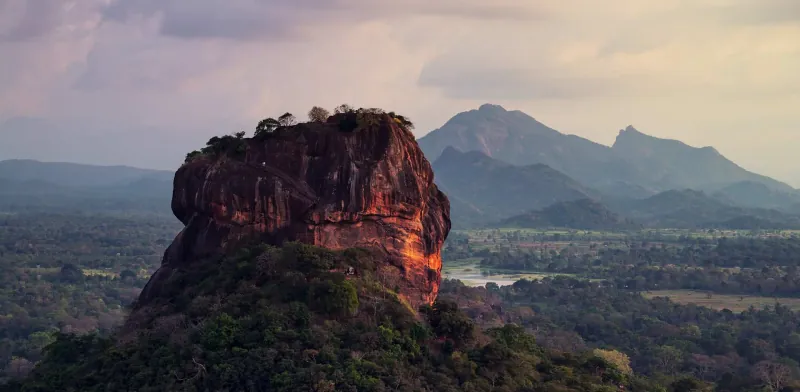
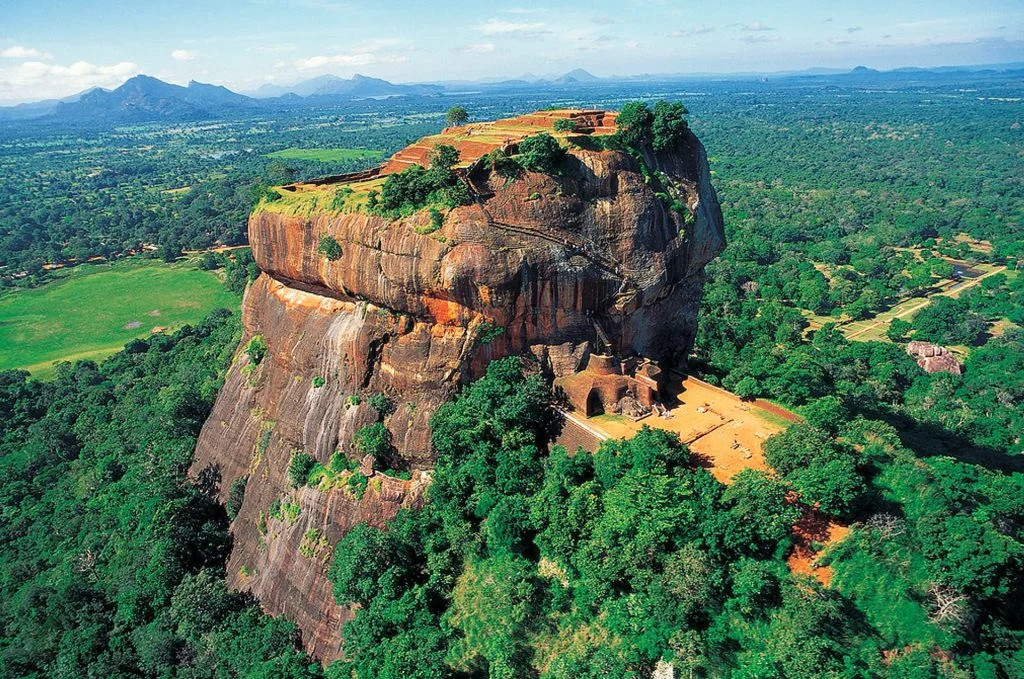
Sigiriya Rock Fortress is one of the most visited cultural landmarks on the island and a celebrated UNESCO World Heritage Site. Often referred to as the “Eighth Wonder of the World,” this ancient citadel rises dramatically 200 metres (660 feet) above the surrounding forested plains of the Central Province. Known historically as “Sinha-Giri” (Lion Rock), the fortress earned its name from the colossal lion sculpture that once guarded the final stairway to the summit palace, of which only the massive carved paws remain today.
Constructed in the 5th century CE by King Kassapa (477–495 CE), Sigiriya represents an extraordinary synthesis of ancient urban planning, sophisticated hydraulic engineering, landscape architecture, and classical art. Unlike most ancient Sri Lankan ruins that served monastic purposes, Sigiriya was designed as an impregnable royal citadel and pleasure capital, offering invaluable insight into non-religious court architecture in ancient South Asia. The hike to the summit encompasses roughly 1,200 stone and iron steps, leading past manicured water gardens, boulder monasteries, and sheer rock galleries to the royal palace ruins crowning the peak.
The Eighth Wonder of the World – Architectural Highlights
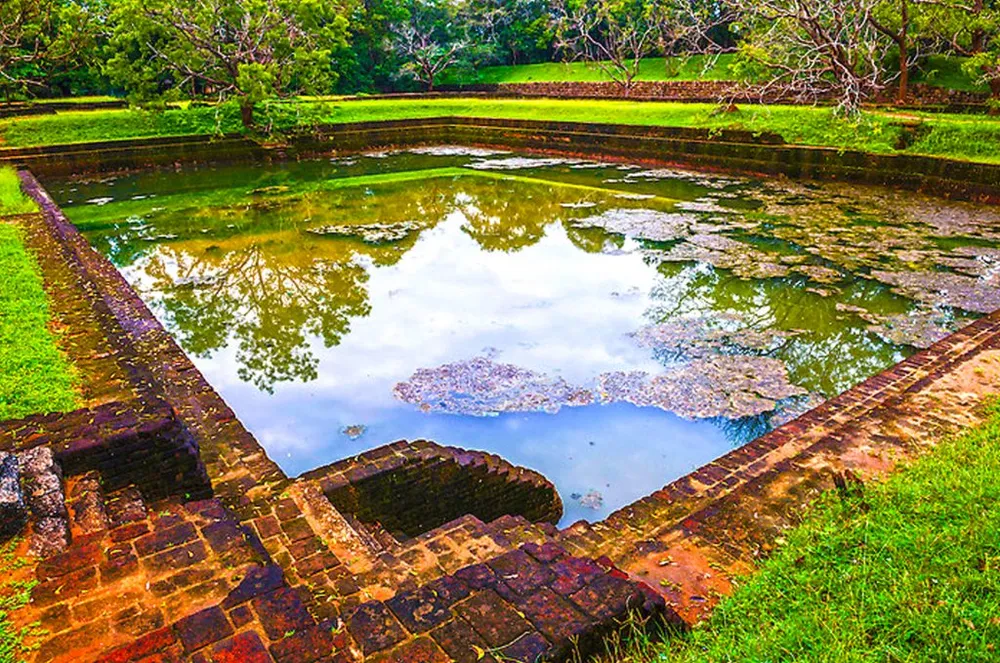
The archaeological complex covers roughly 15 hectares and is organized around a strict east-west axis. The journey through the citadel leads through distinct architectural zones: the expansive royal pleasure grounds comprising the Water Gardens, Boulder Gardens, and Terrace Gardens, flanked by ancient moats fed by the Sigiriya Wewa reservoir. Ascending the western rock face reveals the sheltered Fresco Paintings Pocket and the burnished Mirror Wall & Sigiriya Graffiti, leading to the monumental Lion’s Paws Sculpture terrace before reaching the summit palace plateau.
The Royal Pleasure Gardens
The pleasure gardens at the western base of the rock rank among the oldest surviving landscaped gardens in the world. The royal planners adapted the natural contours of the landscape with remarkable hydraulic precision, dividing the space into three distinct, interconnected zones.
1. Sigiriya Water Gardens
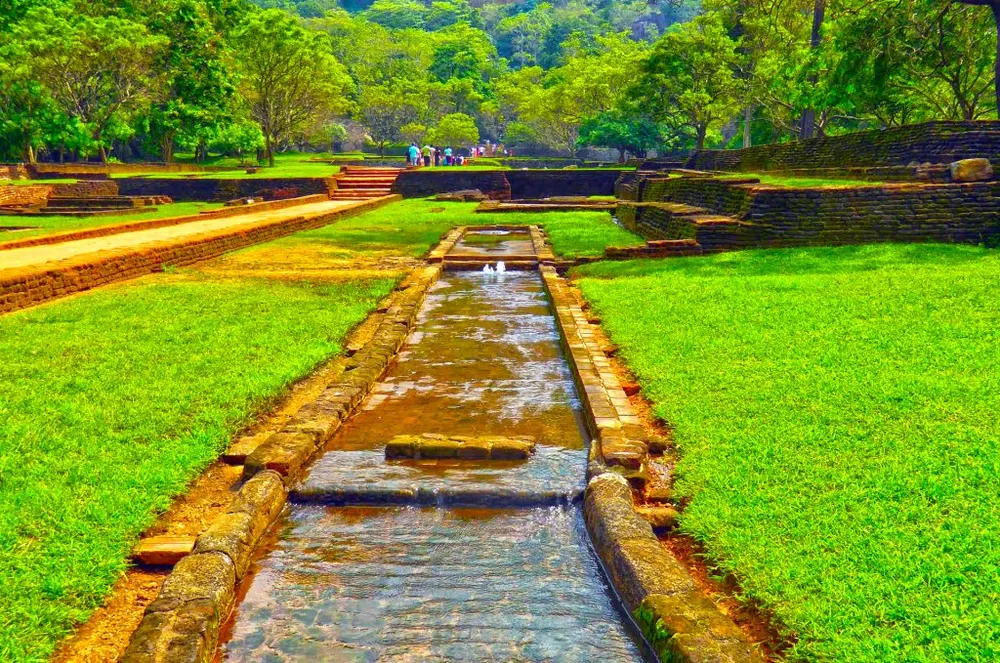
The symmetrical water gardens consist of interconnected pools, sunken courtyards, bathing pavilions, and underground terracotta conduits. Fed by gravity from the adjacent Sigiriya Wewa reservoir, the system powers circular limestone fountains that still erupt with gentle jets during the rainy season. The royal court used these gardens for ceremonial gatherings, cooling retreats, and seasonal water games.
2. Sigiriya Boulder Gardens
East of the water gardens, the landscape transitions into the boulder gardens. Here, monumental natural granite boulders were integrated directly into the architectural layout without quarrying them away. Many boulders feature ancient drip-ledges (katare) carved beneath their overhangs, indicating that they served as rock-shelter monasteries for Buddhist monks as early as the 3rd century BCE before King Kassapa transformed the site. Stone sockets on the rock surfaces once supported timber pavilions and winding stairways.
3. Sigiriya Terrace Gardens
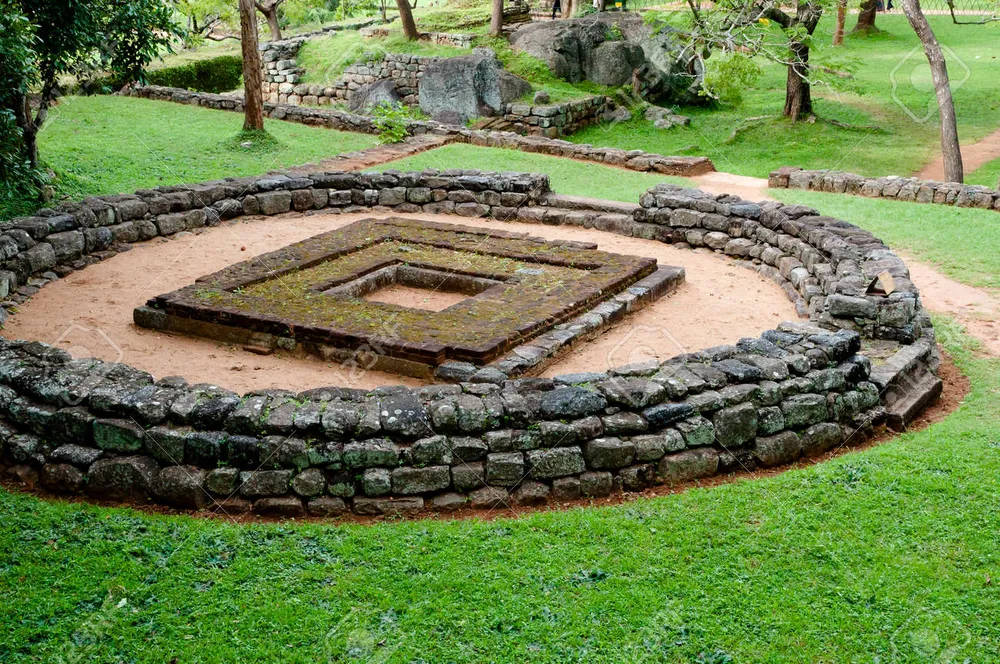
Climbing towards the base of the rock, the terrace gardens consist of concentric rubble retaining walls that wrap around the lower slopes. Each rising terrace was planted with flowering trees and shrubs, creating a gradual vertical progression from the flat western plains to the sheer rock face.
The Ancient Stairway & Cliff Face Features
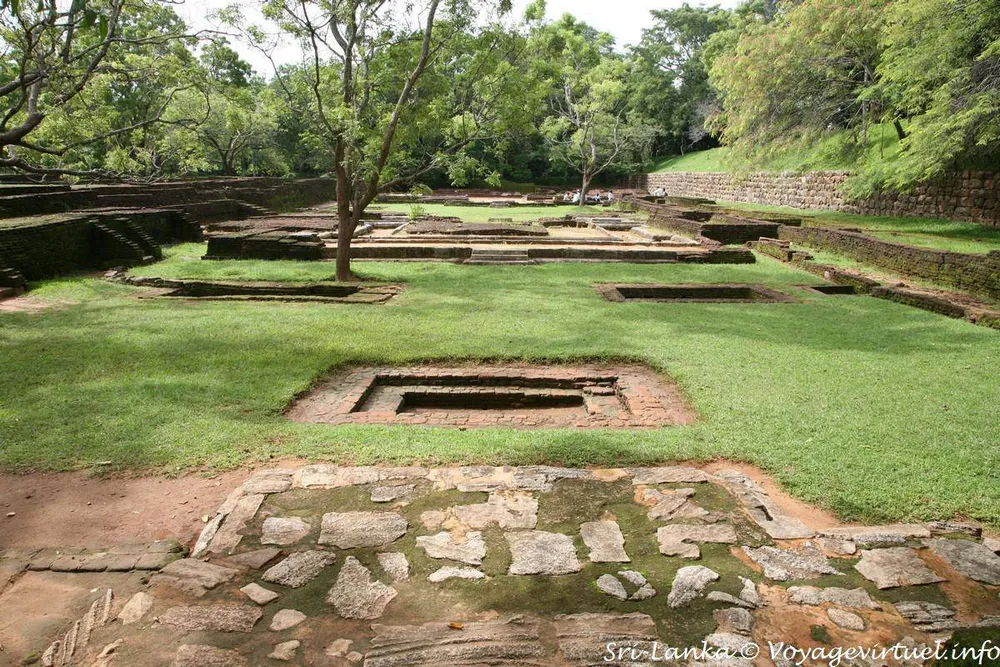
A wide terrace marks the transition from the ground gardens to the vertical climb. From here, an engineered modern stairway follows the traces of the original 5th-century route carved into the granite rock face.
The Sigiriya Frescoes
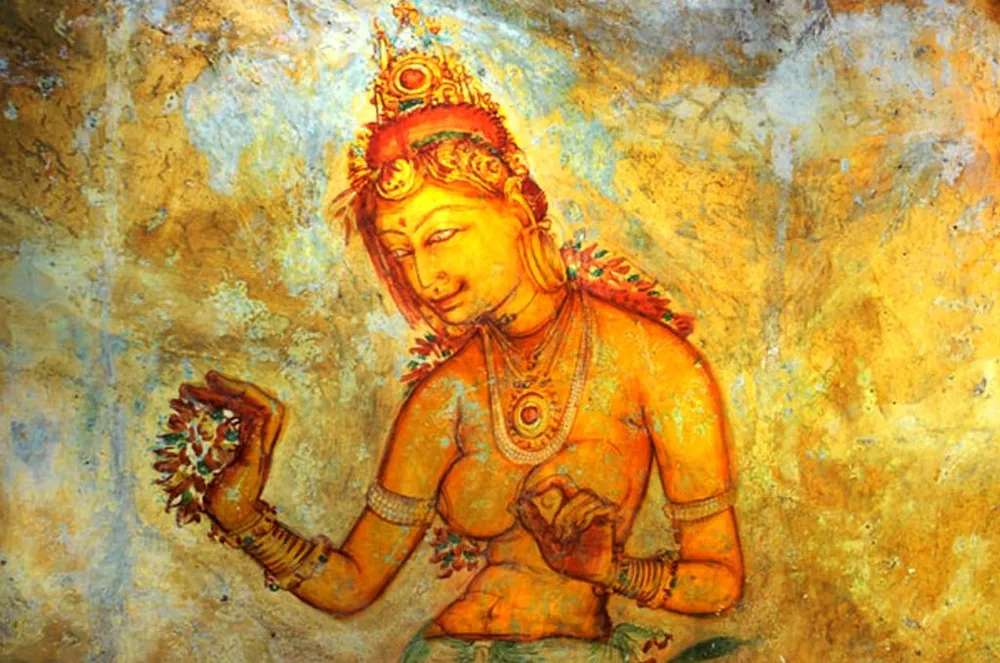
Sheltered within a natural depression on the western rock face, roughly 100 metres above the ground, are the famous Sigiriya frescoes. According to ancient graffiti, up to 500 portraits once adorned the plastered rock face. Today, 21 masterfully preserved depictions of celestial nymphs (apsaras) or court maidens remain.
Painted in earth tones of ochre, red, and green using a refined tempera technique, the maidens are shown emerging from clouds holding flowers and lotus petals. Art historians often draw parallels with the contemporary 5th-century Buddhist frescoes of Ajanta Cave 16 in central India. However, the Sigiriya paintings display distinct local techniques, including a luminous copper-blue pigment and a rare naturalistic, life-like movement that is uniquely Sri Lankan.
Note: To protect the delicate ancient pigments, photography and flash cameras are strictly prohibited inside the fresco pocket.
The Mirror Wall and Ancient Graffiti
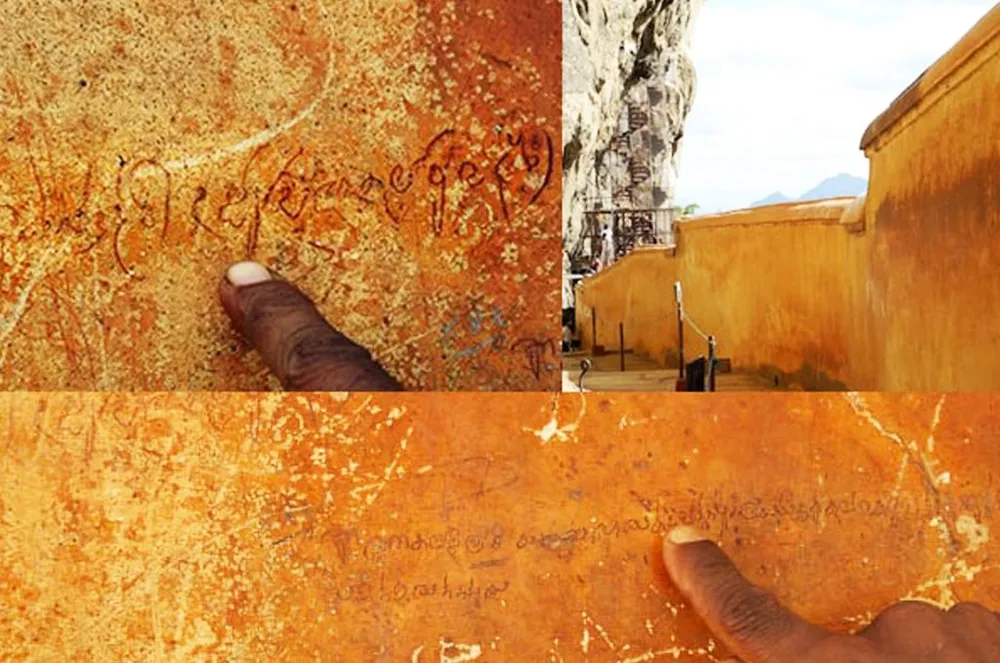
Directly below the fresco pocket runs the Mirror Wall (Katabitha). Originally constructed from brick masonry and covered with a lime plaster burnished to a glass-like sheen, the wall was polished so thoroughly that King Kassapa was said to see his reflection as he walked beside it.
Over the centuries following the abandonment of the palace, visitors from across the island traveled to Sigiriya to marvel at the ruins and the frescoes. Between the 6th and 14th centuries, these pilgrims inscribed hundreds of verses directly onto the plaster using styluses. These inscriptions, known as the Sigiriya Graffiti, provide rare linguistic and literary records of ancient colloquial Sinhala, capturing romantic poetry, personal reflections, and words of awe for the painted maidens.
The Lion’s Paws Terrace
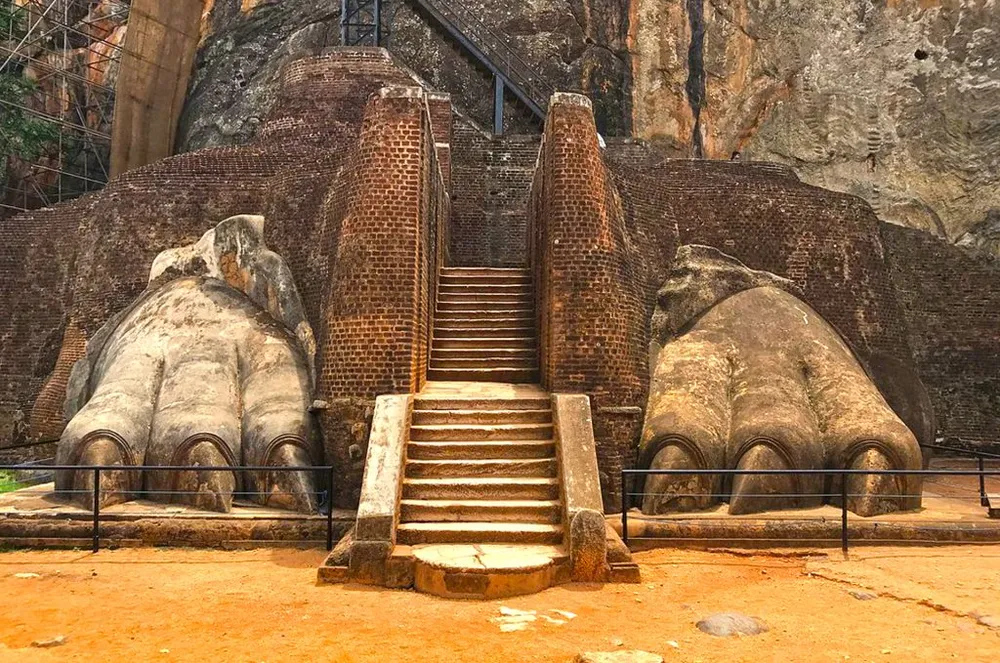
Continuing along the northern face of the rock brings climbers to the expansive Lion Terrace. This intermediate plateau served as the grand entrance to the summit palace. In antiquity, a colossal brick and masonry lion stood here; visitors ascended into the palace by entering between its paws and climbing through its open mouth.
Today, only the two massive paws survive, complete with meticulously carved claws flanking a narrow iron staircase. Looking up from this terrace provides an awe-inspiring perspective of the vertical rock face that remains to be climbed.
The Summit Palace Complex
Climbing the final flight of steps from the Lion’s Paws leads onto the 1.5-hectare summit plateau, which houses the terraced ruins of King Kassapa’s private royal citadel.
Summit Palace Foundations & Royal Pool
The foundations outline reception halls, guardrooms, the king’s private bedchambers at the highest elevation, and a magnificent royal bathing pool carved directly from the solid gneiss bedrock. Nearby sits a smoothly sculpted granite throne (asanaya) facing the morning sunrise, where the king once held audience overlooking his realm.
360° Panoramic Views
Reaching the summit rewards climbers with breathtaking 360-degree vistas across the dry-zone wilderness. To the west, the geometric lines and reflecting pools of the Water Gardens unfold directly below. Looking south reveals the distinctive profile of Pidurangala Rock, offering an iconic vantage point back towards Sigiriya. To the north rises Mapagala mountain framed by dense green forest canopies, while on clear mornings, the distant white stupas of ancient Anuradhapura can even be glimpsed on the northwest horizon.
Sigiriya Rock Fortress FAQs
What is Sigiriya and why is it important?
Sigiriya is an ancient rock fortress and palace complex built in the 5th century CE by King Kassapa. It is celebrated globally for its sophisticated hydraulic gardens, 5th-century wall paintings, polished Mirror Wall, and colossal Lion's Paws gateway. It was inscribed as a UNESCO World Heritage Site in 1982.
How many steps are there to climb at Sigiriya?
There are approximately 1,200 steps from the base through the gardens, past the Lion's Paws, and up to the summit plateau. Handrails and safety barriers are installed along all exposed staircases.
How long does the climb take?
The ascent typically takes 45 to 60 minutes depending on fitness and crowd levels. We recommend allowing 2.5 to 3.5 hours for the complete experience, including exploring the water gardens, viewing the frescoes and Mirror Wall, and relaxing at the summit.
How much are entrance tickets to Sigiriya?
Tickets for foreign adults are USD $36 per person (or local currency equivalent at official CCF exchange rates), while tickets for foreign children aged 6 to 12 and SAARC passport holders are USD $18. Tickets can be purchased at the main Central Cultural Fund ticket office near the Sigiriya Museum or online through the official CCF e-services portal.
What are the opening hours?
The site is open daily from 7:00 AM to 5:30 PM (ticket counters close at 5:00 PM). It is open 365 days a year, including all public holidays.
What is the best time of day to climb?
Early morning from 7:00 AM to 9:00 AM and late afternoon from 3:30 PM to 5:30 PM are the best times to climb. This avoids the intense midday heat, provides softer lighting for photography, and avoids peak mid-morning tour groups.
Is climbing Sigiriya difficult or dangerous?
The climb is physically demanding due to steep flights of stairs, but it is not dangerous. Pathways and staircases are secured with modern steel railings. Anyone with moderate mobility can complete the climb by pacing themselves. Those with severe vertigo or mobility limitations can enjoy the ground-level gardens and the Sigiriya Museum.
What is the dress code for Sigiriya?
Unlike active Buddhist temples, Sigiriya is an archaeological and secular palace site, so there is no strict religious dress requirement (covering knees and shoulders is not mandatory). However, lightweight, breathable clothing, a sun hat, sunscreen, and sturdy walking shoes or sneakers are strongly recommended.
Planning Your Visit to Sigiriya
Sigiriya forms the central anchor of the Cultural Triangle and pairs easily with nearby landmarks like the Dambulla Cave Temple and morning hikes up Pidurangala Rock.
At Overa Tours, we organize private chauffeur-driven excursions and comprehensive cultural itineraries, including the 10-Day Ancient Kingdoms Heritage Trail and the Cultural Triangle & Galle Fort tour. Contact our travel team to arrange your private guided visit to Sigiriya and surrounding cultural highlights.