Kumana National Park, historically known as Yala East National Park, is the island’s premier ornithological wilderness, spanning 18,149 hectares along the remote southeastern coast. Bordered by the Kumbukkan Oya to the south and vast marine lagoons to the east, Kumana is globally celebrated as a pristine eco-tourism destination where hundreds of thousands of resident and migratory birds converge.
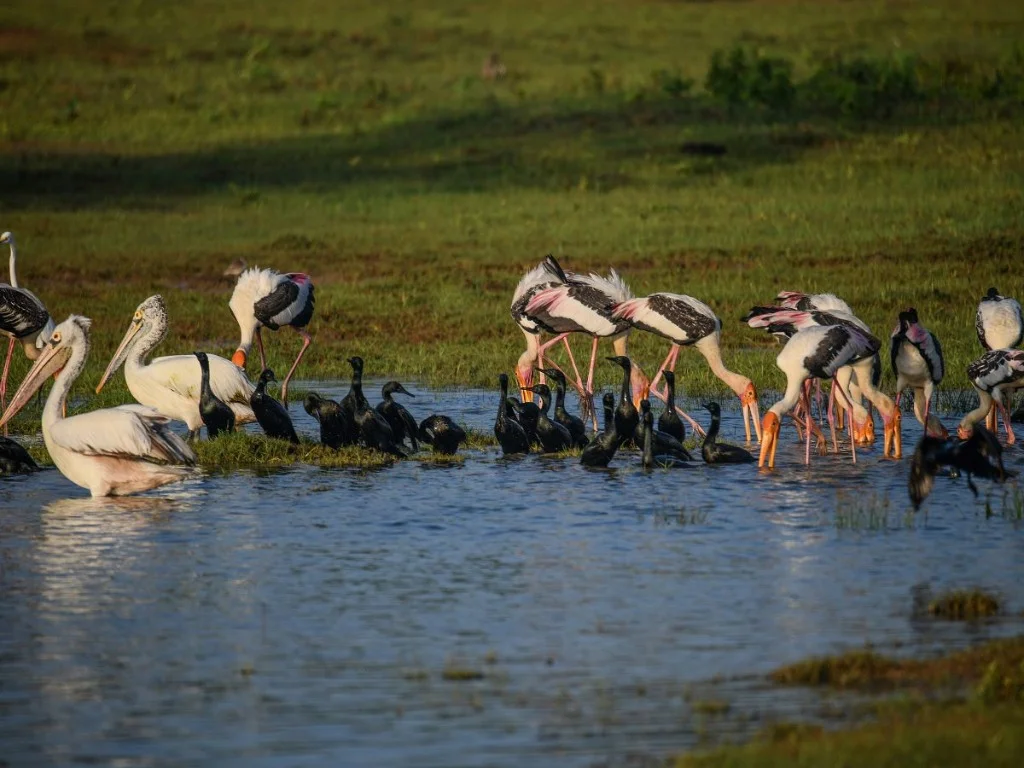
The jewel of the park is Kumana Villu, a 200-hectare natural mangrove marsh fed by the Kumbukkan Oya through a half-mile inlet. During the annual breeding peak between May and June, this sprawling wetland transforms into one of Asia’s most spectacular avian nurseries. The mangrove treetops and reed beds become alive with nesting colonies of spot-billed pelicans, painted storks, Eurasian spoonbills, black-headed ibises, herons, egrets, and cormorants.
Beyond its celebrated avifauna, Kumana shares continuous ecological corridors with Yala National Park, providing sanctuary for Asian elephants, Sri Lankan leopards, sloth bears, wild water buffaloes, and mugger crocodiles. Situated just 30 kilometers south of Arugam Bay along the scenic East Coast, Kumana offers a refreshingly tranquil safari experience free from the crowded tracks of more commercialized reserves.
Why Visit Kumana National Park?
- Uncrowded Safari Wilderness: While western Yala draws heavy safari vehicle traffic, Kumana receives only a fraction of visitors, giving photographers and wildlife lovers serene, uninterrupted wildlife encounters.
- Vast Bird Community: With over 255 recorded avian species, Kumana is the country’s most vital waterbird nesting ground and a designated Ramsar-worthy wetland habitat alongside Bundala National Park.
- Big Game Mammals: Safaris through the dry scrub forest frequently yield sightings of elephants, leopards stalking rocky outcrops, golden jackals, wild boars, and sloth bears feeding in palu groves.
- Ancient Monastic Heritage: Rocky granite ridges within the reserve conceal ancient Buddhist rock shelters, monastic caves, and Brahmi inscriptions dating from the 2nd century BCE (such as the Bambaragasthalawa ruins).
- The Sacred Pada Yatra Route: Each year, thousands of Hindu and Buddhist pilgrims walk through the wild heart of Kumana during the legendary Pada Yatra, a traditional coastal foot pilgrimage leading to the sacred forest shrine of Kataragama.
Best Time to Visit Kumana
- February to July (Dry Season & Breeding Peak): The premier window for wildlife safaris and bird watching. Rainfall is minimal, vegetation thins out for superior visibility, and May to June marks the height of nesting activity at Kumana Villu.
- October to January (Northeast Monsoon & Migrant Season): While seasonal monsoon rains can make interior mud tracks challenging, this period welcomes immense flocks of migratory waterfowl arriving along the Central Asian Flyway from northern Eurasia and the Himalayas.
Bird Watching Highlights at Kumana Villu
Kumana is an essential pilgrimage for birders, sheltering both resident wetland species and long-distance migrants:
- Large Wading & Nesting Flocks: Vast colonies of painted storks, spot-billed pelicans, Asian openbills, glossy ibises, black-headed ibises, purple herons, and little cormorants raising chicks in the mangrove canopy.
- Rarities of the Wetlands: The elusive black-necked stork—the island’s rarest breeding wetland bird—alongside lesser adjutants, Pacific reef egrets, and great thick-knees.
- Long-Distance Migrants: Flocks of northern pintails, garganeys, common sandpipers, whimbrels, and yellow wagtails feeding across shallow saline lagoons after flights covering thousands of miles.
- Raptors & Forest Birds: Crested serpent eagles, white-bellied sea eagles, grey-headed fish eagles, malabar pied hornbills, and vibrant Indian rollers.
Wildlife Safaris in Kumana National Park
Although celebrated primarily as a bird haven, Kumana supports a thriving population of large mammals and reptiles across its dry semi-evergreen forest and thorn scrub:
- Elephants: Small resident herds and solitary tuskers frequently bathe and forage along the banks of the Kumbukkan Oya, moving freely between Kumana, Lahugala, and the Yala wilderness.
- Carnivores & Predators: Sri Lankan leopards roam the granite boulder hills, while sloth bears are often spotted during the fruiting season of the Palu (Manilkara hexandra) trees in mid-year.
- Reptilian Life: Mugger crocodiles bask along every major tank and lagoon shore, joined by water monitors and star tortoises.
- Regional Safari Pairings: Travelers seeking comprehensive wildlife expeditions often pair Kumana with the elephant gatherings of Gal Oya National Park and the diverse terrain of Yala National Park.
Safari Camping in the Wilderness
Camping inside Kumana provides an immersive encounter with the sights and sounds of the wild:
- Riverside Campsites: Official campsites run by the Department of Wildlife Conservation (DWC) dot the forested banks of the Kumbukkan Oya under shady kumbuk trees (Terminalia arjuna).
- Luxury Mobile Glamping: Operators set up fully serviced tented safaris complete with raised beds, private en-suite amenities, naturalist guides, and candlelit dinners under the stars.
- Nighttime Wilderness Sounds: Sleep to the calls of nightjars, the distant roar of the ocean surf, and the trumpeting of river elephants.
Best Accommodations Near Kumana
Most travelers base themselves in the laid-back coastal towns of Arugam Bay and Panama, situated just 30 to 45 minutes north of the park gate:
- The Spice Trail: A premier boutique hotel featuring contemporary garden chalets, an open-air swimming pool, and fine dining in central Arugam Bay.
- Stay Golden: Relaxed beachfront villas with yoga shalas and panoramic ocean views south of the main point.
- Jetwing Yala: Eco-friendly luxury resort offering beach chalets and direct proximity to southern safari tracks.
- The Bavarian Resort: Comfortable rooms and quiet garden surroundings ideal for early morning jeep departures.
- Upali Beach Surf Resort: Rustic beachfront accommodation located right at the edge of the world-famous surf point.
Getting to Kumana National Park
Kumana National Park is situated approximately 340 kilometers east of Colombo and roughly 30 kilometers south of Arugam Bay. The final staging post is the quiet coastal village of Panama, from where a dirt road runs south through coastal sand dunes and lagoons to the Okanda park entrance gate. Dedicated 4WD safari jeeps with high ground clearance are required to navigate the sandy tracks and river crossings within the park.