Where windswept sandbars stretch toward the Indian horizon and ancient baobab trees whisper centuries of maritime lore, Mannar unveils an untouched northern frontier of sacred pilgrimage shrines, vibrant bird sanctuaries, and timeworn coastal authenticity.
Perched along the arid northwestern coastline approximately three hundred kilometres north of Colombo, Mannar Island encompasses roughly 130 square kilometres of flat, sun-drenched terrain linked to the mainland by a modern road bridge spanning the emerald lagoon. Unlike the bustling commercial resort strips found in the south, Mannar preserves a tranquil, undiscovered ambiance defined by stark coastal landscapes, shimmering white salt salterns, roaming feral donkeys, and deep spiritual heritage. As the closest geographical point between the island and the Indian subcontinent, Mannar has functioned for millennia as a vital crossroads of international maritime trade, Hindu epic lore, and colonial conquest. For travelers seeking an authentic off-the-beaten-path escape, Mannar rewards the adventurous with extraordinary wildlife spectacles, peaceful deserted beaches, and a profound sense of timeless serenity.
Adam’s Bridge and the Historic Pier at Talaimannar
At the westernmost extremity of Mannar Island lies Talaimannar, where the land fragments into Adam’s Bridge, also revered across the subcontinent as Rama Setu. This legendary chain of limestone shoals, coral reefs, and shifting sandbanks extends across thirty kilometres of shallow turquoise waters toward Dhanushkodi on Rameswaram Island in Tamil Nadu. Immortalisated in the ancient Hindu epic Ramayana, the sandbanks are celebrated as the miraculous bridge constructed by Lord Rama’s Vanara army to cross the Palk Strait and rescue Princess Sita from King Ravana. Geological records indicate that this natural land bridge was completely traversable on foot until a catastrophic cyclone breached the channels in the fifteenth century.
Today, visitors can travel to the very edge of the headland to admire the historic Talaimannar Lighthouse, a stately cylindrical white tower erected in 1915 that overlooks the rusted iron pilings of the old railway pier. For decades throughout the twentieth century, this pier served as the bustling maritime link for the famed Indo-Ceylon Express, which transported passengers between Colombo and Chennai via train and passenger ferry. Standing on the deserted sandspits of Adam’s Bridge Marine National Park at sunrise, with the morning breeze whipping across the shallows and flocks of coastal waders taking flight, offers an unforgettable encounter with myth and open ocean geography.
Spiritual Antiquities: Thiruketheeswaram Kovil and Our Lady of Madhu
Mannar has served as a sacred sanctuary of divine worship for thousands of years, housing monuments of profound significance to both Hindu and Christian pilgrims. Situated on the mainland near the entrance to the causeway stands Thiruketheeswaram Kovil, one of the five ancient Pancha Ishwarams dedicated to Lord Shiva across the island. Revered in the seventh-century Thevaram hymns composed by celebrated Saivite saints Sambandar and Sundarar, the temple has stood on these coastal plains since pre-Christian antiquity. Mythological accounts trace its origins to Mayan, the celestial architect and father of Ravana’s queen Mandodari, who reputedly built the shrine to seek Lord Shiva’s blessings. Pilgrims from around the world gather at the temple’s sacred Palavi Theertham tank during the Maha Shivaratri festival to perform purification baths, accompanied by the hypnotic resonance of temple bells, chanting priests, and aromatic incense.
Inland among the dense dry-zone forests of the Mannar District lies the National Shrine of Our Lady of Madhu, one of the most venerable and emotionally significant Catholic pilgrimage centres in South Asia. Dating back more than four hundred years to the era of Dutch religious persecution, the sanctuary was established when faithful devotees carried the revered wooden statue of Our Lady of Good Health deep into the jungle for safety. Today, the basilica stands as a powerful symbol of unity, drawing hundreds of thousands of Tamil and Sinhalese devotees of all religious backgrounds during the annual August feast to seek blessings, healing, and peace.
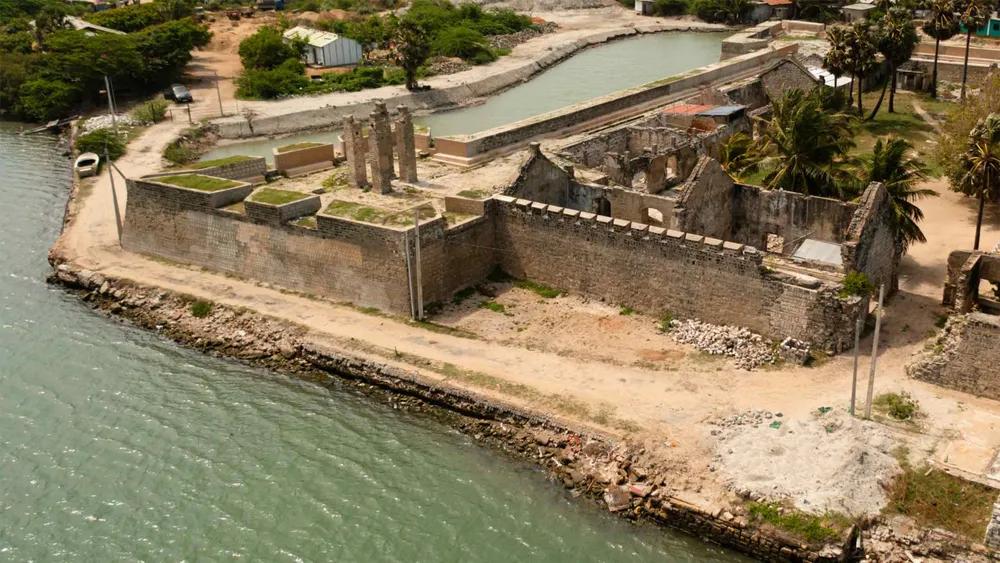
Guarding the entrance to the island beside the lagoon stands the formidable Mannar Dutch Fort. Originally founded by Portuguese conquerors in 1560 and subsequently captured and substantially rebuilt by the Dutch East India Company (VOC) in 1658, the square fortress features four massive corner bastions built of porous coral stone and limestone blocks, offering sweeping vistas across the lagoon where local fishing craft glide across the water.
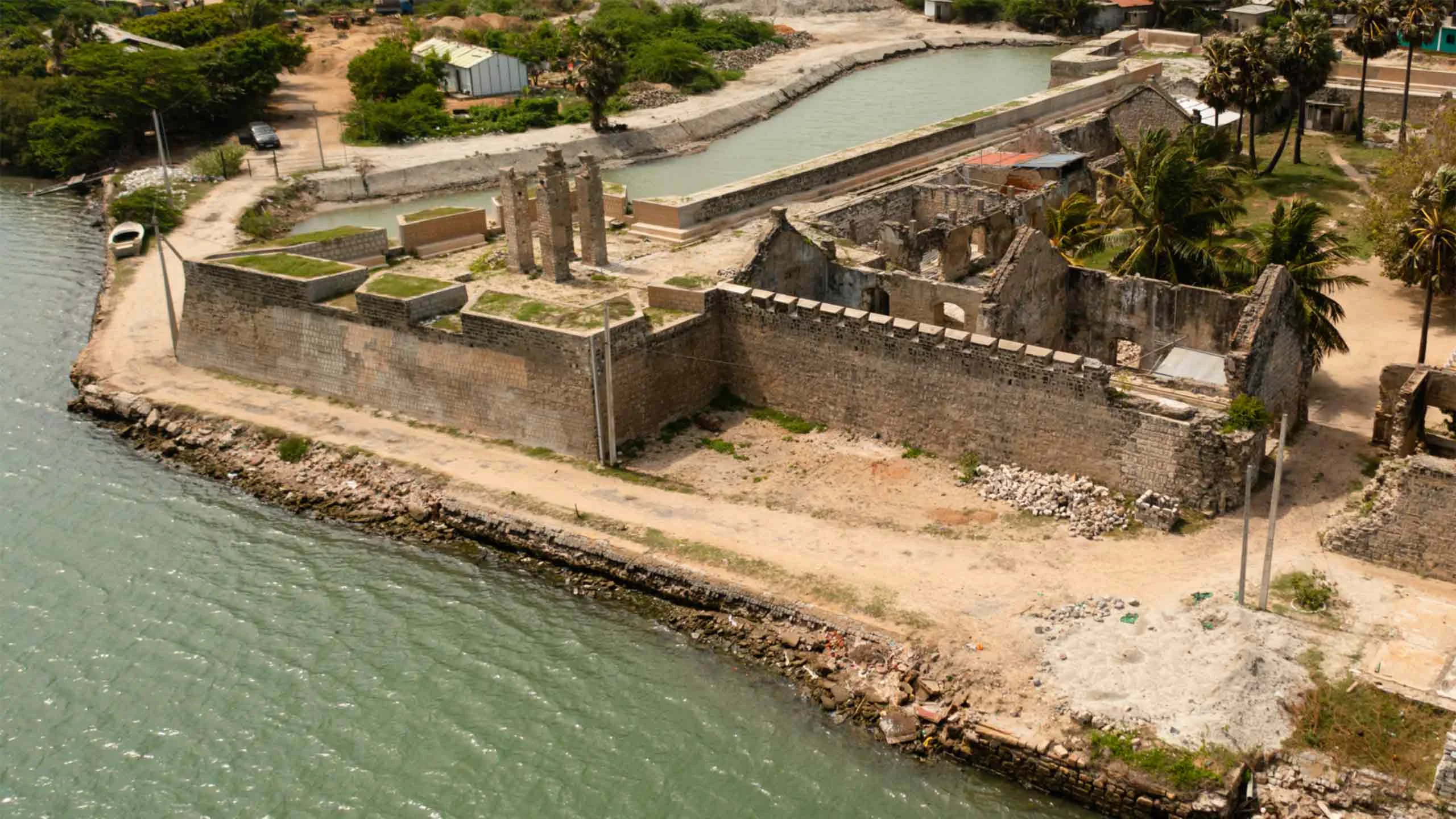 The weathered coral-and-limestone ramparts of Mannar Fort, guarding the historic lagoon entrance since the 17th century.
Avian Haven: Vankalai Sanctuary and Migratory Flyways
For naturalists and ornithologists, Mannar is nothing short of paradise, serving as the primary entry point for hundreds of thousands of migratory birds navigating the Central Asian Flyway. Located at the southeastern approach to Mannar Island, the Vankalai Sanctuary is a globally recognized Ramsar Wetland of International Importance encompassing over 4,800 hectares of shallow saline lagoons, tidal mudflats, salt pans, and mangrove marshes.
Between November and April, the sanctuary witnesses one of the most breathtaking wildlife spectacles in the Indian Ocean as tens of thousands of Greater Flamingos descend upon the shallow waters, creating a vibrant sea of crimson and pink along the water’s edge. Alongside the flamingos, the wetlands provide essential feeding grounds for rare and threatened avian species, including crab-plovers, Eurasian spoonbills, spot-billed ducks, bar-tailed godwits, black-tailed godwits, and Caspian terns. The early morning hours offer extraordinary photography opportunities as white-bellied sea eagles circle high in the thermal currents and painted storks wade rhythmically through the shimmering water.
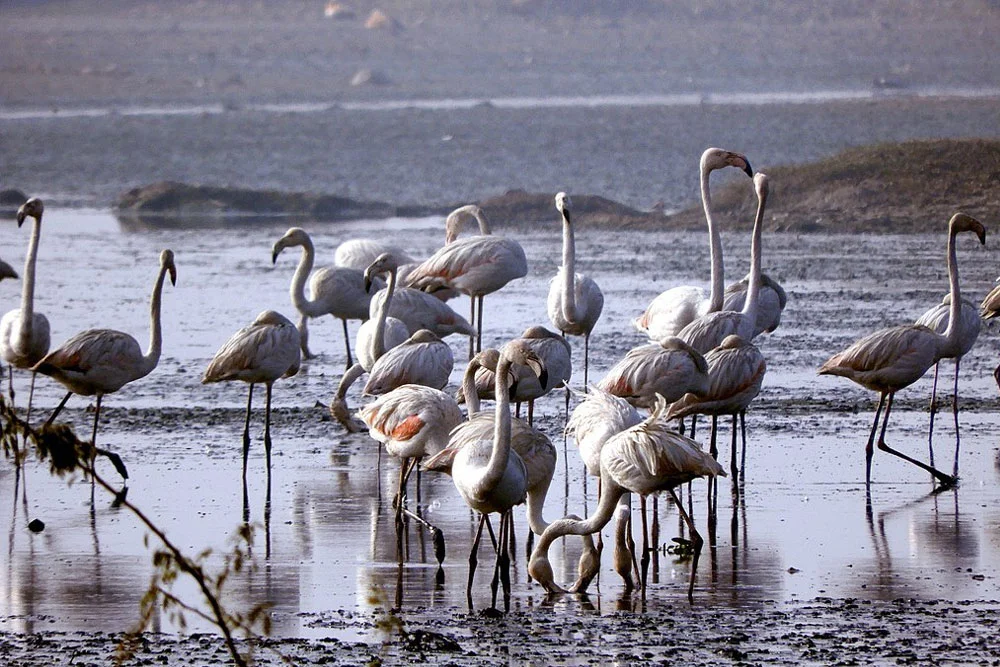 Greater Flamingos gathering across the shallow saline waters of Vankalai Sanctuary, a vital stopover on the Central Asian Flyway.
Living Antiquity: Ancient Baobab Trees, Salt Pans, and Feral Donkeys
The arid landscape of Mannar is home to intriguing botanical and cultural curiosities that reveal centuries of international maritime contact. Perhaps the most famous botanical wonder is the colossal Baobab Tree at Pallimunai, known locally as the Perukka Maram or elephant tree. Believed to have been planted more than seven centuries ago by Arab merchants who traded Arabian horses for Ceylon pearls, this ancient African native (Adansonia digitata) features a gigantic hollow trunk measuring over nineteen metres in circumference, casting generous shade over the sun-drenched soil.
Another distinctive feature of Mannar Island is its population of feral donkeys, whose ancestors were brought to the island by Arab and Somali traders centuries ago as pack animals. Today, these gentle, hardy creatures roam freely across the roadsides, salt pans, and scrublands, having become an endearing emblem of the island’s unique heritage. Along the central lagoon road, vast salt salterns glitter like snowfields beneath the midday sun, where local families continue the time-honored craft of hand-harvesting unrefined sea salt crystals from the concentrated seawater ponds.
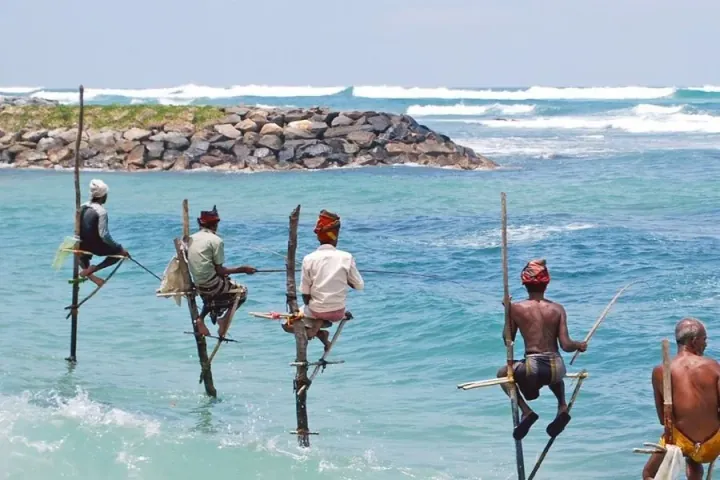
In the coastal villages of Pesalai and Talaimannar, traditional fishing communities maintain ancient maritime practices. Visitors walking along the shore at dawn can watch teams of fishermen hauling in immense karavalaya beach seine nets, sorting through sparkling catches of blue swimmer crabs, silver mullet, cuttlefish, and jumbo tiger prawns straight from the surf with genuine warmth and northern hospitality.
Flavours of the Arid Coastline
The culinary traditions of Mannar reflect its proximity to the sea and the bold, rustic spices of the Northern Province. Dining here is unpretentious and intensely flavorful, centered around the freshest seafood caught daily by local village fishermen. Travelers can savor fragrant lagoon crab curries simmered in rich coconut milk, roasted coriander, crushed fenugreek, and fiery red chillies, accompanied by warm steamed rice, freshly baked wood-fired bread, and tangy coconut sambal.
Local markets and roadside stalls offer an array of regional treats, from sun-cured dry fish (karuvadu) celebrated across the island for its rich umami flavour, to sweet palmyrah jaggery, cooling King Coconut water, and authentic Jaffna-style vegetable curries prepared with indigenous moringa leaves and local garden produce. Savoring a simple seafood dinner at a beachfront guesthouse as the evening breeze cools the air is the quintessential Mannar experience.
Seasons, Climate, and Travel Logistics
Mannar is situated within the dry zone of the island, characterized by hot, sunny, and arid conditions for most of the year, with temperatures averaging between 28 and 34 degrees Celsius. The premier time to visit Mannar is during the dry winter window from November through April, when the climate is pleasantly breezy, rainfall is minimal, and the migratory bird season is at its peak. During these months, the waters around Talaimannar and Adam’s Bridge are calm, making boat excursions and coastal walks thoroughly enjoyable.
Reaching Mannar is a scenic and straightforward journey. Travelers can take the northern railway line aboard the Talaimannar Night Mail or daytime express trains from Colombo Fort, journeying through the central plains and crossing the scenic lagoon bridge directly into the heart of the island. Alternatively, private air-conditioned vehicle transfers via the A14 highway from Colombo take approximately four to five hours, allowing travelers to effortlessly combine their visit with archaeological expeditions in Anuradhapura, leopard safaris in Wilpattu National Park, or cultural tours of Jaffna.
Planning Your Mannar Journey with Overa Tours
Whether you wish to stand upon the legendary sandbanks of Adam’s Bridge, photograph thousands of pink flamingos in the shimmering lagoons of Vankalai, explore the ancient stone sanctum of Thiruketheeswaram Kovil, or simply unwind on miles of deserted coastline, Mannar offers an authentic and unforgettable travel escape. At Overa Tours, our team crafts bespoke northern travel itineraries complete with private air-conditioned transport, knowledgeable local naturalist guides, and carefully selected boutique guesthouses.
Mannar integrates seamlessly into broader cultural and wildlife journeys across the north and west, pairing naturally with ancient UNESCO heritage sites, coastal wetlands, and the historic fortress of Jaffna. To begin designing your private expedition to the hidden north, contact our travel specialists.
Frequently Asked Questions
What is the best time of year to visit Mannar?
The best time to visit Mannar is from November through April, when the weather is warm, sunny, and cooled by coastal trade winds. This period coincides with the peak migratory bird season, when tens of thousands of Greater Flamingos and rare waterbirds inhabit the Vankalai Sanctuary. The sea around Adam's Bridge is also calm and clear during these months, offering ideal conditions for coastal exploration.
How do visitors reach Adam's Bridge (Rama Setu) from Mannar town?
Adam's Bridge is located at Talaimannar, approximately thirty kilometres west of Mannar town at the far western tip of the island. Travelers can reach Talaimannar via a scenic thirty-minute drive by private vehicle or tuk-tuk along the central island road, passing coastal villages and sand dunes. At the end of the road near the Talaimannar Lighthouse, visitors can walk out onto the exposed sandbanks of Adam's Bridge Marine National Park or arrange local boat excursions across the shallow sandbars when sea conditions permit.
What bird species can be spotted at Vankalai Sanctuary?
Vankalai Sanctuary is one of the most critical bird habitats in South Asia, hosting over 150 species of resident and migratory waterbirds. The primary highlight between November and April is the arrival of tens of thousands of Greater Flamingos feeding in the shallow lagoons. Visitors can also spot crab-plovers, Eurasian spoonbills, spot-billed ducks, bar-tailed godwits, black-tailed godwits, Caspian terns, painted storks, and white-bellied sea eagles.
How old is the famous Baobab tree in Mannar and how did it arrive there?
The famous Baobab tree at Pallimunai in Mannar is estimated to be over seven hundred years old. Native to mainland Africa and Madagascar, baobab trees were brought to Mannar by Arab merchants who traded extensively along the northern coast of the island during the medieval era. The tree features an extraordinary hollow trunk measuring more than nineteen metres in circumference and remains a living testament to ancient Indian Ocean maritime trade routes.
What is the spiritual significance of Thiruketheeswaram Kovil and Our Lady of Madhu?
Thiruketheeswaram Kovil is one of the five ancient Pancha Ishwarams dedicated to Lord Shiva in Sri Lanka, revered since pre-Christian times and celebrated in the sacred seventh-century hymns of Tamil Saivite saints. Meanwhile, the National Shrine of Our Lady of Madhu is a four-hundred-year-old Catholic sanctuary nestled in the mainland forests, home to the revered statue of Our Lady of Good Health and venerated as a sacred place of healing and unity by both Tamil and Sinhalese pilgrims of all faiths.
How do travelers reach Mannar from Colombo or Anuradhapura?
Travelers can reach Mannar by direct train from Colombo Fort via the northern railway line, terminating at Talaimannar Pier. By road, private air-conditioned vehicle transfers from Colombo take approximately four to five hours along the A14 highway via Medawachchiya. Mannar is also situated just an hour and a half northwest of the ancient UNESCO World Heritage city of Anuradhapura, making it an easy and rewarding extension to Cultural Triangle itineraries.