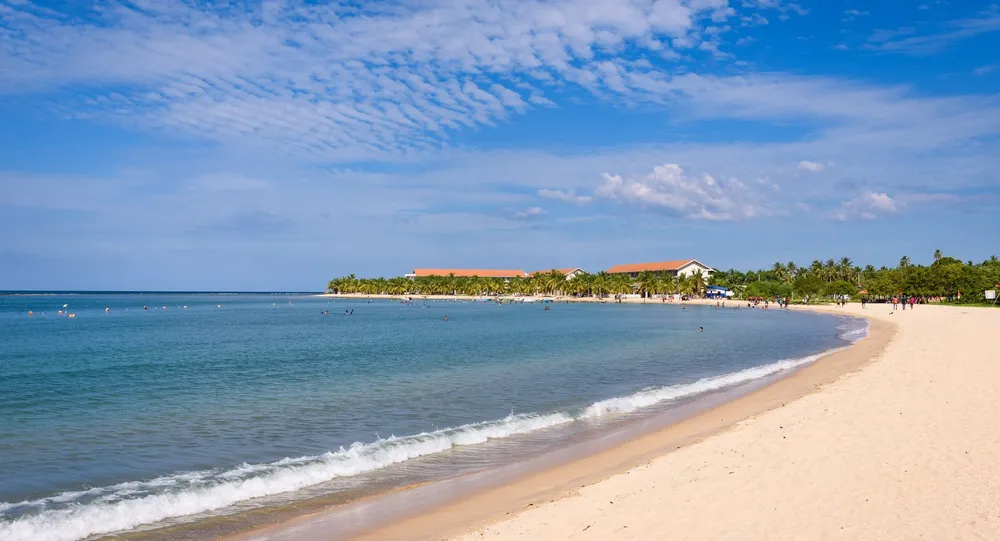
Where protective coral reefs cradle a tranquil turquoise lagoon, Pasikuda unfolds as one of the most idyllic and peaceful beach sanctuaries on the eastern seaboard, celebrated for its warm, waist-deep waters and powdery white sands.
Located in the Batticaloa District of the Eastern Province, approximately 280 kilometres northeast of Colombo and 35 kilometres northwest of Batticaloa town, Pasikuda—historically known as Passekudah, meaning “Bay of the Green Algae”—is celebrated for possessing one of the safest and most remarkable shallow coastlines in the Indian Ocean. A broad, ancient offshore coral reef curves gracefully across the bay, acting as a massive natural breakwater that tames incoming ocean swells. This unique coastal bathymetry creates a glass-calm natural swimming pool where bathers, swimmers, and families can wade out several hundred metres from the shoreline with crystal-clear waters rising barely to the waist. While the southwest monsoon brings rain and choppy surf to the southern and western shores between May and September, Pasikuda enjoys sun-drenched skies, gentle offshore breezes, and placid seas, making it an indispensable coastal highlight of any dry-season holiday across the island.
The Natural Wonder of Pasikuda Bay
The extraordinary attraction of Pasikuda lies in its serene, sheltered bay, which spans an expansive crescent of powdery white sand kissed by transparent azure waters. Unlike open-ocean beaches characterized by unpredictable undertows and crashing shorebreaks, the water in Pasikuda remains exceptionally flat and crystal-clear throughout the summer months. Swimmers of all ages can float effortlessly across sun-warmed shallows, gaze downward at small schools of darting silver fish over the rippled sand, and enjoy long, unhurried swims without the stress of strong ocean currents.
The broad outer reef that encloses the bay serves not only as a protective barrier but also as a flourishing marine habitat. Snorkelers wading out toward the outer reef margin can discover vibrant patches of brain corals, staghorn formations, sea anemones host to playful clownfish, parrotfish, and occasional hawksbill sea turtles feeding along the seabed. Local boatmen offer short outrigger boat rides directly from the shore to deeper reef drop-offs, providing adventurous travelers with wonderful opportunities for snorkeling and underwater photography in warm, welcoming seas.
Kalkudah Beach: The Wild Neighbouring Haven
Just across the narrow palm-studded headland that defines the southern horn of Pasikuda lies Kalkudah Beach, an expansive, untamed stretch of golden shoreline that presents a captivating contrast to the manicured resort frontages of the main bay. Stretching for several kilometres along the open coast, Kalkudah remains largely untouched by large-scale commercial development, framed by whispering coconut groves, wild palmyrah palms, and coastal casuarina trees.
While Pasikuda is celebrated for its shallow lagoon calm, Kalkudah embraces the gentle rolling swells of the open Bay of Bengal, providing an invigorating setting for morning jogs, beachcombing, and contemplative sunset strolls. Traditional wooden catamarans and vibrant fishing nets line the upper sands where local fishermen launch their craft into the predawn surf. Visitors seeking complete solitude and natural beauty can spend peaceful hours wandering along Kalkudah’s deserted sands, listening to the rhythmic murmur of the surf and taking in panoramic ocean horizons uninterrupted by crowds.
Water Sports, Marine Adventures, and Deep-Sea Diving
The calm waters of Pasikuda create an exceptional playground for aquatic enthusiasts of all skill levels. Water sports centres operated along the beachfront provide high-speed thrills, including jet skiing, wakeboarding, and parasailing, which offers breathtaking aerial vistas of the crescent-shaped coastline, emerald hinterland lagoons, and the outer reef barrier. Kayakers and stand-up paddleboarders can glide serenely across the mirror-like surface of the bay in the early morning, exploring sheltered coves and shallow sandbanks before the midday breeze begins.
For certified scuba divers, the eastern waters off Pasikuda and Batticaloa hold world-class underwater treasures. Beyond the coastal reef formations, the region is internationally acclaimed as the gateway to the historic HMS Hermes, the world’s first purpose-built aircraft carrier, sunk by Japanese air strikes in April 1942 during World War II. Resting upright at a depth of fifty-three metres off the Batticaloa coast, the historic shipwreck is encrusted with black coral and swarmed by dogtooth tuna, giant groupers, and manta rays, representing one of the finest technical deep-wreck dives on the planet. Several licensed dive centres in the area also guide recreational divers to shallower local wrecks, submerged granite boulders, and colorful offshore reef gardens.
Exploring Batticaloa and the Cultural Heritage of the East
Beyond its sun-drenched beaches, Pasikuda serves as a convenient base for discovering the rich historical and cultural tapestry of the Batticaloa region. A scenic forty-minute drive south brings travelers to the historic town of Batticaloa, nestled between the open ocean and a labyrinthine network of interconnected lagoons. Visitors can explore Batticaloa Fort, a historic defensive stronghold originally built by the Portuguese in 1628, captured by the Dutch East India Company in 1638, and later fortified by the British. Surrounded on two sides by the lagoon, the fort preserves thick coral-stone ramparts, colonial administrative chambers, and peaceful lookouts over the water.
Batticaloa is also famous in island folklore for the enigmatic phenomenon of the “Singing Fish.” On calm, clear full moon nights between April and September, particularly near the Lady Manning Bridge on Kallady Lagoon, travelers and locals gather to listen to a subtle, musical humming sound rising from the water, reminiscent of a gently rubbed wet glass finger harp or distant plucked strings, believed to originate from aquatic molluscs or bottom-dwelling marine organisms. Exploring the quiet fishing hamlets, colonial churches, and historic Hindu kovils around the lagoon provides an authentic glimpse into the warm, resilient spirit of eastern coastal communities.
Luxury Beachfront Resorts and Coastal Living
In recent years, Pasikuda has developed into one of the country’s prime beach destinations, having been designated as a specialized eco-tourism zone. Leading luxury hospitality brands have established world-class beachfront sanctuaries along the bay, including Uga Bay, Amaya Beach, Anantaya Resort, Sunrise by Jetwing, and the pioneering Maalu Maalu Resort & Spa, which was architecturally inspired by traditional Sri Lankan fishing villages with timber cottages, woven cadjan textures, and expansive thatched dining pavilions.
These luxury resorts offer spacious oceanfront villas, sprawling freeform infinity pools that seamlessly merge with the azure horizon, holistic Ayurvedic spa pavilions, and private beach dining under the stars. Guests can indulge in rejuvenating herbal oil therapies and sunset yoga sessions on the lawn, accompanied by the gentle sea breeze and the rustle of coconut fronds, experiencing an unhurried level of refined tropical tranquility that contrasts refreshingly with busier resort strips elsewhere on the island.
Eastern Flavours: Fresh Seafood and Regional Gastronomy
The culinary landscape of Pasikuda and the Batticaloa coastline is a delight for lovers of authentic island cuisine, blending indigenous Tamil culinary traditions with Portuguese and Dutch colonial influences. Fresh catches from local fishermen take centre stage at resort restaurants and beachfront eateries, where succulent tiger prawns, fresh cuttlefish, and kingfish are marinated in aromatic curry leaves, lime, and crushed peppercorns before being grilled over open charcoal embers.
A regional specialty not to be missed is authentic Batticaloa Lagoon Crab Curry, prepared using sweet, meaty mud crabs simmered in rich coconut gravy infused with roasted coriander, fenugreek, and fiery dried chillies. Diners can pair these rich curries with delicate steamed string hoppers, soft wood-fired roti, and aromatic coconut sambal. In the evenings, open-air beachfront lounges serve tropical cocktails, freshly harvested King Coconut water, and chilled fruit juices as the sky transitions through shades of lilac, amber, and gold across the quiet bay.
Seasons, Climate, and Travel Logistics
Pasikuda enjoys a tropical dry-zone climate with remarkably consistent sunshine throughout much of the year. The primary high season runs from May through September, coinciding with dry, warm weather and average daily temperatures ranging between 28 and 33 degrees Celsius. During these peak summer months, sea conditions within the bay remain exceptionally calm, making it the premier window for swimming, water sports, and family beach getaways.
The shoulder months of April and October also offer wonderful holiday weather with fewer travelers, competitive resort rates, and warm seas. From November through February, the northeast monsoon brings seasonal rain showers and occasional choppy water to the eastern coast. While major resorts remain open year-round with inviting swimming pools and spa retreats, travelers seeking calm ocean swimming generally plan their visits between late spring and early autumn.
Reaching Pasikuda is a picturesque cross-country journey that showcases the dramatic transition from central lush valleys to sun-dappled eastern plains. Traveling by private air-conditioned vehicle from Colombo or Bandaranaike International Airport takes approximately five to six hours along well-maintained highways via Kurunegala, Dambulla, and Polonnaruwa. Pasikuda is uniquely positioned just an hour and a half east of the ancient royal capital of Polonnaruwa and roughly two hours from the iconic citadel of Sigiriya Rock Fortress, allowing travelers to effortlessly combine ancient cultural discoveries with an exquisite beach retreat.
Planning Your Pasikuda Holiday with Overa Tours
Whether you envision floating in crystal-calm turquoise waters, embarking on a deep-sea diving expedition to historic wartime shipwrecks, taking peaceful sunset walks along the wild sands of Kalkudah, or unwinding in a private beachfront pool villa, Pasikuda delivers an unforgettable coastal escape. At Overa Tours, our travel specialists design bespoke luxury itineraries that feature private chauffeur transfers, reservations at premier beachfront resorts, and tailored day excursions led by licensed guides.
Pasikuda connects seamlessly into broader island circuits, pairing the serene eastern beaches with wildlife safaris in Minneriya National Park or Kaudulla National Park, the ancient wonders of the Cultural Triangle, and the historic harbour of Trincomalee. To begin planning your customized eastern coast holiday to Pasikuda, contact our travel specialists.
Frequently Asked Questions
What makes the sea at Pasikuda Beach so calm and safe for swimming?
Pasikuda Beach is sheltered by a wide, ancient offshore coral reef system that acts as a natural breakwater across the entire bay. This barrier absorbs the force of incoming ocean swells, creating a shallow, flat lagoon where the water remains calm as a swimming pool. Bathers can safely walk several hundred metres out from the shore with the water staying waist-deep, making it one of the safest swimming beaches in South Asia.
When is the best time of year to visit Pasikuda?
The best time to visit Pasikuda is during the dry season from May through September. During these months, the eastern seaboard enjoys sunny skies, minimal rainfall, and flat, crystal-clear sea conditions. The shoulder months of April and October also offer pleasant conditions with fewer visitors, whereas November through February brings seasonal rainfall and rougher seas during the northeast monsoon.
Is Pasikuda suitable for families traveling with young children?
Yes, Pasikuda is widely considered one of the finest family-friendly beach destinations in the country. Because the offshore reef keeps the bay free of strong currents, large waves, and sudden drop-offs, young children can play and splash safely in the warm, shallow waters along the shoreline. Furthermore, luxury beachfront resorts offer dedicated kids’ pools, water sports, and spacious family villas with direct beach access.
What is the difference between Pasikuda Beach and neighbouring Kalkudah Beach?
Pasikuda Beach is a sheltered, crescent-shaped bay lined with upscale resorts, water sports centres, and exceptionally calm, shallow waters ideal for swimming and family leisure. In contrast, Kalkudah Beach, located just across the headland, is a wilder, expansive golden shoreline facing the open ocean with rolling swells, traditional fishing catamarans, and lush coconut palm groves, offering a tranquil retreat away from resort infrastructure.
How far is Pasikuda from the Cultural Triangle sites like Polonnaruwa and Sigiriya?
Pasikuda is exceptionally well positioned for combining beach relaxation with cultural exploration. The UNESCO World Heritage ancient city of Polonnaruwa is situated just seventy kilometres west, taking approximately an hour and twenty minutes by private vehicle. Sigiriya Rock Fortress and the Dambulla Cave Temples are located approximately two hours away, making Pasikuda the ideal coastal conclusion to a Cultural Triangle tour.
What water sports and marine activities are available in Pasikuda?
Visitors to Pasikuda can enjoy a diverse variety of aquatic activities, including jet skiing, windsurfing, stand-up paddleboarding, kayaking, and reef snorkeling directly from the beach or outer reef drop-offs. For certified scuba divers, the region offers guided reef dives and world-class technical diving excursions to the legendary World War II aircraft carrier wreck, the HMS Hermes, off the Batticaloa coast.