Gracing the eastern shoreline beside one of the finest natural harbours on earth, Trincomalee is an extraordinary coastal destination where sacred cliff-top shrines, powder-soft golden beaches, and thriving coral atolls converge.
Known historically as Gokanna in ancient Pali chronicles and Thirukonamalai in classical Tamil literature, Trincomalee has captivated maritime voyagers, imperial powers, and spiritual pilgrims for millennia. Renowned British Admiral Horatio Nelson famously praised its deep-water basin as the finest natural harbour in the world. Today, this vibrant eastern capital seamlessly blends centuries of multicultural heritage with sublime tropical relaxation, inviting travelers to discover ancient Shiva temples perched on sea cliffs, snorkel alongside harmless blacktip reef sharks at Pigeon Island, and encounter majestic blue whales across calm summer seas.
Koneswaram Temple and the Heights of Swami Rock
Rising dramatically 130 metres above the crashing surf of the Indian Ocean, Koneswaram Temple crowns the sheer promontory of Swami Rock within the walls of Fort Frederick. Revered as the Dakshina Kailasam, or Mount Kailash of the South, this sacred Hindu sanctuary is one of the five ancient Pancha Ishwarams dedicated to Lord Shiva across the island, with literary references stretching back over two millennia.
The original sprawling temple complex was famously dismantled in 1622 by Portuguese commander Constantino de Sa, who utilized its carved granite blocks to fortify the garrison below. Centuries later, underwater explorers—including renowned author Sir Arthur C. Clarke in 1956—recovered submerged temple pillars and ancient bronze deities from the seabed. Reconstructed on its historic clifftop vantage point, the present temple houses the sacred swayambhu lingam, surrounded by vibrant shrines, brass oil lamps, and a monumental gilded statue of seated Lord Shiva gazing peacefully toward the eastern horizon.
Immediately beside the temple precinct lies Lover’s Leap, a vertiginous rock precipice plunging directly into the azure sea. The cliff is steeped in colonial legend regarding Francina van Rhede, a Dutch governor’s daughter who plunged into the abyss in 1687 after watching her departing lover’s ship sail across the bay. Today, visitors tie colourful prayer cloths and miniature votive cradles to surrounding iron railings, offering prayers for fertility and divine blessings amidst panoramic ocean breezes.
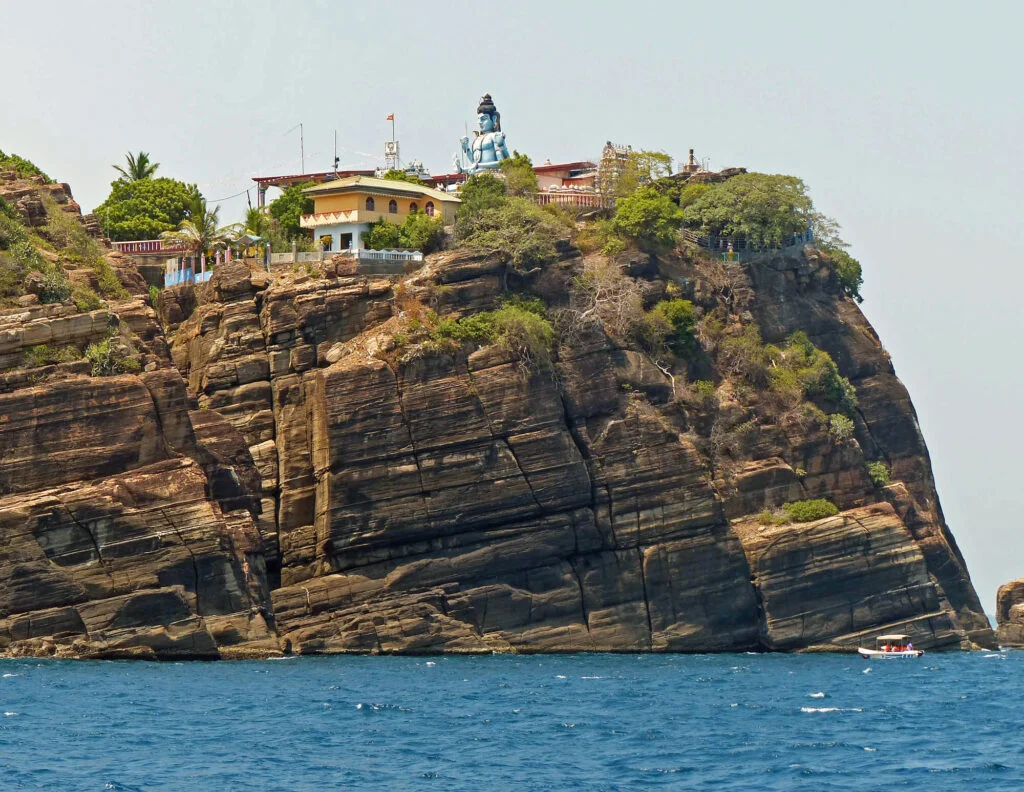 Koneswaram Temple perched high atop Swami Rock, guarding Trincomalee’s historic ocean promontory.
Fort Frederick and Colonial Maritime Heritage
Guarding the narrow neck of the promontory leading to Swami Rock is Fort Frederick, a storied military fortress constructed by the Portuguese in 1623 and substantially expanded by the Dutch East India Company in 1665. Over the centuries, control of this strategic naval citadel shifted between Portuguese, Dutch, French, and British forces, reflecting the intense geopolitical struggles for dominance over the Bay of Bengal.
Today, Fort Frederick operates as an active military station that welcomes visitors along its shaded avenues. One of the most delightful aspects of walking through the fort gates is encountering wild herds of spotted chital deer that roam freely beneath ancient banyan trees, resting peacefully alongside colonial barracks and interacting gently with passersby. Within the nearby town overlooking the bay, the Maritime and Naval History Museum occupies an elegantly restored seventeenth-century Dutch colonial commissioner’s residence, showcasing naval cannons, shipwreck relics from regional sea battles, and educational exhibits detailing the rich marine ecosystems of the eastern coast.
Further along the northern coast road lies the Trincomalee British War Cemetery, one of six Commonwealth War Graves Commission burial grounds on the island. Nestled amidst manicured lawns and flowering frangipani trees, the cemetery serves as a poignant resting place for soldiers and naval personnel who lost their lives defending the vital eastern naval anchorage during World War II, including those who fell during the Imperial Japanese Navy’s carrier airstrike on Easter Sunday in 1942.
Pigeon Island National Park: South Asia’s Premier Coral Haven
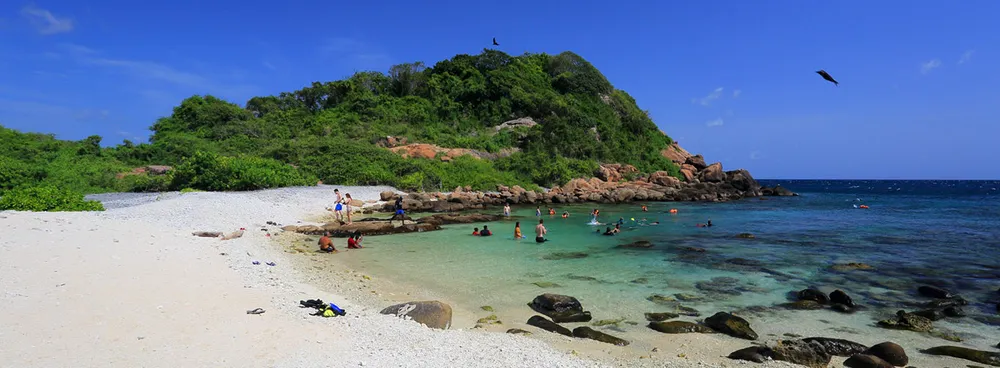
Located roughly one kilometre off the shores of Nilaveli Beach, Pigeon Island National Park is one of only two designated marine national parks on the island and a world-renowned destination for snorkeling and diving. Comprising two rocky islands named after the resident colonies of wild rock pigeons that nest upon their volcanic crags, the park protects some of the most vibrant and intact shallow coral reefs in South Asia.
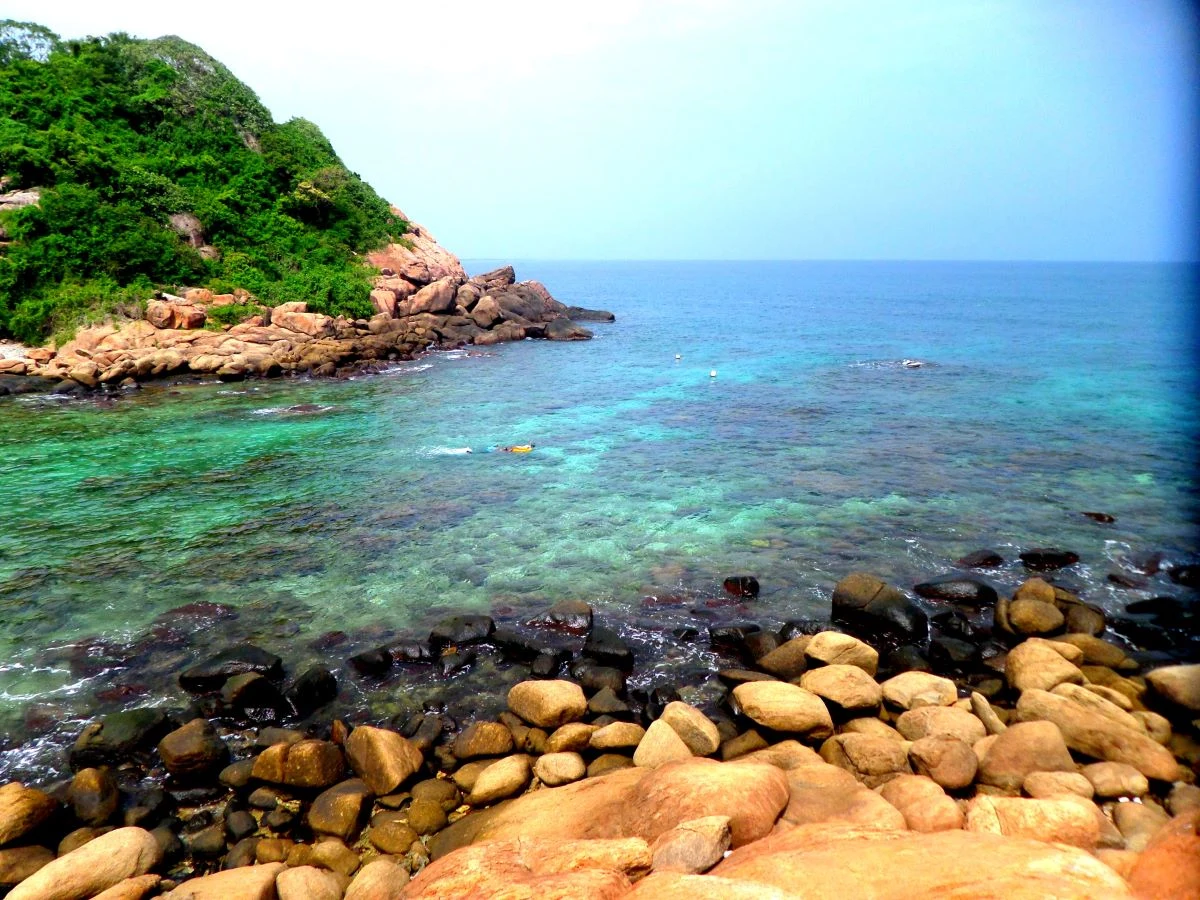 Rugged volcanic rock and turquoise seas define the shores of Pigeon Island Marine National Park.
Stepping into the crystal-clear turquoise shallows straight off the powdery white-sand beach reveals a kaleidoscopic underwater universe dominated by branching staghorn corals, cabbage corals, and massive brain corals. Snorkelers of all experience levels are virtually guaranteed to encounter harmless juvenile blacktip reef sharks gliding gracefully through the shallows, alongside green sea turtles, hawksbill turtles, and over three hundred species of dazzling reef fish, including clownfish, parrotfish, moray eels, and blue-ringed angelfish. Strict national park regulations—such as non-motorized swimming zones and designated boat drop-off points—ensure this delicate marine ecosystem remains protected for generations to come.
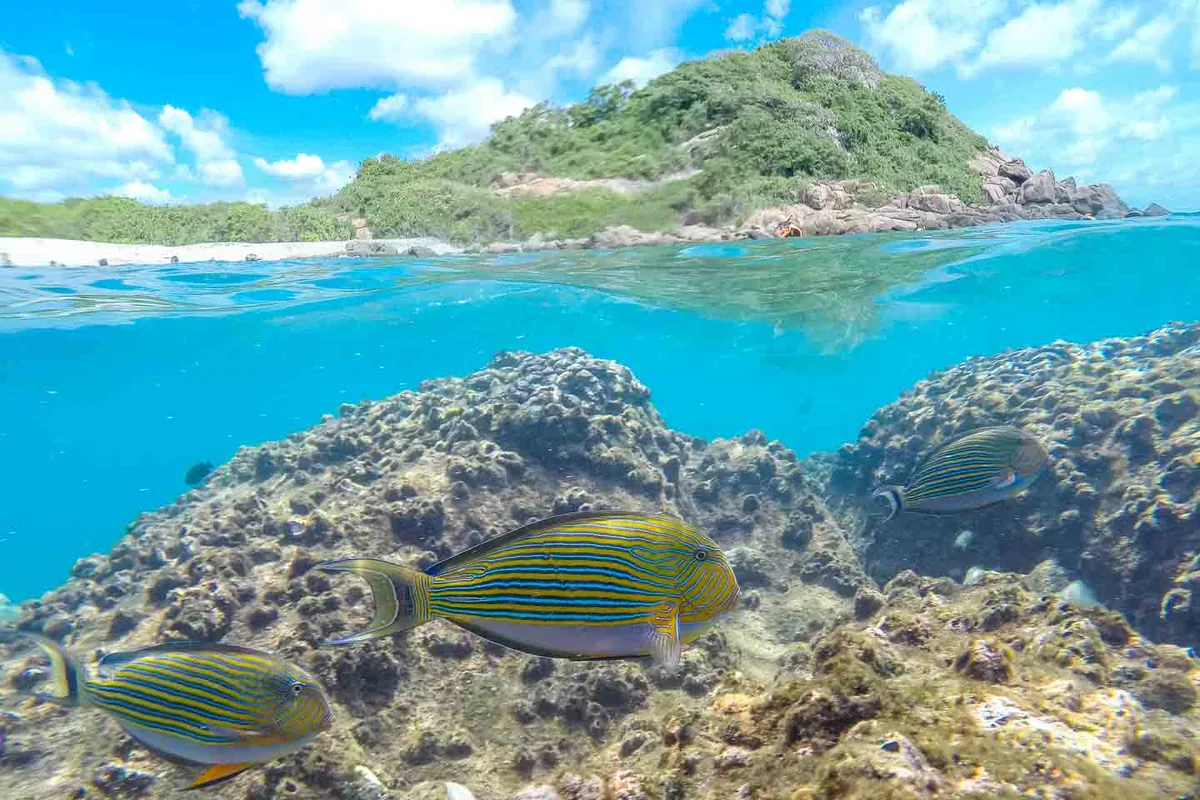 Crystalline waters allow snorkelers to encounter flourishing coral reefs and marine life right off Pigeon Island.
Golden Shores: Nilaveli, Uppuveli, and Marble Beach
The beaches surrounding Trincomalee offer some of the most serene and expansive coastal stretches on the island, characterized by gentle sloping sands and calm, transparent waters ideal for swimming throughout the summer months. Nilaveli Beach, situated sixteen kilometres north of the town center, is an enchanting four-kilometre ribbon of pristine golden sand bordered by swaying coconut palms and luxury coastal resorts. Serving as the primary launchpad for boat transfers to Pigeon Island, Nilaveli provides an uncrowded sanctuary for travelers seeking peaceful sunbathing, long beach walks, and tranquil ocean dips.
Located closer to town, Uppuveli Beach presents a livelier, bohemian coastal ambiance. Its palm-lined shoreline is dotted with open-air beach bars, laid-back cafes serving fresh seafood and tropical juices, and dive centers organizing scuba excursions to offshore wrecks. Travelers gather here at twilight to enjoy acoustic music, watch local fishing boats return to shore, and savor candlelit dinners with toes in the sand.
Tucked away along the sheltered southern reaches of the inner natural harbour lies Marble Beach, operated in part by the air force resort. Named for its calm, glassy surface that glistens like polished marble under the midday sun, this sheltered cove features emerald-green waters completely protected from ocean swells, offering one of the safest and most picturesque natural swimming pools anywhere in the country.
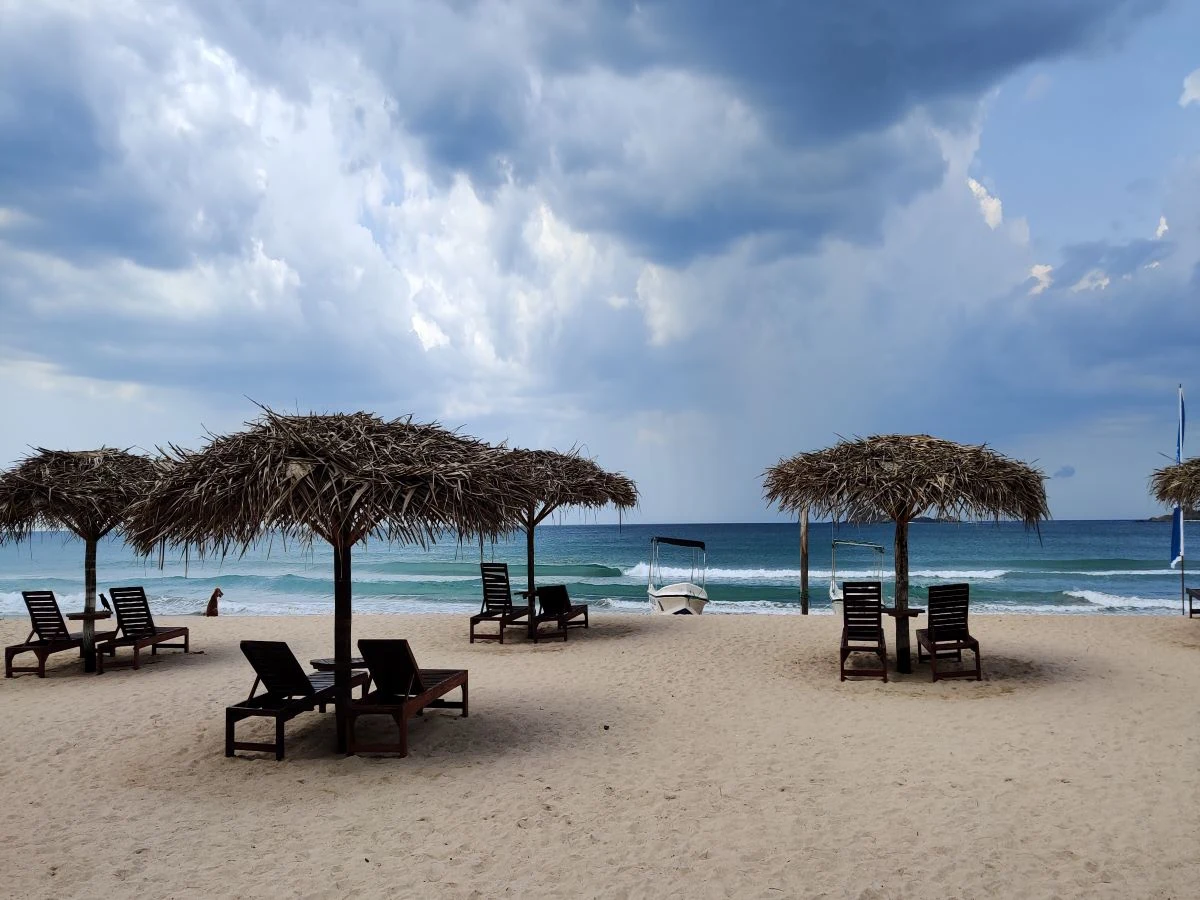 Uncrowded golden shores and calm turquoise waters along the peaceful expanse of Nilaveli Beach.
East Coast Whale and Dolphin Safaris
While the southern coast around Mirissa commands attention during the winter months, Trincomalee serves as the undisputed whale watching capital of the Indian Ocean from May through October. During this period, the southwest monsoon leaves the eastern seas calm, flat, and bathed in sunshine, creating optimal conditions for offshore marine safaris.
Just beyond the entrance to Trincomalee Harbour, the sea floor drops precipitously into the Trincomalee Submarine Canyon, a vast underwater chasm that funnels nutrient-rich currents directly toward the surface. This unique bathymetry attracts enormous pods of blue whales, sperm whales, and Bryde’s whales that feed and nurse their calves in the deep waters. Morning boat safaris departing from Dutch Bay or Nilaveli routinely witness super-pods of hundreds of acrobatic spinner dolphins leaping through the swell, alongside bottlenose and Fraser’s dolphins, offering an exhilarating oceanic encounter conducted according to strict ethical wildlife viewing guidelines.
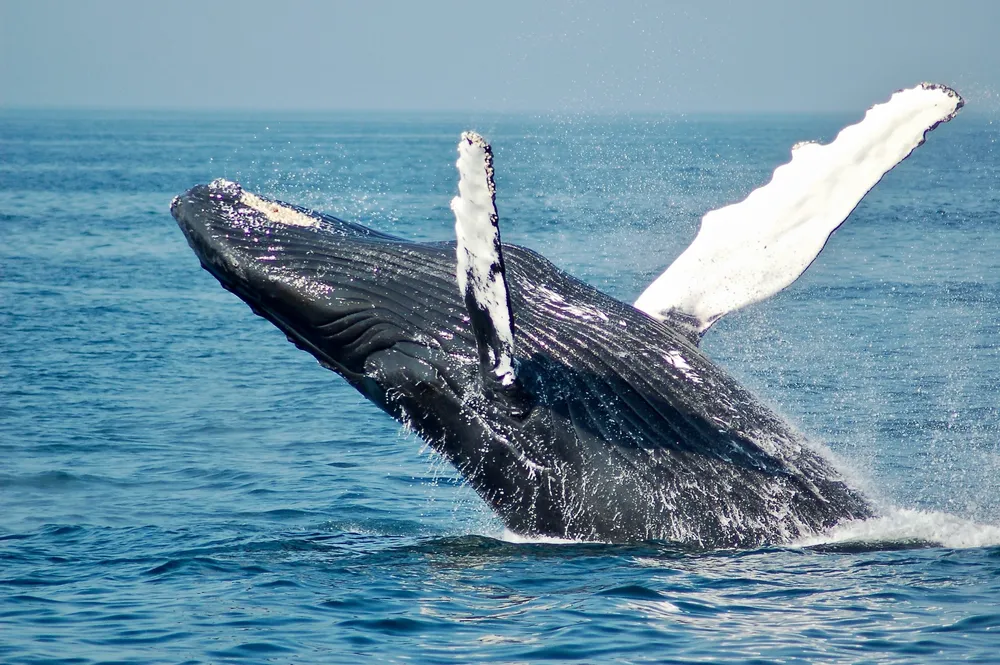 A breaching whale off the east coast, where deep submarine canyons attract marine giants from May to October.
Kanniya Hot Springs and Cultural Sanctuaries
Eight kilometres northwest of Trincomalee lies Kanniya Hot Springs, an intriguing heritage site featuring seven square brick-lined bathing wells. Naturally heated water bubbles up from underground geothermal sources, with each well maintaining a subtly different therapeutic temperature averaging around 42 degrees Celsius.
Inscriptions and stone ruins preserved by the Department of Archaeology confirm that the site functioned as an ancient Buddhist monastic infirmary during the Anuradhapura Kingdom, providing restorative warm baths for meditating monks. According to classical Ramayana folklore, the springs were created by the mythical King Ravana, who pierced the earth with his blade to produce fresh hot water for the funeral rites of his mother. Today, visitors and pilgrims visit the site to draw buckets of warm mineral water to splash over themselves for therapeutic rejuvenation.
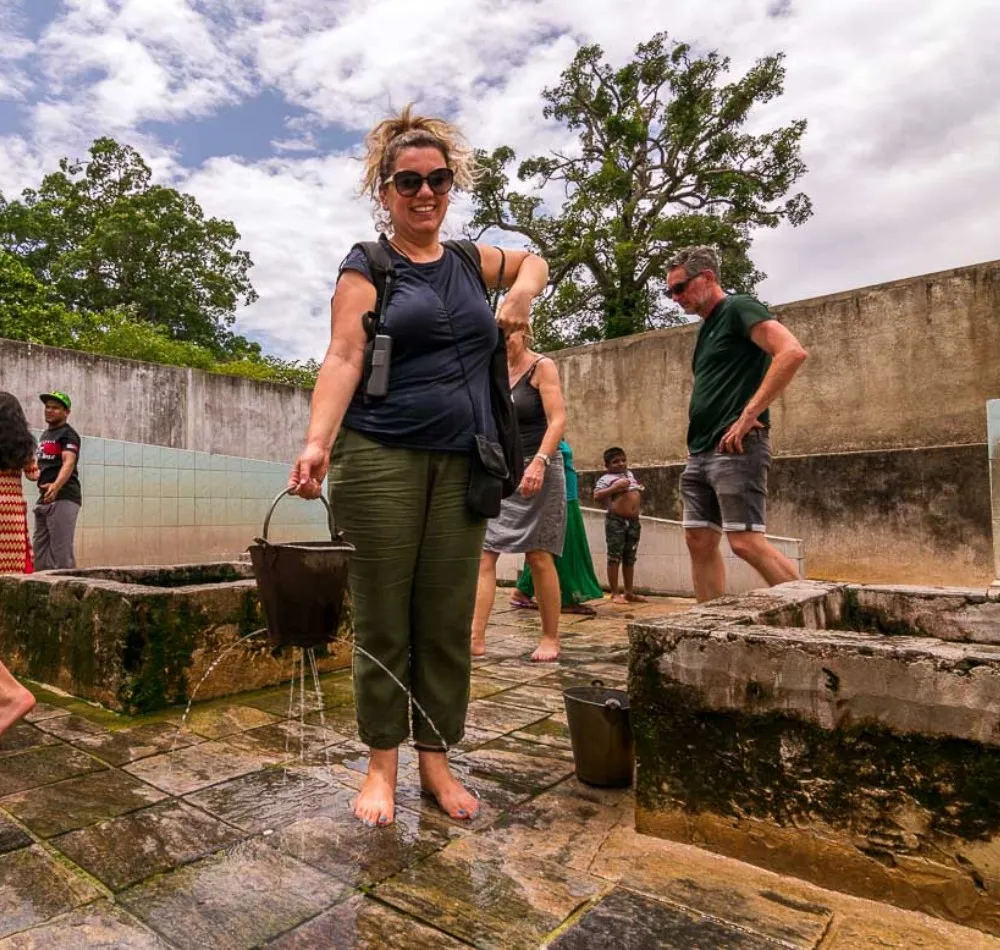 Drawing naturally heated mineral water at Kanniya Hot Springs, an ancient bathing ritual steeped in folklore.
Cultural exploration continues at Pathirakali Amman Temple in the heart of Trincomalee town, a dazzling Hindu temple dedicated to the goddess Kali. Its soaring multi-tiered gopuram is covered in hundreds of intricately carved, brightly painted sculptures depicting celestial dancers and deities, leading into fragrant inner sanctuaries echoing with ceremonial drumming. Further inland at Periyakulam, Velgam Vehera represents an extraordinary third-century BC Buddhist monastery that remarkably survived centuries of Chola rule, preserving crystalline granite Buddha statues and ancient Tamil inscriptions amidst tranquil forest groves.
Seasons, Climate, and Travel Logistics
Trincomalee is blessed with an inverted weather pattern compared to the southern and western coasts, making it the premier sunny beach destination during the European summer months. The optimal window to visit extends from April through September and early October, when the region experiences dry, warm weather, crystal-clear sea visibility, and flat waters ideal for marine safaris and swimming.
The northeast monsoon brings rainfall and rougher sea conditions between November and February, causing diving and snorkeling operations at Pigeon Island to pause. However, travelers visiting during the shoulder months can still enjoy cultural sightseeing, wildlife visits, and peaceful coastal scenery.
Reaching Trincomalee is convenient via modern highway networks. Private air-conditioned transfers from Colombo or the international airport require approximately five hours along the A6 highway via Dambulla and Habarana. Alternatively, travelers can take the scenic overnight or daytime express train from Colombo Fort directly to Trincomalee Railway Station, arriving relaxed and ready to begin coastal adventures.
Planning Your Trincomalee Holiday with Overa Tours
Whether your dream getaway entails snorkeling alongside reef sharks at Pigeon Island, standing in awe before the sacred golden lingam at Koneswaram, or waking up to oceanfront luxury on Nilaveli Beach, Trincomalee delivers an unforgettable eastern coastal escape. At Overa Tours, our travel designers craft bespoke itineraries featuring private vehicle transfers, verified marine safari skippers, handpicked luxury resorts, and licensed cultural guides.
Trincomalee pairs seamlessly with inland explorations of the Cultural Triangle, connecting effortlessly with the ancient citadel of Polonnaruwa, the rock fortress of Sigiriya, and the cave shrines of Dambulla. To start designing your bespoke holiday to Trincomalee, contact our travel specialists.
Frequently Asked Questions
What is the best time of year to visit Trincomalee?
The best time to visit Trincomalee is from April through September and early October. During these months, the eastern coast enjoys sunny, dry weather, calm ocean conditions, and optimal water clarity for swimming, scuba diving, and snorkeling. This period also coincides with the prime whale watching season off the eastern coast.
How does whale watching in Trincomalee differ from Mirissa?
Whale watching in Trincomalee operates during the opposite season to Mirissa. While Mirissa's season runs from November to April, Trincomalee's peak season extends from May to October. Additionally, the Trincomalee submarine canyon lies very close to the natural harbour, meaning boat safaris often encounter blue whales and spinner dolphins within a shorter cruising distance from shore.
How do visitors reach Pigeon Island National Park and what are the rules?
Pigeon Island is reached via a ten to fifteen-minute motorized boat ride from Nilaveli Beach. Visitors purchase national park admission tickets and boat permits before departure. To protect the fragile coral reef, touching or standing on living coral is strictly prohibited, life jackets are mandatory, and visitors must remove all personal litter upon departure.
Is Koneswaram Temple open to visitors of all faiths and is there a dress code?
Yes, Koneswaram Temple warmly welcomes respectful visitors of all faiths and backgrounds. As an active Hindu place of worship, visitors must dress modestly with shoulders and knees covered, and remove footwear before entering the temple compound. Male visitors are traditionally expected to remove their shirts when entering the inner sanctum.
Which beach is better for a holiday: Nilaveli or Uppuveli?
The choice depends on personal travel preferences. Nilaveli Beach is quieter, more expansive, and ideal for travelers seeking peaceful relaxation, luxury beachfront resorts, and direct proximity to Pigeon Island. Uppuveli Beach is closer to Trincomalee town, featuring a vibrant bohemian beach scene with beachfront cafes, dive centers, and casual evening dining.
Can visitors bathe at Kanniya Hot Springs?
Yes, visitors are permitted to bathe using the traditional method of drawing water from the square wells using buckets provided at the site. The warm mineral water is splashed over the body rather than used for submerging or swimming. Visitors must bring their own towels and wear modest bathing attire in keeping with local cultural standards.