Where the northern sun warms flat limestone plains and towering palmyrah groves, Jaffna unfolds as a captivating cultural sanctuary steeped in ancient royal heritage, vibrant Hindu devotion, and coastal island wonders.
Situated at the northernmost apex of the island, approximately four hundred kilometres north of Colombo, Jaffna serves as the proud capital of the Northern Province. Flanked by the serene Jaffna Lagoon to the south and the turquoise shallows of the Palk Strait to the north, the Jaffna Peninsula is distinguished by its unique Miocene limestone geology, producing a remarkably flat landscape adorned with silver-green palmyrah meadows, freshwater artesian springs, and picturesque coral stone boundary walls. For centuries, Jaffna flourished as the administrative seat of the medieval Jaffna Kingdom under the Aryacakravarti dynasty, developing a profound literary, religious, and architectural identity distinct from the central and southern kingdoms. Today, as the northern gateway welcomes curious travelers, Jaffna reveals an untouched, authentic travel experience where sacred temple bells, monumental colonial ramparts, pristine offshore islands, and fiery culinary traditions blend seamlessly.
Nallur Kandaswamy Kovil and Sacred Hindu Shrines
The spiritual heartbeat of the northern peninsula resides in Nallur, the historic capital of the ancient Jaffna Kingdom located just three kilometres east of the modern city centre. Here rises Nallur Kandaswamy Kovil, one of the most sacred and revered Hindu shrines on the island, dedicated to Lord Murugan, also revered as Skanda, the divine embodiment of wisdom and war. Founded in the fifteenth century by Sanpaha Perumal and rebuilt to monumental splendor during the Dutch and British colonial eras, the temple complex is celebrated for its towering golden gopurams, ornate brass-plated doorways, intricately sculpted stone corridors, and tranquil sacred stepped pool known as the theertham.
Stepping into Nallur Kovil during the daily pooja ceremonies is a deeply moving sensory immersion. Devotees gather in reverent silence as temple priests chant Vedic mantras to the pulsating rhythms of thavil drums and the piercing, soaring notes of the nadaswaram trumpet. In accordance with sacred Dravidian temple traditions, male worshippers enter the sanctum bare-chested wearing traditional white veshtis, while women wear vibrant silk saris, honoring the divine atmosphere of purity. In August, the temple hosts the world-renowned annual Nallur Festival, an extraordinary twenty-five-day spiritual celebration featuring breathtaking chariot ceremonies where colossal, hand-carved silver and timber chariots carrying the deity are drawn through the surrounding avenues by thousands of fervent barefoot pilgrims.
The peninsula is also home to numerous other historic Hindu monuments that chronicle centuries of northern spirituality. Travelers can explore the revered Sri Nagapooshani Amman Kovil on the sacred island of Nainativu, the ancient Naguleswaram Kovil at Keerimalai, and peaceful neighborhood shrines adorned with vivid stucco sculptures of deities, mythical yalis, and celestial dancers tucked away in quiet coastal fishing villages.
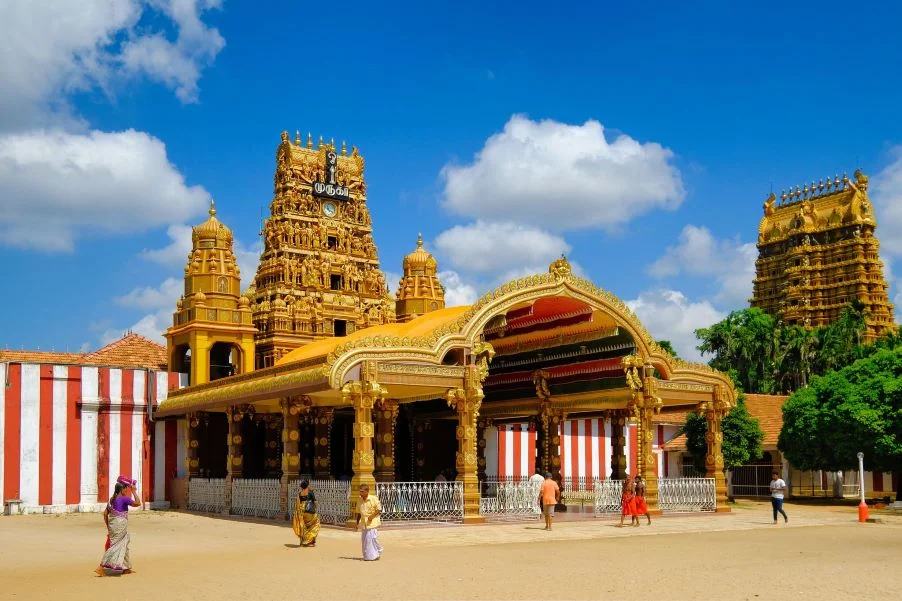 The towering golden gopuram of Nallur Kandaswamy Kovil, the spiritual heartbeat of the Jaffna Peninsula.
Jaffna Dutch Fort and the Resilient Jaffna Public Library
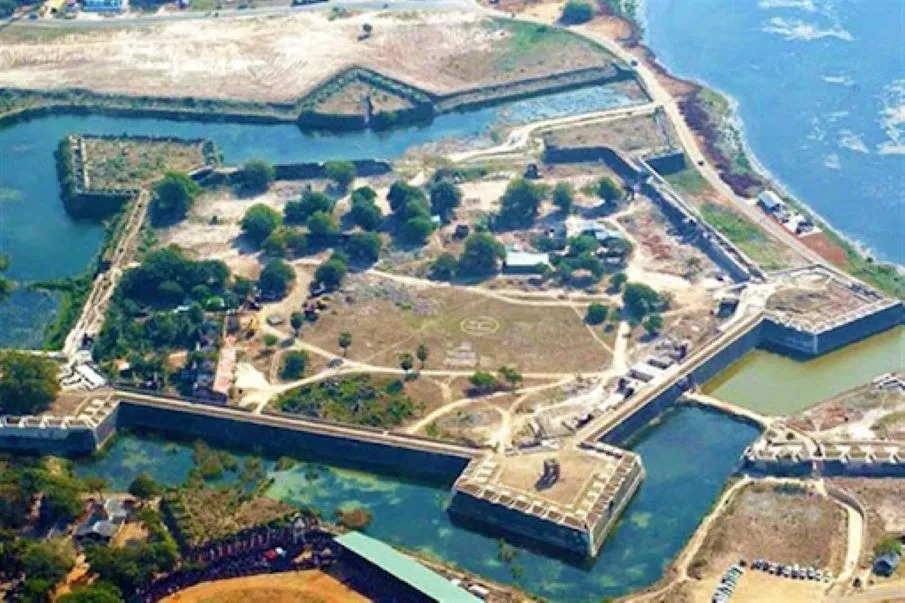
Dominating the southern waterfront where the city meets the calm waters of the lagoon, the Jaffna Dutch Fort stands as one of the most formidable colonial coastal strongholds in South Asia. Originally constructed in 1618 by the Portuguese commander Phillippe de Oliveira, the fort was captured in 1658 by the Dutch East India Company (VOC), who transformed it into an expansive, pentagonal star-shaped citadel enclosed by thick ramparts built entirely of local yellow coral stone, crushed sea shells, and granite blocks. Surrounded by a wide defensive moat and reinforced with five angular bastions, the fort sheltered military barracks, powder magazines, governor residences, and the historic Kruys Kerk church.
Visitors can enter through the restored moat bridges and monumental archways to explore the sprawling parade grounds before ascending the wide stone ramps to the elevated parapets. Strolling along the massive stone walls at sunset provides breathtaking panoramic views across the lagoon, where traditional outrigger fishing boats glide across mirror-like waters beneath the golden glow of the evening sky. Carefully restored with archaeological support, the fortress remains an enduring monument to four centuries of maritime trade, colonial conflict, and architectural endurance.
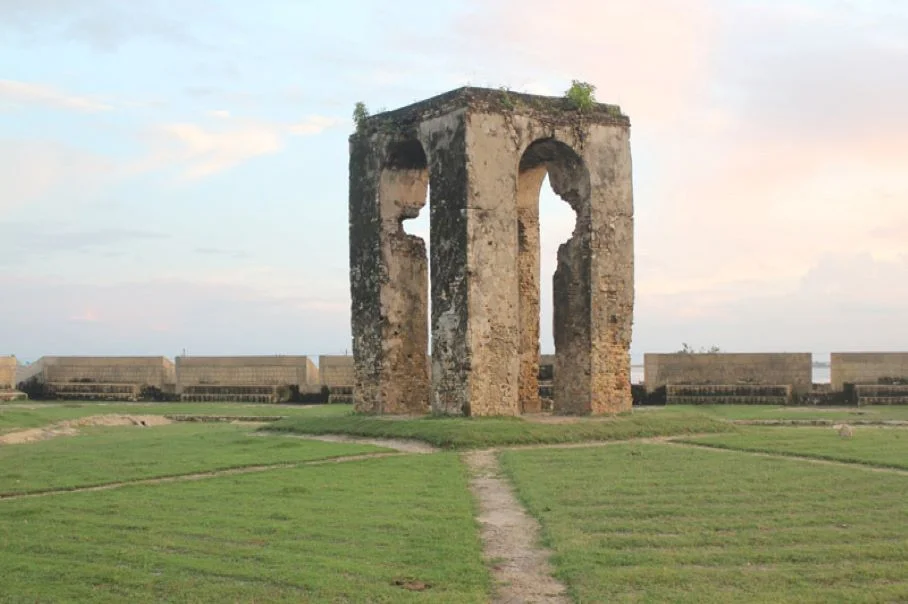 Walking the massive coral-and-granite ramparts of Jaffna Dutch Fort, overlooking the serene coastal lagoon.
A short walk north of the fort brings visitors to the iconic Jaffna Public Library, an exquisite white landmark constructed in classical Indo-Saracenic architectural style with majestic arches, grand domed cupolas, and serene landscaped gardens. Established in 1933, the library rapidly grew into one of the largest and most prestigious academic institutions in Asia, housing over ninety-seven thousand rare manuscripts, ancient palm-leaf scrolls, and historical treatises on Tamil culture, literature, and indigenous science. Tragically destroyed during civil unrest in 1981, the library was lovingly rebuilt and reopened, standing today as a cherished national monument to intellectual resilience, historical preservation, and the enduring passion of northern scholars. Adjacent to the library gardens rises the Jaffna Clock Tower, erected in 1875 from local limestone to commemorate the royal visit of Albert Edward, Prince of Wales.
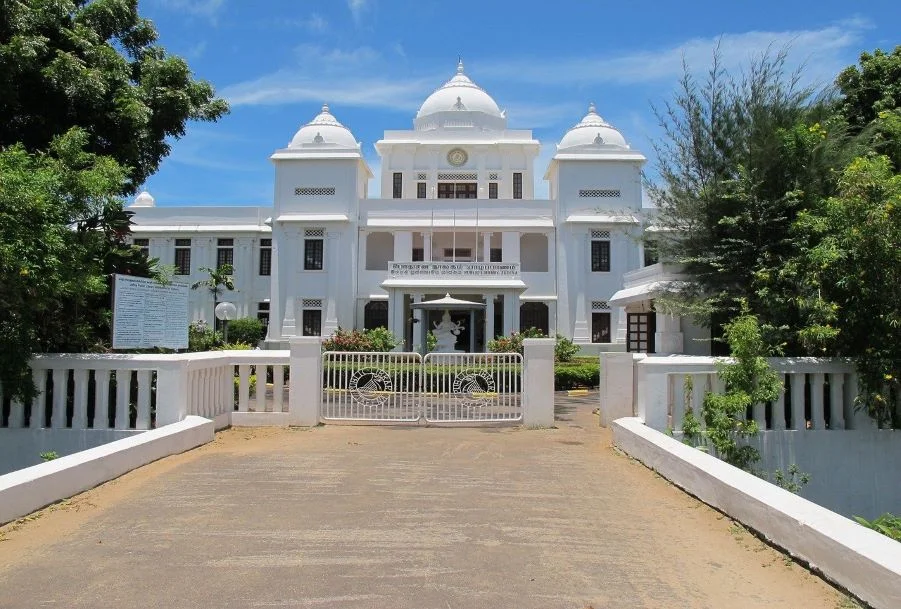 The restored Indo-Saracenic facade of the historic Jaffna Public Library, an enduring symbol of northern culture and scholarship.
Offshore Islands: Nainativu and the Wild Plains of Delft Island
A defining highlight of any journey to the north is venturing across the offshore archipelago that extends west of the Jaffna Peninsula into the turquoise waters of the Palk Strait. Connected to the mainland by an impressive system of modern marine causeways, travelers journey past the islands of Mandaitivu, Velanai, and Pungudutivu before reaching the Kurikkaduwan Jetty, where passenger ferries embark across the open sea to sacred island destinations.
The most celebrated pilgrimage crossing leads to Nainativu, an island revered by both Buddhists and Hindus for millennia. On the southern shoreline stands Nagadeepa Purana Viharaya, one of the sixteen holiest Buddhist pilgrimage shrines on the island. Historical chronicles record that Gautama Buddha visited this sacred sanctuary during his second legendary journey to the country, settling a bitter conflict between two Naga warrior kings, Chulodara and Mahodara, over a gem-studded throne. Just a short walk away on the opposite shoreline rises the kaleidoscopic Nagapooshani Amman Kovil, an ancient Shakti Peetham dedicated to the serpent-crowned mother goddess Parvati, attracting countless pilgrims with its multi-tiered sculpted gopuram and sacred brass sanctum.
Further west across twenty kilometres of open ocean lies Neduntheevu, widely known by its colonial name of Delft Island. This remote, windswept limestone island feels like a lost world frozen in time. Delft is internationally famous for its herd of wild feral ponies, direct descendants of Arabian stallions and Dutch cavalry mounts introduced by Portuguese and Dutch VOC governors in the seventeenth century. Exploring Delft aboard an open-air safari truck or three-wheeler reveals fascinating curiosities: a massive hollow Baobab tree planted centuries ago by Arab merchants, kilometers of intricate boundary walls built entirely of dry-stacked coral boulders without mortar, the solitary Portuguese fort ruins, the giant limestone footprint embedded in the rock, and the Queen’s Tower, a historic colonial navigation beacon that guided sailing ships across the strait.
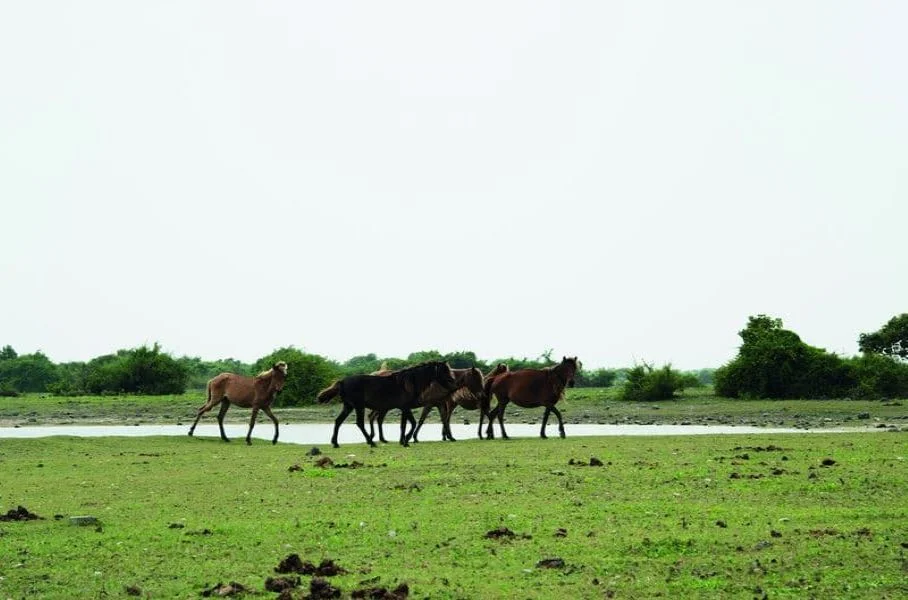 Wild feral ponies roaming the windswept coral plains of remote Delft Island, descendants of colonial Dutch cavalry stock.
Spiritual Antiquities: Kantharodai, Keerimalai, and Dambakola Patuna
Beyond the immediate city boundaries, the Jaffna Peninsula cradles extraordinary archaeological and spiritual landmarks that testify to millennia of shared northern heritage. In the tranquil inland hamlet of Chunnakam, eight kilometres north of Jaffna, travelers discover Kantharodai, also known as Kadurugoda Viharaya. This mystical archaeological site features a cluster of approximately twenty miniature stupas constructed of porous gray coral stone, nestled peacefully beneath a grove of coconut palms. Excavations conducted in 1917 by British magistrate Paul E. Peiris uncovered nearly sixty stupa foundations alongside ancient coins, Roman pottery shards, and Brahmi script fragments dating from the pre-Christian era through the early Anuradhapura period, offering profound evidence of an ancient northern trading settlement and monastic complex.
Continuing northward to the coastal edge of the peninsula brings visitors to Keerimalai, translating to “Mongoose Hill” in Tamil. Steeped in folklore, the site is famous for the legendary Hindu sage Nagula Muni, who was reputedly cured of a facial affliction by bathing in the therapeutic freshwater springs that bubble up naturally from the underground limestone caverns. Today, the Keerimalai Holy Water Spring features scenic oceanfront bathing ponds where fresh mineral water cascades continuously just inches away from the salt waves of the Palk Strait. Adjacent to the springs stands Keerimalai Naguleswaram Kovil, an ancient coastal temple and one of the revered Pancha Ishwarams dedicated to Lord Shiva, having drawn pilgrims seeking purification for thousands of years.
Further along the northern shoreline lies Dambakola Patuna, the historic ancient seaport where Buddhist nun Arahat Theri Sanghamitta arrived from India in the third century BC carrying the sacred southern branch of the Jaya Sri Maha Bodhi tree. Welcomed by King Devanampiyatissa, this sacred sapling was later planted in the royal capital of Anuradhapura, where it thrives today as the world’s oldest historically documented human-planted tree. The modern Sri Sangamitta Viharaya stands gracefully on the windswept shore to commemorate this momentous arrival, offering travelers panoramic vistas across the azure ocean toward the southern coastline of India.
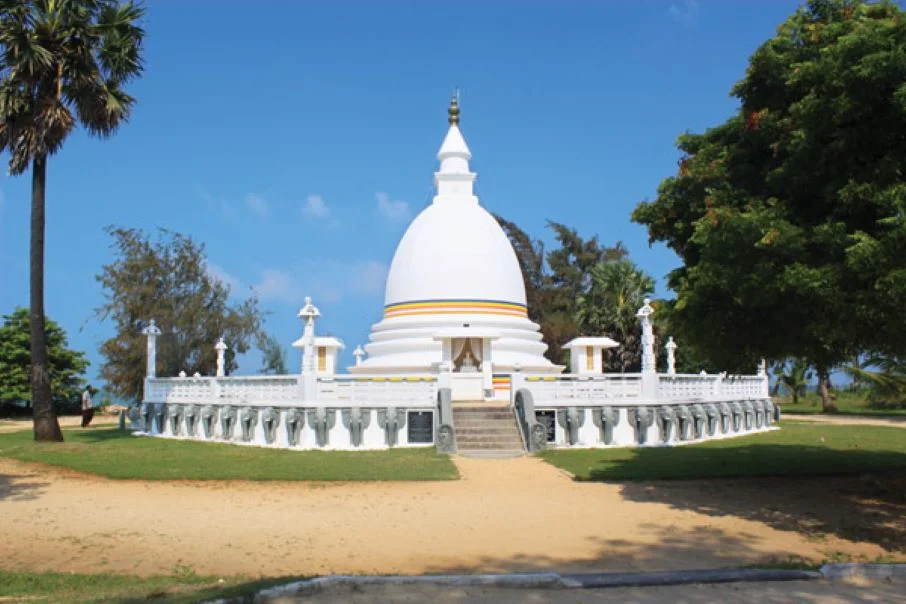 The coastal stupa and oceanfront shrine at Dambakola Patuna, commemorating the historic arrival of the sacred Bodhi sapling.
Northern Beaches and the Edge of the Island: Casuarina and Point Pedro
The northern coastline of Jaffna offers serene, uncrowded marine landscapes characterized by crystalline waters, whispering coastal woodlands, and evocative geographical milestones. On Karainagar Island, accessible via an enchanting scenic causeway that skims across the lagoon, lies Casuarina Beach, widely regarded as the most idyllic beach in the Northern Province. Named after the graceful whistling pine trees that fringe the shoreline, the beach features velvety white sand and an extraordinarily shallow, reef-sheltered continental shelf. Swimmers can wade hundreds of metres out into the warm, transparent sea without water rising past their waist, making it an exceptionally safe and relaxing bathing sanctuary for families and travelers.
At the eastern shoulder of the peninsula lies the historic trading town of Point Pedro, anchored by Sakkottai Cape, the northernmost geographic point of the country. A distinct concrete national monument marks this remote headland, where travelers can stand at the very edge of the island gazing across the narrow Palk Strait toward the Indian subcontinent, often picking up Indian cellular telecommunication signals on clear days. The nearby Point Pedro Lighthouse rises proudly above the rocky shoreline, while nearby Charty Beach and Akkarai Beach in Velanai offer tranquil stretches of pale sand where traditional fishing catamarans rest beneath palm canopies away from tourist crowds.
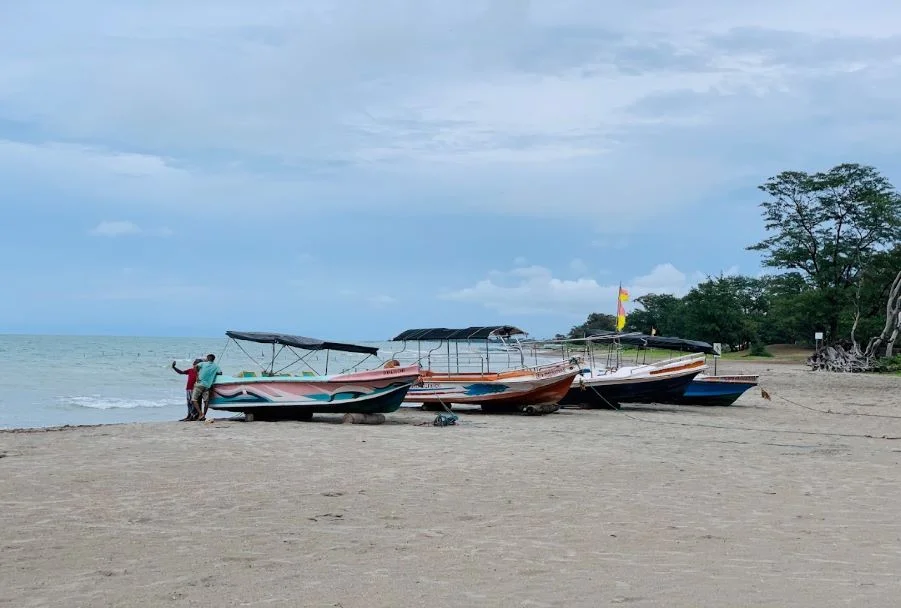 Traditional outrigger fishing boats resting along the tranquil, shallow turquoise waters of Casuarina Beach on Karainagar.
Jaffna’s Legendary Culinary Heritage
No exploration of Jaffna is complete without immersing oneself in the distinctive flavours of northern Tamil gastronomy, which differs dramatically from the culinary traditions found in southern and central regions. Northern cuisine is renowned for its bold, complex spice blends, anchored by authentic Jaffna curry powder (Jaffna curry thool), a roasted mixture of dried red chillies, coriander seeds, cumin, fennel, fenugreek, and black peppercorns that imparts an unmistakable deep aroma and rich burgundy hue to every dish.
The crowning glory of northern dining is the legendary Jaffna Crab Curry (Nandu Curry), prepared using fresh blue swimmer crabs caught daily from the shallow lagoons. Simmered in fragrant clay pots with freshly pressed coconut milk, aromatic curry leaves, tamarind pulp, and drumstick leaves (murunga ilai), the curry delivers an unforgettable explosion of peppery heat and natural sweetness. Another unique northern delicacy is Odiyal Kool, a thick, hearty seafood chowder crafted from ground palmyrah root flour (odiyal), brimming with crab, prawns, cuttlefish, tapioca, and jackfruit seeds, traditionally shared during community festivals.
The palmyrah palm (Borassus flabellifer) serves as the revered tree of life across the peninsula, providing an array of culinary treasures including sweet unfermented sap, refreshing palmyrah toddy, golden palm jaggery (panamkatti), and sun-dried fruit toffees known as pinattu. For dessert, travelers flock to the iconic Rio Ice Cream parlor on Point Pedro Road near Nallur, celebrated for generous sundaes layered with mango syrup, jelly cubes, and roasted cashews, as well as the prized Karthacolomban mangoes, whose juicy, honey-sweet flesh is celebrated as the finest in South Asia.
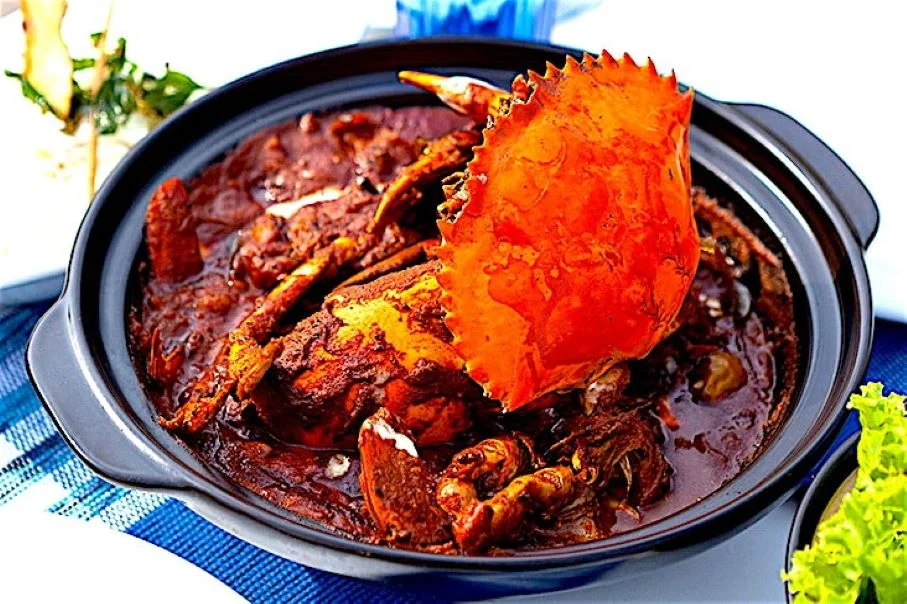 Authentic Jaffna crab curry, slow-cooked in aromatic clay pots with roasted spices, tamarind, and fresh lagoon crab.
Cycling Through Heritage Quarters and Lively Markets
The relaxed pace and flat terrain of Jaffna make it an extraordinary city to explore on two wheels. A morning cycling journey through the historic residential quarters of Nallur leads travelers past quiet lanes flanked by fragrant jasmine gardens, traditional colonial bungalows with terracotta tile roofs, and remnants of royal antiquity. Riders can pause at Cankilian Thopu, the ornate ornamental archway that once marked the palace grounds of King Cankili II, the last reigning monarch of the Jaffna Kingdom, as well as the mysterious Mantri Manai, an ancient minister’s residence showcasing intricate colonial timber carvings and arched brick doorways.
Continuing into the city center, the vibrant Jaffna Central Market on Hospital Street offers an authentic glimpse into daily merchant life. The air is filled with the sweet fragrance of sun-ripened bananas, ripe mangoes, and strings of dried chillies hanging from wooden stalls, alongside hand-woven palmyrah baskets, spicy murukku snacks, and jars of sweet palmyrah cordials prepared by local community cooperatives. Down along Beach Road near the waterfront, the early morning fish market buzzes with friendly banter as local fishermen unload fresh catches of red snapper, cuttlefish, mullet, and prawns straight from their colorful wooden boats, welcoming visitors with warm northern hospitality.
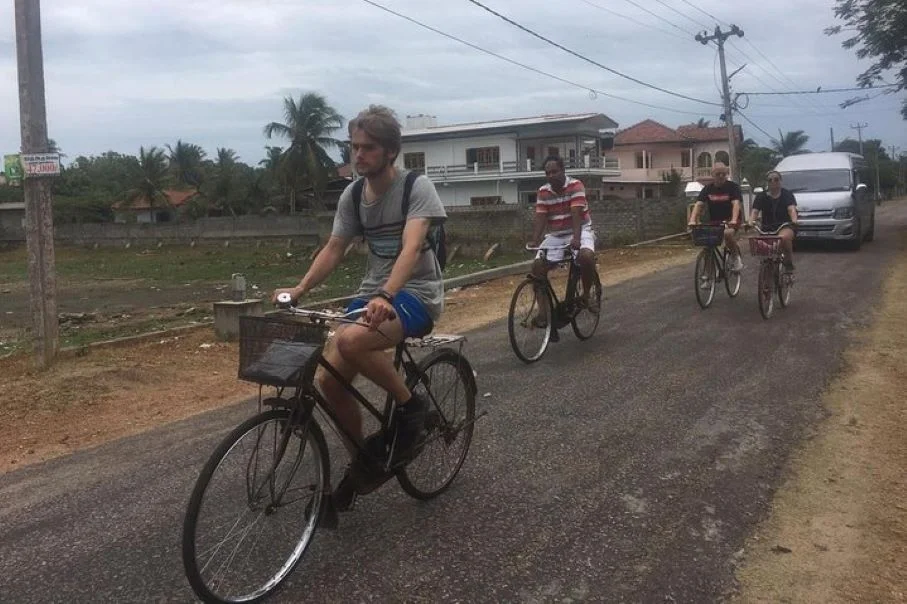 Exploring Jaffna’s quiet colonial avenues, palmyrah groves, and historic neighborhoods on two wheels.
Seasons, Climate, and Travel Logistics
Jaffna experiences a tropical savanna climate characterized by warm, pleasant conditions throughout the year, with average daily temperatures ranging between 28 and 33 degrees Celsius. The primary dry season extends from February through August, bringing clear sunny skies and minimal rainfall, making it the most popular time for island excursions, cultural sightseeing, and cycling tours. The northeast monsoon brings seasonal rain showers primarily between October and December, which rejuvenate the surrounding countryside and replenish the peninsula’s artesian aquifers.
Traveling to Jaffna is a memorable experience that showcases the changing landscapes of the island. The most iconic journey is aboard the railway express trains, such as the Yal Devi or the modern air-conditioned Uttara Devi, which depart daily from Colombo Fort Railway Station and glide smoothly across the mainland before traversing the historic Elephant Pass causeway directly into Jaffna Railway Station in roughly six to seven hours. Alternatively, travelers can arrange private luxury transfers via the A9 northern highway, allowing flexibility to pause at sacred ancient sites like Anuradhapura or the Elephant Pass War Memorial along the way.
Planning Your Jaffna Journey with Overa Tours
Whether your dream northern journey includes participating in the vibrant temple poojas at Nallur Kandaswamy Kovil, cycling past ancient royal archways, taking an adventurous ferry crossing to the wild ponies of Delft Island, or savoring authentic lagoon crab curry at sunset, Jaffna offers an unforgettable cultural tapestry. At Overa Tours, our travel specialists design personalized private itineraries featuring luxury air-conditioned vehicle transfers, handpicked boutique accommodations such as Jetwing Jaffna and Fox Resorts Jaffna, and licensed multilingual guides who bring northern history and traditions to life.
Jaffna connects seamlessly into comprehensive island itineraries, linking northern cultural explorations with the ancient capitals of Polonnaruwa and Sigiriya, or the golden beaches and marine sanctuaries of Trincomalee. To begin planning your custom journey to the northern peninsula, contact our travel specialists.
Frequently Asked Questions
What is the best time of year to visit Jaffna?
The best time to visit Jaffna is during the dry season from February through August, when the weather is predominantly sunny, dry, and ideal for outdoor sightseeing and island excursions. Traveling in July and August is particularly rewarding for culture enthusiasts who wish to experience the grand twenty-five-day annual Nallur Festival. The period from December to February also offers pleasant weather with cooler evening temperatures, whereas October and November bring the heaviest rainfall during the northeast monsoon.
What dress code and etiquette should visitors observe at Nallur Kandaswamy Kovil?
Visitors to Nallur Kandaswamy Kovil must dress respectfully in accordance with Hindu temple tradition. Male visitors are required to remove their shirts and enter the inner temple bare-chested, wearing long trousers or a traditional white veshti. Female visitors should wear modest attire with shoulders and knees covered, such as a sari, maxi dress, or long skirt. Footwear must be removed and left at the designated shoe repository outside the temple gates, and photography is strictly prohibited inside the sacred inner sanctum.
How do travelers reach Delft Island and Nainativu from Jaffna?
To visit Nainativu and Delft Island, travelers drive approximately one hour southwest from Jaffna town along coastal causeways to the Kurikkaduwan Jetty (KKD). From the jetty, regular passenger boats operate a short twenty-minute ferry ride across calm waters to Nainativu. For Delft Island, a public ferry operated by the navy makes daily crossings taking approximately forty-five minutes to one hour each way. Because ferry schedules are limited and capacity is prioritized for island residents, travelers are advised to arrive early or arrange organized excursions through Overa Tours.
How many days should travelers spend in Jaffna?
A stay of three to four full days is recommended to fully appreciate Jaffna and its surrounding attractions. This duration allows one full day for exploring the city centre, Jaffna Dutch Fort, the Public Library, and Nallur Kovil; a second full day dedicated to island hopping across Nainativu and Delft Island; and a third day for discovering Casuarina Beach, Keerimalai Sacred Springs, Kantharodai ruins, and Point Pedro.
What is the best way to travel to Jaffna from Colombo?
The most comfortable and scenic way to travel between Colombo and Jaffna is aboard the direct express train service departing from Colombo Fort Railway Station, including the air-conditioned *Uttara Devi* and the legendary *Yal Devi*, which take approximately six to seven hours. Alternatively, travelers can book a private air-conditioned vehicle transfer with Overa Tours along the A9 highway, which allows flexible sightseeing stops in Anuradhapura or Elephant Pass.
What are the signature dishes of traditional Jaffna cuisine?
Signature culinary specialties of Jaffna include the world-famous Jaffna Crab Curry (*Nandu Curry*) simmered in roasted spice blends and drumstick leaves, Odiyal Kool (a thick seafood and palmyrah flour chowder), fiery Jaffna mutton and fish curries, and pittu served with spicy coconut milk gravies. Visitors should also sample sweet palmyrah jaggery, Rio Ice Cream sundaes, and succulent local Karthacolomban mangoes.