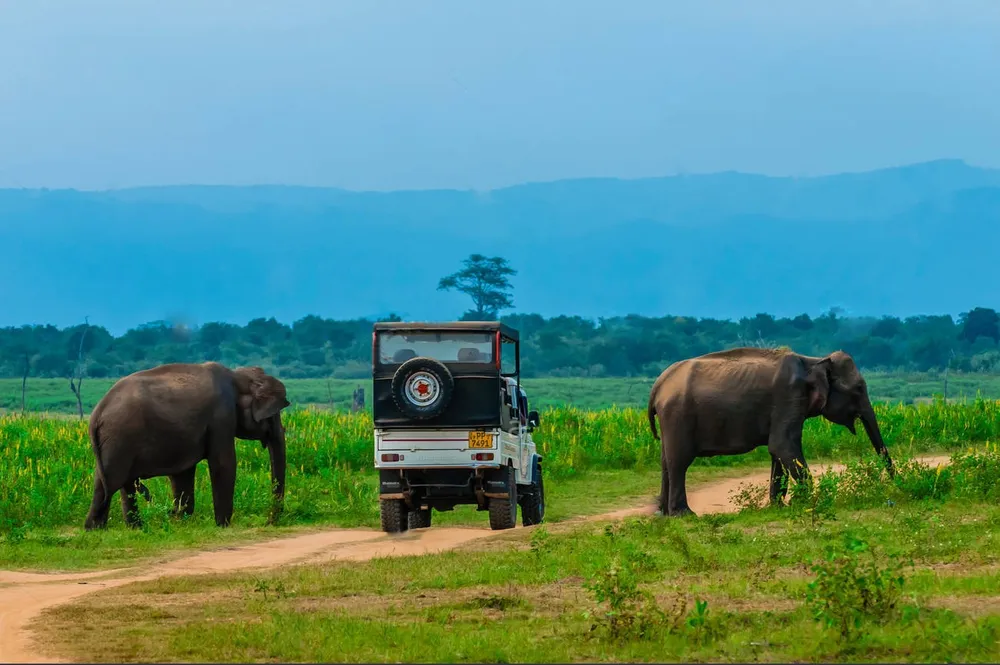
Spanning 30,821 hectares across the boundary of the Sabaragamuwa and Uva Provinces, Udawalawe National Park is renowned as one of the finest destinations in Asia for observing wild Asian elephants (Elephas maximus maximus) in their natural habitat. Established in 1972 to provide a sanctuary for wildlife displaced by the construction of the vast Udawalawe Reservoir on the Walawe River, the park evokes the wide-open grassy plains of an East African savanna.
With a thriving resident population estimated between 500 and 700 elephants, visitors embarking on a 4x4 game drive are virtually guaranteed intimate sightings of matriarchal family herds, playful calves, and solitary bull elephants grazing across the open plains and bathing in scenic waterholes.
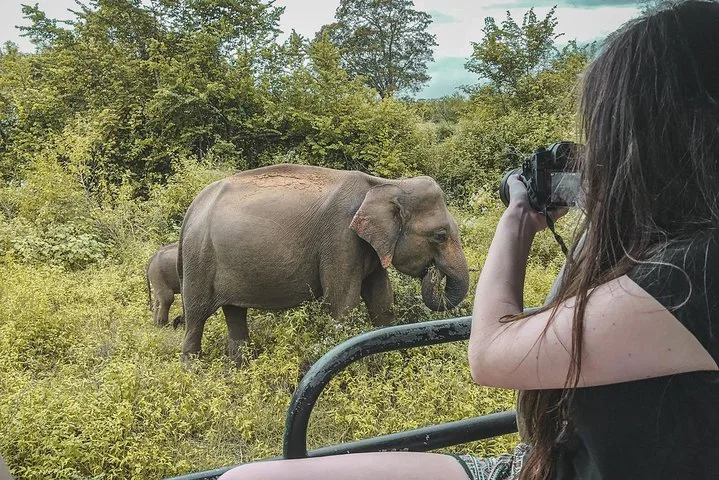
Wildlife & Biodiversity in the Savanna Plains
While wild elephants are the undisputed highlight, Udawalawe protects an extraordinarily rich ecosystem of mammals, reptiles, and avifauna:
- Large Herbivores & Mammals: Herds of wild water buffalo (Bubalus arnee), spotted deer (axis deer), barking deer, sambar, wild boar, and golden jackals roaming across the scrublands.
- Apex Predators & Elusive Species: The Sri Lankan leopard (Panthera pardus kotiya) and sloth bear (Melursus ursinus) inhabit the deeper rocky sectors of the park, though sightings are rare compared to Yala National Park.
- Reptilian Life: Mugger crocodiles (Crocodylus palustris) basking along the banks of the reservoir, alongside large water monitors and star tortoises.
- Avian Sanctuary: Over 180 species of birds frequent the park’s wetlands and forests, including the crested serpent eagle, white-bellied sea eagle, changeable hawk-eagle, painted stork, black-headed ibis, and migratory bee-eaters.
The Elephant Transit Home (Ath Athuru Sevana)
Located just outside the western park gate along the reservoir dam, the Elephant Transit Home (ETH) is an internationally acclaimed rehabilitation center established in 1995 by the Department of Wildlife Conservation:
- Rehabilitation Philosophy: Unlike conventional sanctuaries, the ETH raises injured and orphaned elephant calves with minimal human contact so they can be successfully reintroduced into wild herds within the national park once they reach maturity.
- Public Milk Feeding: Visitors can observe the lively young calves being bottle-fed milk from a shaded viewing platform four times daily:
- 09:00 AM
- 12:00 PM
- 03:00 PM
- 06:00 PM
- Conservation Impact: Since its inception, over 100 rehabilitated juvenile elephants have been fitted with radio collars and successfully integrated back into the park’s wild population.
Safari Logistics, Timings & Practical Guidance
- Park Operating Hours: 06:00 AM to 06:00 PM daily.
- Recommended Safari Windows: Early morning (06:00 AM to 09:30 AM) and late afternoon (03:00 PM to 06:00 PM) provide the best lighting and highest wildlife activity as temperatures cool.
- Safari Duration: Standard game drives last 3 to 4 hours; full-day safaris are available for dedicated wildlife photographers and birdwatchers.
- Best Season to Visit: While wildlife viewing is exceptional year-round, the dry season from May to September sees water supplies contract, concentrating wildlife in spectacular numbers around the main reservoir and watering holes.
- What to Bring: Lightweight neutral clothing (khaki, olive, beige), sun protection (hat, sunscreen, sunglasses), a telephoto camera lens, binoculars, and plenty of drinking water.
- Park Rules: Remain seated inside the 4x4 jeep at all times; never feed wild animals, shout, or discard trash inside the protected reserve.
Nearby Wildlife Sanctuaries & Regional Stops
- Yala National Park: Combine your elephant safari with a quest for leopards in the southeastern coastal wilderness.
- Lunugamvehera National Park: Crucial elephant corridor connecting Udawalawe with Yala.
- Bundala National Park: UNESCO Biosphere Reserve renowned for thousands of wintering migratory waterbirds and flamingos.
- Ella Mountain Guide: The scenic hill country getaway situated just 1.5 to 2 hours north via Wellawaya.
- Matara & South Coast: Direct highway access to southern coastal beaches, surf breaks, and historic Dutch fortresses.
- Minneriya National Park & Kaudulla National Park: Famous Cultural Triangle parks hosting the seasonal “Great Elephant Gathering.”